
24/7 Customer Support

Free returns

Same-day & Next-day Delivery

Quality Guaranteed

Unlock Your Welcome Offers: FREE Delivery | Up to 80% OFF | Free 30-day JoyPlus trial
Download the APP
Choosing healthy snacks online can be more difficult than it looks. Packaging may highlight protein, fibre or “natural” ingredients while leaving serving size, sugar, allergens and storage requirements in smaller print. The right choice depends on when you will eat it, what your diet allows and whether the nutrition information matches your needs.
This guide explains the main buying pitfalls, the figures worth checking and a selection of protein bars, oat bars, vegan snacks, savoury snacks and fruit and nut bars for different lifestyles.
Words such as “natural”, “wholesome” or “energy” do not describe the full nutritional profile. A snack can contain oats or nuts and still be relatively high in calories, fat or sugars. For example, a 50g Deliciously Ella Peanut Butter Baked Oat Bar provides 230 kcal, 10.6g of sugars and 5.1g of protein per bar according to the supplied product information.
That does not automatically make it unsuitable. It simply means you should compare the per-serving values, rather than relying on the front of the pack.
Protein bars may be listed per 40g bar, while oat bars are listed per 50g and savoury snacks may use a 25g portion. Always compare like for like, using both the per-serving and per-100g panels where available.
A smaller bar may appear lower in calories but also provide less protein or fibre. Conversely, a large bar may be more filling but less suitable as a light desk snack.
“Plant-based” does not always mean allergen-free. Soya, peanuts, tree nuts, sesame, milk and cereals containing gluten appear across many snack categories. Some products may also carry “may contain” statements.
For packed lunches, shared offices and family shopping, read the complete ingredient and allergen panel before buying. Packaging can change, so check the label on arrival, particularly where allergies or coeliac disease are involved.
For protein bars and energy bars, check the grams of protein per portion rather than simply looking for the word “protein”. Nature Valley Protein Salted Caramel Nut Bars provide 10.4g protein and 5.5g fibre per 40g bar. Trek Cocoa Oat Protein Flap Jacks provide 9g protein and 2g fibre per 50g bar.
Fibre can help make a snack feel more substantial, but a high-fibre product may not suit everyone in large quantities. Graze Protein Bites Cocoa Vanilla Oat Squares list 5.1g fibre per 30g portion, while the product information lists 6.3g protein per 100g.
Check the nutrition table alongside the ingredient list. Oat bars and fruit and nut bars can contain dates, syrups, chocolate coatings or glucose syrup, which contribute to total sugars. Nakd Blueberry Muffin bars provide 17g sugars per 35g bar, largely from their fruit-based ingredients.
Savoury snacks can be relatively modest in calories while still contributing more salt per portion. Graze BBQ Crunch lists 0.19g salt per 25g portion, whereas the supplied information for Wanderfort Chicken Corn Sausage lists 2.13g salt per 100g. These products suit different occasions and should not be compared solely by calories.
For vegan snacks, check for milk, whey, honey and yoghurt coatings. Graze Oat Boosts Lemon Blueberry and Graze BBQ Crunch are listed as suitable for vegans. Trek Cocoa Oat Protein Flap Jacks are described as vegan and gluten-free, while the ingredient panel identifies soya as an allergen.
For gluten-free snacks, look for a clear product statement and confirm the ingredient and allergen information. Gluten-free oats may still be unsuitable for some individuals depending on personal dietary requirements and medical advice. Products containing wheat, barley or standard oat ingredients should not be treated as gluten-free without suitable labelling.
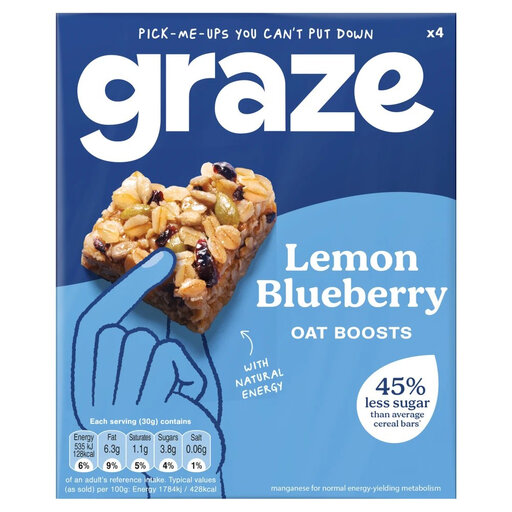
Why This Fits Their Persona: Individually portioned bars offer a straightforward option for work drawers, commuting and lunchboxes without committing to a large single pack.
The 30g portion makes serving size clear, while the product information lists 4.2g fibre per 100g and no artificial colours, flavours or preservatives.
Suitable for vegetarians and vegans; baked in the UK and supplied in individual portions.
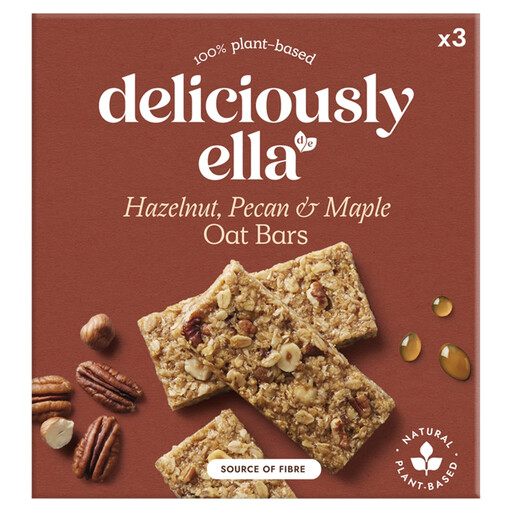
Why This Fits Their Persona: A baked oat bar with pecans, hazelnuts, maple syrup and vanilla suits shoppers prioritising a more layered flavour and chewy texture.
The ingredient list identifies the oat, pecan and hazelnut percentages, helping shoppers assess what the bar contains rather than relying on flavour language alone.
Gluten-free oats listed; 5.2g fibre per 100g; individually suitable for a desk or travel snack.

Why This Fits Their Persona: The 16-bar multipack is practical for regular gym visits, hiking, commuting or keeping a dependable supply at work.
Protein is stated per 50g bar at 9g, making it easier to compare with other protein snacks. The product also identifies soya and possible milk, nut and peanut traces.
Vegan and gluten-free product information; 18g protein per 100g; convenient 16 x 50g format.

Why This Fits Their Persona: Three small packs suit portion-conscious snacking, office drawers and adding crunch to rice bowls, soups or salads.
The total 15g quantity is divided into three 5g packs, reducing ambiguity around how much is being eaten at once.
Ready to eat; Korean-style bulgogi flavour; contains soy, wheat and sesame, which are clearly identified.
We have compiled a complete, real-time list of products that fully satisfy these strict selection criteria and UK safety regulations.
A useful cupboard or desk drawer usually includes more than one format:
Keep products in a cool, dry place unless the packaging states otherwise. Frozen options, such as meat-free Korean-style corndogs, require freezer storage and cooking according to the pack instructions.
They can fit into different eating patterns, but no snack is automatically suitable for every person or goal. Compare portion size, calories, sugars, fat, protein and fibre with your overall daily intake. Foods marketed as healthy can still be energy-dense, particularly bars containing nuts, chocolate or syrups.
Check the age guidance, portion size, allergens and ingredients first. Many protein bars contain peanuts, nuts, milk or soya, and some products may contain sweeteners or food colours. For younger children, consider choking warnings and choose products with an appropriate texture and size.
Use the best-before date on the packaging and follow storage instructions. Once opened, some products should be consumed promptly or within a stated period to preserve texture and freshness. Check the physical label when your order arrives, as dates and formulations may vary between batches.