
24/7 Customer Support

Free returns

Same-day & Next-day Delivery

Quality Guaranteed

Unlock Your Welcome Offers: FREE Delivery | Up to 80% OFF | Free 30-day JoyPlus trial
Download the APP
Navigating the supermarket aisle for healthy wholegrain foods can feel like a complicated task. Packaging is often covered in promising claims, but the reality inside the box can be quite different. Many of us have bought a "healthy" cereal or snack bar only to find it's not as beneficial as we thought. As a Joybuy Product Recommendation Officer, my role is to help you see past the marketing and make choices that genuinely fit your lifestyle.
Let's look at the common pitfalls that can lead to a disappointing purchase and how to avoid them.
A product can legally be labelled as "containing wholegrain" even if it only includes a small amount. Many breakfast cereals and breads mix a little wholegrain flour with a majority of refined white flour, diminishing the fibre and nutrient content you’re looking for.
This is perhaps the most common issue. A box of granola or a pack of cereal bars might be promoted as a source of fibre, but a quick look at the nutritional information reveals it's also packed with sugar. Terms like glucose syrup, invert sugar syrup and even honey can add up, turning a supposedly healthy breakfast into a dessert. This is a frequent problem with products marketed as a quick healthy breakfast.
Some products highlight one positive attribute, like being high in fibre, to distract from other, less desirable ones, such as high levels of saturated fat or sodium. A wholegrain snack might seem like a good choice, but if it's loaded with salt, its overall health benefit is questionable.
To make a truly informed choice, you need to know what to look for on the packaging. Here are the core parameters that matter most.
Ingredients are listed by weight, from highest to lowest. For a product to be genuinely wholegrain-rich, you should see ingredients like wholegrain oats, wholewheat flour, or brown rice listed first. If the first ingredient is sugar, or a refined grain like "wheat flour" (without the word "whole"), it’s a clear sign that the wholegrain content is not the main component.
This is where you find the facts. When analysing the "Per 100g" column, here are some simple guidelines:
low sugar granola.oats for cholesterol management mentioned, this refers to beta-glucans, a type of soluble fibre found in oats. According to established health information, consuming 3g of oat beta-glucans daily as part of a balanced diet can help lower cholesterol levels.Many fortified cereals have added vitamins and minerals to boost their nutritional profile. This can be particularly useful for nutrients that are harder to get, such as Iron, Vitamin D and various B Vitamins (like Folic Acid and B12). If you're looking for an extra nutritional boost, checking for fortification is a smart move.
Based on these practical criteria, here are a few products that align with different needs and lifestyles, helping you avoid the common purchasing traps.
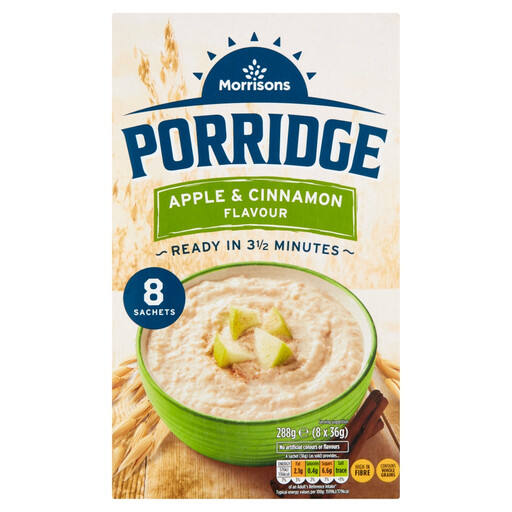
Why This Fits Their Persona: For those with busy mornings, these individual sachets offer a warm, high-fibre breakfast in minutes. It's a simple, no-fuss solution for getting a proper start to the day, whether at home or in the office kitchen.
While it contains sugar, the pre-portioned sachets prevent accidental over-serving, helping you manage your intake. The primary ingredient is wholegrain oat flakes (81%), so you're not being misled by a minor "wholegrain" addition.
The main benefit is convenience. It's a perfect example of a quick healthy breakfast that is also high in fibre and made with whole grains.
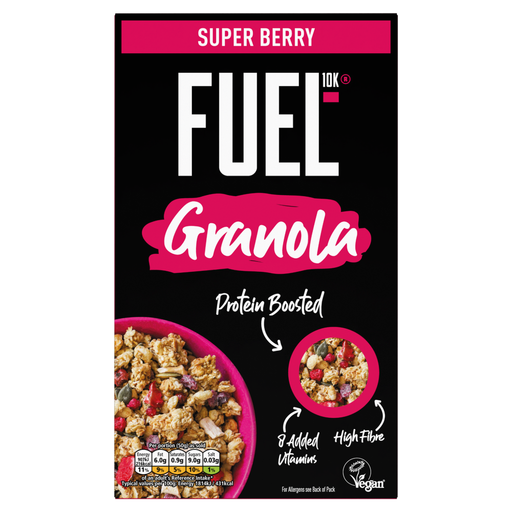
Why This Fits Their Persona: Ideal for fitness enthusiasts or anyone needing a more substantial breakfast. This granola is specifically formulated to be high in protein, which helps with satiety and supports an active lifestyle.
It sidesteps the "empty health halo" by delivering on a very specific, measurable promise: high protein. At 15.9g of protein per 100g, its primary benefit is clear and not just a vague "healthy" claim.
This is a standout among high fibre breakfast cereals for its impressive protein content. It combines wholegrain oat flakes with protein crisps and seeds for a satisfying texture and sustained energy release.

Why This Fits Their Persona: For those who prefer savoury over sweet, these organic crispbreads are an excellent choice. They work well as a standalone snack, a base for toppings like avocado, or an accompaniment to soups and salads.
It completely avoids the hidden sugar trap by being a savoury product with only 2.4g of sugar per 100g. It's made with 100% organic wholegrain and has a transparent, additive-free ingredient list.
This is a fantastic wholegrain snack that is also a powerhouse of nutrients, boasting 10g of fibre and 18g of protein per 100g. It's a satisfying and versatile item for your organic pantry staples.
We have compiled a complete, real-time list of products that fully satisfy these strict selection criteria and UK safety regulations.
The most reliable method is to check the "of which sugars" line in the nutritional information table, looking at the "per 100g" value. A figure below 5g is considered low. Also, scan the ingredients list for words ending in "-ose" (like glucose, fructose) and various syrups, especially if they appear near the top of the list.
Oat beta-glucan is a type of soluble fibre found naturally in oats. It has been the subject of numerous studies, and health authorities like the EFSA (European Food Safety Authority) have authorised the claim that regular consumption of at least 3g of oat beta-glucans per day contributes to the maintenance of normal blood cholesterol levels.
Wholegrain snacks can be a helpful part of a weight management plan. Their high fibre content helps you feel fuller for longer, which can reduce the likelihood of overeating between meals. However, it's still important to be mindful of portion sizes and to choose products that are not also high in sugar or fat.