What to check before choosing
Start with the dry weight and turnaround window for the property’s usual cotton load. Then compare the exact programmes, routine upkeep and installation requirements of models that can accommodate it.
| Concern |
What to check |
Who this matters to |
| Guest-changeover turnaround |
Check the permitted dry load and stated duration of the exact cotton or bed-linen programme; check a fast programme separately. |
If bedding and towels must be ready before the next arrival, I need a cycle that fits the urgent batch, not merely a large drum. Around 36% of consumers put turnaround first. |
| Winter electricity use |
Compare current energy information for the exact models and the programmes relevant to your cotton loads. |
With the dryer running repeatedly through winter, I want to weigh electricity use against the time each load takes. Around 29% of consumers make repeat-use energy their primary concern. |
| Installation and upkeep |
Check the manual’s space, socket and cleaning requirements; confirm that filters remain easy to reach. |
When cleaners share the laundry routine, I need a setup they can use and maintain consistently. Around 21% of consumers prioritise safe, manageable operation. |
| Care for varied laundry |
Check cotton and bed-linen settings first, then assess any specialist programmes and noise specifications relevant to the property. |
If the property also launders other textiles, I want suitable settings without compromising the regular cotton workload. Around 14% of consumers place laundry care and guest comfort first. |
Brands to consider
These ranges offer different features to investigate for a holiday let; compare the exact model and programme rather than treating a brand name as a performance guarantee.
Bosch
Bosch’s heat-pump range includes the 9 kg WQG245R2GB, a model worth examining when bedding settings and condenser upkeep are priorities.
- Bosch lists a self-cleaning condenser, AutoDry, a half-load option and a bed-linen programme with reversing drum for the WQG245R2GB.
- A self-cleaning condenser does not replace the filter-cleaning steps in the manual; confirm the current programme details before planning changeovers around this model.
Beko
Beko’s B5T49231R illustrates a 9 kg route for hosts whose urgent laundry can be separated into smaller loads.
- Beko states that its RapiDry mode dries up to 5 kg in one hour and lists sensor-drying programmes on this model.
- The one-hour statement is specific to that load and mode; check the separate programme conditions for a full cotton load.
Miele
Miele’s 9 kg TWH780WP offers specialist-care and noise-related features to assess where the laundry area is close to guest spaces.
- Miele lists SilenceDrum, DryCare 40 and HygieneDry on the TWH780WP.
- These manufacturer-listed features do not establish cotton-load turnaround time or an independently measured result; compare the relevant programmes and service terms.
AEG
AEG’s heat-pump range includes specialist fabric-care options for properties that wash more than cotton towels and bedding.
- AEG describes controlled drum movement and temperature in its AbsoluteCare range for certain fabrics.
- Check cotton capacity and programme duration on the exact model before giving specialist-care settings priority in a cotton-heavy laundry routine.
Heat pump dryers on Joybuy
These 9 kg and 10 kg heat pump dryers provide models to compare for a holiday let’s cotton laundry. Match each one to the property’s actual load size, programme needs and installation space before choosing.
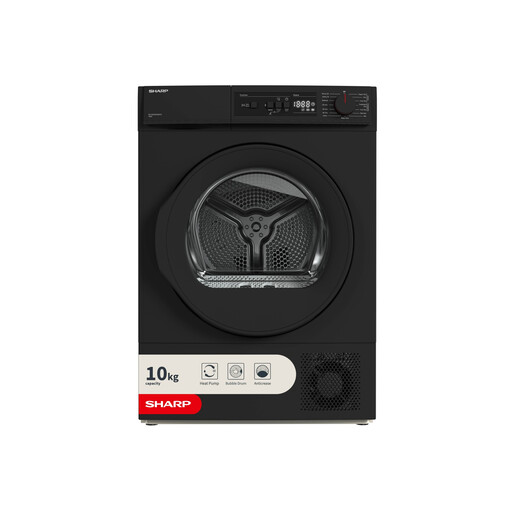 Image unavailable
Sharp KD-NHA0S6GM1D-EN 10 kg heat pump dryer, matte black
Consider its 10 kg rated capacity if your usual bedding and towel batches are larger. For a time-sensitive cotton load, check the permitted load and fabric setting of the shorter programme; also confirm the current energy information and installation instructions.
View on Joybuy
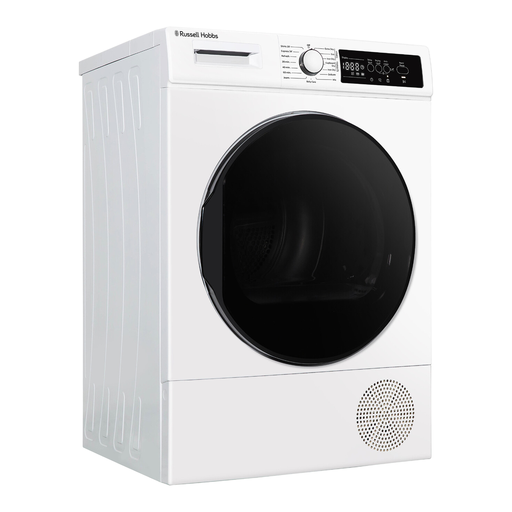 Image unavailable
Russell Hobbs RH9HPTD1E12W 9 kg heat pump dryer, white
Its 9 kg rated capacity makes it a comparison option for regular bedding loads. If quick changeovers matter, check the express programme’s cotton suitability and load limit; confirm how the water container is emptied and what the installation requires.
View on Joybuy
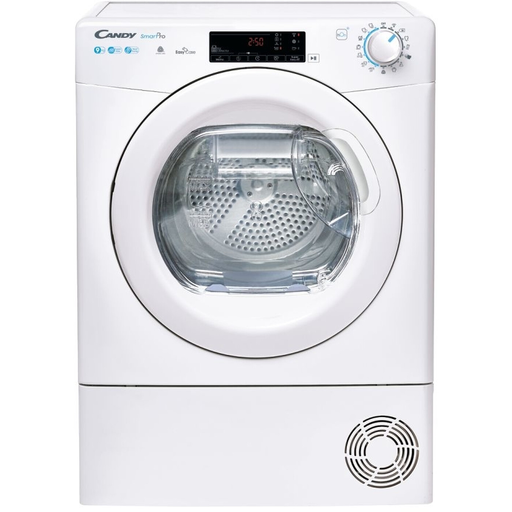 Image unavailable
Candy CSOE H9A2TE-80 Smart Pro 9 kg heat pump dryer, white
Its 9 kg rated capacity is relevant to regular towel and bedding batches. Check which shorter programmes permit cotton and how much laundry each accepts before planning a changeover around their stated times; compare current energy information for this exact model.
View on Joybuy
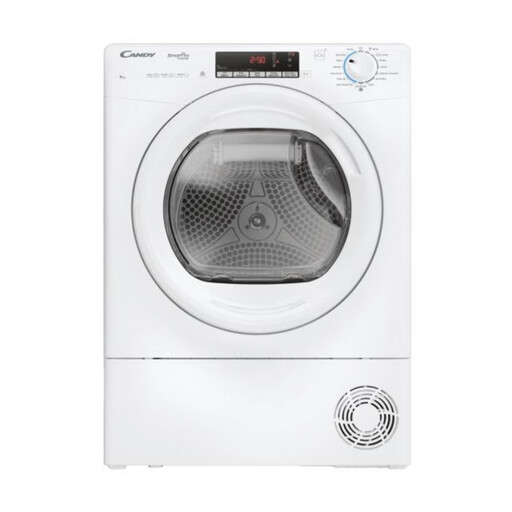 Image unavailable
Candy CROE H9A3TE-80/N 9 kg heat pump dryer, white
Consider this 9 kg model if coordinating laundry between guest stays is important. The product name specifies sensor drying and Wi-Fi connectivity; check the exact cotton programme’s load and duration, as well as the current energy information and installation instructions.
View on Joybuy
 Image unavailable
Hoover HRE H9N2TE-80 9 kg heat pump dryer, white
Its 9 kg rated capacity makes it another option to assess for bedding and towel loads. The product name specifies sensor drying and Wi-Fi connectivity, but the cotton programme’s permitted load and duration need checking before relying on it for turnaround; confirm installation requirements too.
View on Joybuy
Common questions
Can a heat pump dryer handle cotton towels and bedding in winter?
Yes, if its cotton or bed-linen programme accepts the dry weight of the load and offers the dryness setting you need. AEG notes that heat-pump drying can take longer than traditional condenser drying, so check programme conditions rather than using drum capacity as a guide to turnaround time.
Does a holiday let need a 9 kg dryer?
Not necessarily: 9 kg is a useful comparison point for frequent larger loads, but the property’s usual dry-load weight should determine the capacity you consider. If urgent loads are smaller, compare the permitted load and timing of the fast programme as a separate decision.
Can the dryer go in a cupboard or use an extension lead?
Electrical Safety First advises against placing a tumble dryer in an enclosed cupboard or relying on an extension lead. Provide a nearby suitable wall socket and follow the exact manufacturer instructions for space, ventilation and any stacking or drainage arrangement.
What fire-safety checks matter in a holiday let?
Include the laundry area and its operating routine in the property’s fire-safety arrangements, and check which duties apply to its location and type. Home Office guidance for small paying guest accommodation discusses short-term lets in the context of the Regulatory Reform (Fire Safety) Order 2005; do not assume that framework applies unchanged to every property across the UK.
Does a self-cleaning condenser remove the need to clean the dryer?
No. Electrical Safety First advises removing lint and fluff from the filter and around the door after every use. Follow the exact model’s instructions for any further periodic cleaning, even if it has a self-cleaning condenser.


