Hosts managing repeated rainy-day loads
If uniforms, PE kits and everyday clothes need drying between guest stays or cleaning visits, usable capacity and predictable programme times matter more than drum size on its own.


For recurring rainy-day loads of school clothes in a holiday let, start by comparing 9kg heat-pump dryers with moisture sensing, then check the programme times for the loads you actually expect to dry. A larger drum alone will not solve a tight turnaround: fabric-care settings, drainage and the routine needed to keep the appliance safe may be more important for your property.
If uniforms, PE kits and everyday clothes need drying between guest stays or cleaning visits, usable capacity and predictable programme times matter more than drum size on its own.
Cotton uniforms, sportswear and delicate layers may need different programmes. Check each garment label as well as the dryer’s settings before putting them in the same load.
When guests or cleaners handle the laundry, consider how they will check cycle progress, empty the water container, clean the lint filter and report appliance problems.
Work backwards from the clothes that need to be ready soonest, then decide whether electricity use, garment care or a manageable installation is the next priority.
| Concern | What to check | Who this matters to |
|---|---|---|
| Turnaround and load size | Compare cotton and mixed-load programme times with your cleaning schedule; check programme load limits as well as the rated drum capacity. | When school clothes must be ready before the next outing or handover, I need the usual load to finish in time. Around 36% of consumers put turnaround first. |
| Electricity use | Compare the current energy information for the exact models on the same basis, taking account of the programmes you expect to use. | With frequent wet-weather loads, I want to understand the electricity needed for my regular laundry. For around 29% of consumers, that is the primary concern. |
| Garment care | Check moisture-sensing and suitable mixed-fabric or delicate programmes against the garments’ care labels. | If uniforms and sportswear have different care instructions, I need settings that suit the clothes rather than one setting for everything. Around 21% of consumers prioritise garment care. |
| Installation and upkeep | Measure the space and door clearance; check the exact model’s drainage instructions, socket requirements and maintenance routine. | When other people may run the dryer, I need tank-emptying and safety checks to be straightforward. That is the leading need for around 14% of consumers. |
The product information notes heat-pump programmes can take longer than those on standard dryers. A cycle that extends beyond the property’s laundry window may be inconvenient even if the appliance otherwise suits the load.
Check the selected model’s cotton, mixed-fabric and small-load programme times against the hours available.
Rated capacity does not tell you the load limit or duration of every programme. The setting you need for school clothes may have different limits.
Compare the manufacturer’s programme guidance with a typical load, and leave room to follow its loading instructions.
A water container does not establish that a dryer can drain into a waste connection. Hose routing and permitted drain height depend on the model.
Check direct-drain compatibility, hose inclusion and the installation instructions before ordering.
If there is no suitable waste connection, arranging one may add installation work.
The Office for Product Safety and Standards lists fire-risk alerts affecting specified heat-pump dryer models; an alert for one model does not apply automatically to every dryer from its brand.
Check the exact model against current product recalls and alerts before purchase and during ownership, and register the appliance with its manufacturer.
A reference point for hosts considering moisture sensing and a reduced condenser-cleaning routine.
Relevant when mixed loads or garments with different care requirements shape the choice.
A reference for sensor programmes and practical installation guidance.
These 9kg heat-pump dryers are relevant to recurring school-clothes loads. Compare their exact programme times, drainage arrangements and safety information before deciding which suits the holiday let.
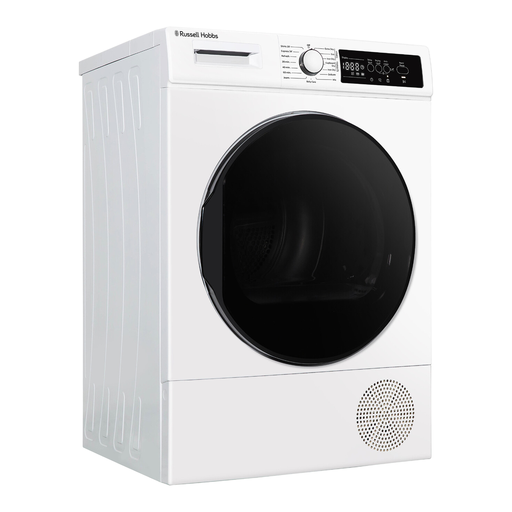 No image available
Consider this 9kg model for recurring school-clothes loads, but check the programme time and load limit for the clothes that need the quickest turnaround.
Confirm whether the intended installation can use direct drainage or whether someone will need to empty the water container.
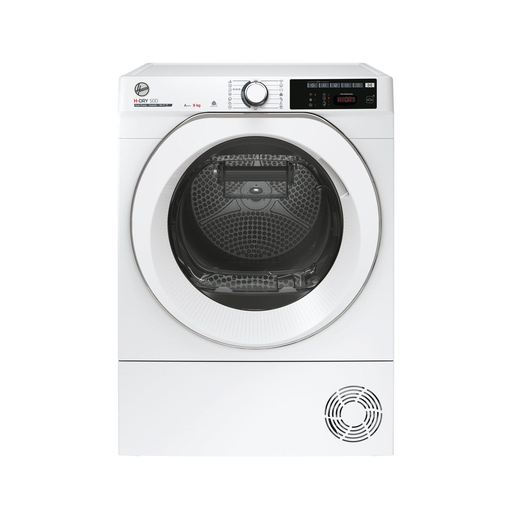 No image available
This 9kg model is worth comparing for repeated loads; check the drying programmes rather than treating a refresh function as the time needed to dry school clothes.
Check how its water container is emptied and search current safety alerts using the exact model number.
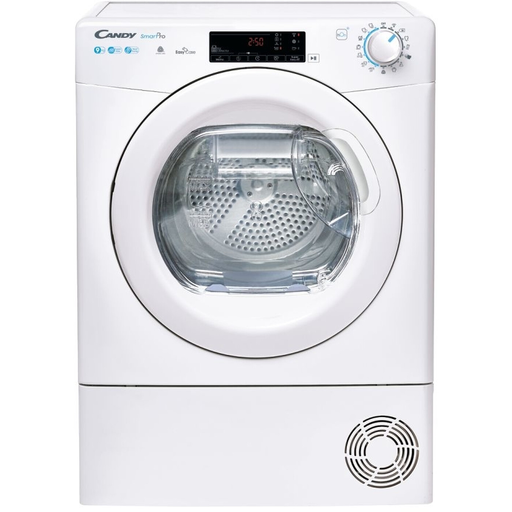 No image available
If short programmes are important, check their permitted loads and whether they suit a mixed school-clothes wash; a rapid-cycle duration is not necessarily a full-load drying time.
Confirm drainage arrangements for this 9kg model and check its exact model number against current safety alerts.
 No image available
The 9kg capacity, Sensor Dry and Wi-Fi connectivity in this model’s title may be relevant when loads and handovers vary; confirm how its controls work and how long the needed programmes run.
Check the water-container routine, any drainage option and current exact-model safety alerts.
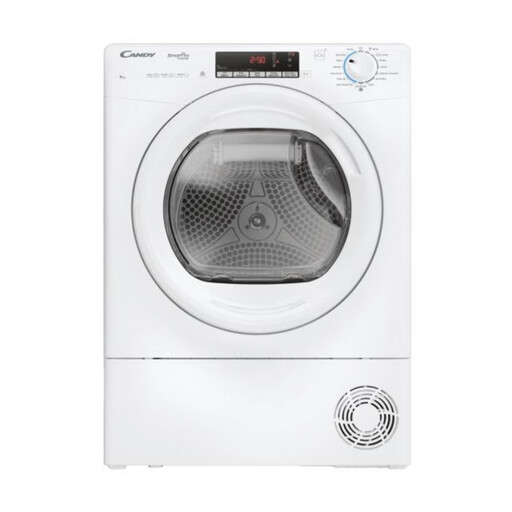 No image available
This 9kg model lists Sensor Dry and Wi-Fi connectivity; compare its actual school-clothes programme times and controls with the household routine before choosing it.
Check how the water container is managed and look up current safety alerts for the exact model.
It can, provided its programme times fit the hours available between loads. The product information notes heat-pump programmes may take longer than those on standard dryers, so compare the exact model’s cotton, mixed-load and small-load settings with your routine.
A 9kg dryer is a sensible capacity to compare for recurring mixed loads, but choose against the size of a normal load rather than an occasional maximum. Check the load limit of the programme you plan to use: it may differ from the dryer’s rated capacity.
Some models can, but direct drainage must be confirmed for the exact dryer. Beko UK’s guidance for its direct-drain setup specifies an unkinked hose and a drain no higher than 80 cm; follow the instructions and limits supplied for the model you choose.
No single set of identical rules covers every UK holiday let. The Home Office identifies the Regulatory Reform (Fire Safety) Order 2005 as the main legislation for paying-guest accommodation in England; Scottish Government guidance addresses self-catering premises under the Fire (Scotland) Act 2005, while Northern Ireland provides separate tourism-business safety guidance. Check the requirements for your property’s nation and circumstances with the relevant authority.
Yes: check the exact model, not just its brand. The Office for Product Safety and Standards publishes alerts affecting specified heat-pump dryers; if a model is affected, follow the instructions in its current alert before using it.