Flat dwellers with limited space
A narrow utility area, kitchen recess or cupboard makes the complete installation space more important than drum capacity alone. Check whether the space is intended for an integrated or freestanding machine.


Choose a heat-pump dryer that fits the full installation space and offers controls suited to your usual small loads; drum capacity alone will not settle either question. Check door clearance, ventilation and access to the water tank and filters, then weigh sensor drying or a programme with a stated small-load limit against the space and cycle-time constraints that matter to you.
A narrow utility area, kitchen recess or cupboard makes the complete installation space more important than drum capacity alone. Check whether the space is intended for an integrated or freestanding machine.
If you regularly dry a few clothes or mixed items, sensor drying and the conditions of any small-load programme deserve closer attention than the maximum load rating.
Lower-temperature heat-pump drying and fabric-specific controls may appeal if you can accommodate cycles that can take longer than conventional alternatives.
Decide first whether you have an open space for a freestanding dryer or a compatible fitted appliance bay. Then measure the space and compare programmes for the loads you actually dry.
Consider when: There is no fitted appliance bay and floor depth is the main constraint; Beko lists its BM3T3713 at 54.5 cm deep.
Check: Beko also gives a different depth elsewhere on its product page, so use the exact model's installation drawing rather than the shallowest stated figure.
Consider when: You have a compatible fitted bay and furniture-door arrangement; Hoover lists its BATD H7A1TCER-80 at 49.2 cm deep.
Check: Appliance depth alone does not establish cabinet, door or service-space compatibility.
Consider when: Small-load turnaround matters more than minimum depth; AEG states that the TE718D4B SpeedDry programme handles up to 4 kg in 75 minutes.
Check: That time is programme-specific, and AEG lists a maximum machine depth of 662 mm.
| Concern | What to check | Who this matters to |
|---|---|---|
| Fit and installation | Measure the full space, including door movement and the clearances in the exact model's instructions; establish whether you need an integrated or freestanding machine. | If a dryer has to fit a narrow recess, I need room to open it and reach its tank and filters, not just enough space for its listed cabinet dimensions. Around 36% of consumers put fit first. |
| Small-load control | Check for sensor drying and any smaller-load programme's stated load and fabric conditions. | When I dry only a few items, I want a cycle that responds to the laundry rather than choosing by drum size alone. Around 29% of consumers prioritise small-load control. |
| Electricity use and fabric care | Compare current energy-label information for comparable models and inspect the programmes available for your fabrics. | If I can wait longer for laundry, electricity use and lower-temperature programme options may carry more weight in my decision. Around 21% of consumers make these their primary concern. |
| Water, noise and upkeep | Check tank and filter access, model-specific drainage options and rated noise before placing a dryer in a tight space. | With little room around the appliance, I need to empty its tank and clean its filters without a struggle, while considering how its noise will affect the flat. Around 14% of consumers put day-to-day access and disturbance first. |
Beko lists the BM3T3713 at 54.5 cm deep in its dimensions section but gives a different depth elsewhere on the page. Neither figure alone accounts for the installation space you must allow.
Check the exact model's installation drawing and measure the access path, door swing, plug position and required clearance before ordering.
Heat-pump cycles can take longer than conventional alternatives. A rapid-programme time applies to its stated load and conditions, not every basket of laundry.
If turnaround matters, compare programmes for your usual load size rather than judging by drying technology alone.
A tight recess can make routine tank emptying and filter cleaning awkward. Direct-drain arrangements depend on the particular model and a suitable connection.
Locate the tank and filters before choosing a position, and check the model's drainage instructions if you want to use a drain.
A compatible drain accessory or plumbing work may be needed for a direct-drain arrangement.
West Yorkshire Fire and Rescue Service advises against running a tumble dryer while you are out or asleep and recommends cleaning its filters after use.
Follow the appliance manual, keep vents clear and stop using the dryer if you notice scorch marks, damaged wiring or unusual faults.
A reference point for a freestanding 7 kg heat-pump dryer where space is tight.
Relevant when the space calls for an integrated dryer rather than a freestanding one.
Worth considering where a stated small-load programme matters more than minimum depth.
A reference point when comparing drainage accessories on a conventional-depth 8 kg machine.
These models cover freestanding dryers and one integrated option for a compatible fitted bay. Compare each machine's installation instructions and small-load controls against your own space and laundry before choosing.
 No image available
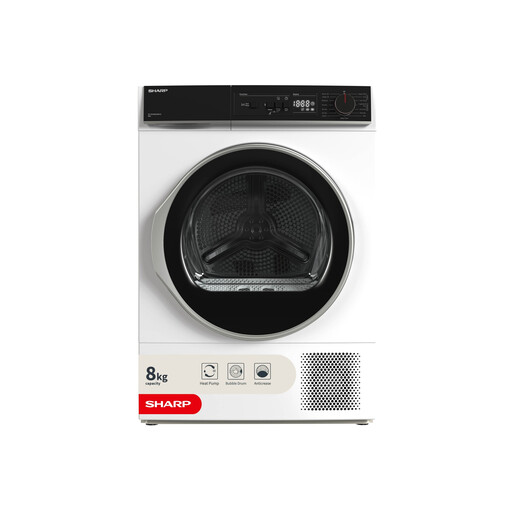
A freestanding option to assess if you have an open appliance space. Check the programme instructions for the load sizes you usually dry, along with installation clearances and tank access.
 No image available
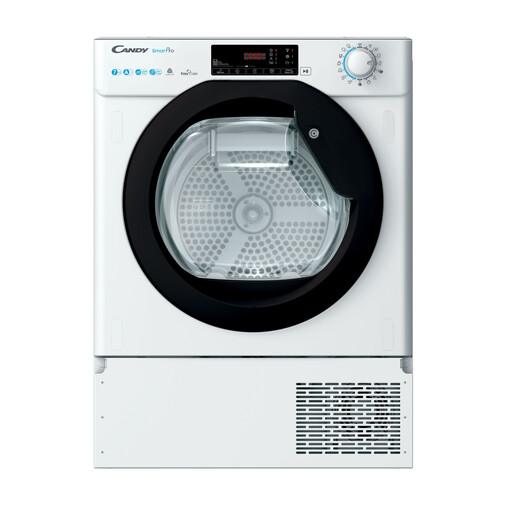
Consider this integrated model only for a compatible fitted appliance bay. Confirm the furniture-door arrangement, ventilation and complete installed depth in its installation instructions.
 No image available
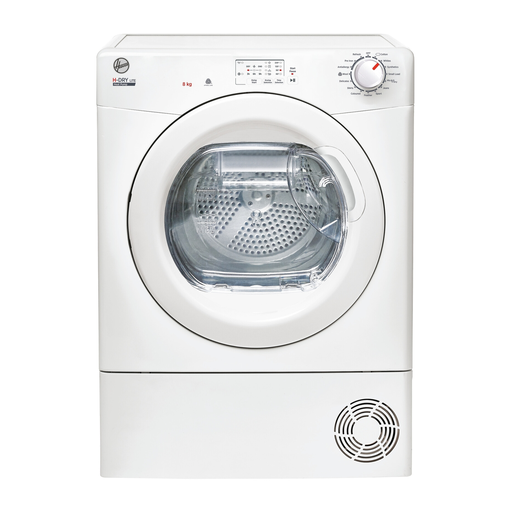
A freestanding choice for comparing small-load controls: its product name specifies Sensor Dry. Check the installation space, door movement and water-tank access before selecting it.
 No image available
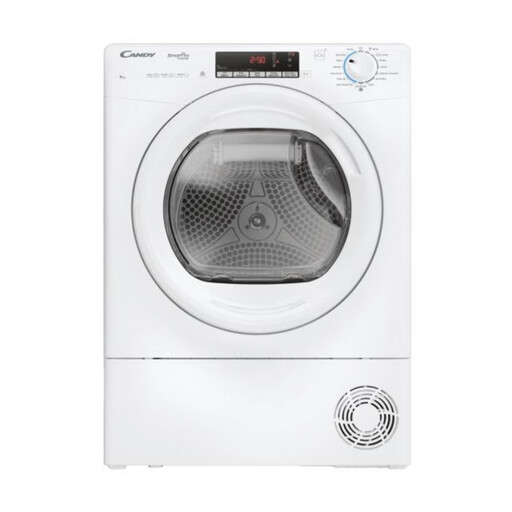
Its product name specifies Sensor Dry, but the 9 kg capacity alone does not establish how it handles a small load. Check the relevant programmes, installation clearance and tank access.
 No image available
This 9 kg model's name specifies Sensor Dry. If you mainly dry small loads, examine its programme conditions as well as the clearance, door swing and tank access required in your space.
A heat-pump dryer collects moisture rather than exhausting it through an outside vent hose. It still needs the ventilation space specified for the exact model, plus a practical way to empty its water tank or use a compatible drain connection.
No: programme controls matter as well as maximum drum capacity. Check sensor drying and any stated small-load programme; for instance, AEG specifies up to 4 kg in 75 minutes for the TE718D4B SpeedDry programme, not for every load.
Only if the appliance instructions permit the arrangement and you use a suitable approved stacking kit. Check the instructions for both machines; a Beko dryer manual also warns against placing the washing machine on top of the dryer.
Keep the filters clean and the appliance ventilated, and follow its manual for routine maintenance. West Yorkshire Fire and Rescue Service advises cleaning filters after use and not running a tumble dryer while you are out or asleep.