Households drying small loads
If you usually dry a few garments, workwear or a partial wash load, the dryer needs to fit your utility room as well as handle those smaller batches. Check the installed depth, not just the drum capacity.


For mostly small loads, measure the utility-room space before choosing a drum size, then look for a sensor-controlled or documented small-load programme. A slim 7 kg model may suit a shallow space; an 8 kg model can leave room for occasional larger loads, while a 9 kg model makes more sense if you will use its extra capacity or features. Check the exact model’s installed dimensions and programme limits rather than assuming capacity alone settles the choice.
If you usually dry a few garments, workwear or a partial wash load, the dryer needs to fit your utility room as well as handle those smaller batches. Check the installed depth, not just the drum capacity.
If your smaller loads contain different fabrics, check whether the exact model offers moisture sensing or a mixed-load programme, and follow the garment-care labels.
If lower running costs matter to you, allow for the purchase and cycle-time trade-offs noted by Which?. In a utility room, also check how you will empty or drain the water and clean the filter.
Choose when: The appliance space is shallow and most loads are small. Beko lists its BM3T3713 at 54.5 cm overall depth.
Bear in mind: Check clearance around the installed dryer, and consider whether you often need to dry larger loads.
Choose when: You want capacity for occasional larger loads but usually dry smaller batches. AEG states that the TE718D4B SpeedDry programme handles up to 4 kg in 75 minutes.
Bear in mind: That programme claim is model-specific; check its fabric restrictions. AEG lists the TE718D4B at 662 mm maximum depth.
Choose when: You will use larger-load capacity or particular features. LG lists a 9 kg drum, sensor drying and automatic condenser cleaning for its FDV309GN.
Bear in mind: Extra capacity may see little use if loads stay small, and automatic condenser cleaning does not replace filter cleaning.
| Concern | What to check | Who this matters to |
|---|---|---|
| Utility-room fit | Measure the route in and the installed space; check the exact model’s maximum depth, door access and installation clearances. | If the utility room is shallow, I need space to open the door and reach the filter as well as room for the appliance. Around 29% of consumers put fit and access first. |
| Small-load drying | Check for moisture sensing and the permitted load and fabric types of any quick or small-load programme. | When I dry only part of a wash, I want a programme intended for that load rather than assuming a full-capacity setting will suit it. Roughly 36% of consumers prioritise practical drying of small loads. |
| Running cost and time | Compare the exact models’ energy information and programme details, including cycle duration for loads like yours. | If I run the dryer frequently, I need to weigh its running cost against what I pay to buy it and how long drying takes. Around 21% of consumers make that balance their main concern. |
| Care and maintenance | Check fabric programmes, the filter-cleaning routine and whether the model supports a suitable direct drain. | For mixed garments in a utility room, I want a manageable cleaning and water-emptying routine without overlooking care labels. Approximately 14% of consumers put fabric care and upkeep first. |
A dryer can fit the available width yet leave too little room for its door, hose routing or access. Beko lists the 7 kg BM3T3713 at 54.5 cm overall depth, while AEG lists its cited 8 kg models at 662–663 mm maximum depth.
Measure the delivery route and intended position, then check the installation instructions for the exact model before ordering.
Drum capacity does not tell you the permitted load for a quick programme. AEG’s stated up-to-4-kg SpeedDry claim applies to the TE718D4B programme, not to every 8 kg dryer.
Check the programme’s load and fabric limits, alongside any sensor-drying feature, against the batches you normally dry.
Automatic condenser cleaning is a model-specific feature, not a replacement for cleaning the lint filter. London Fire Brigade advises cleaning the tumble-dryer filter after every load.
Read the model manual for its cleaning tasks and keep filter cleaning in your routine.
London Fire Brigade advises against running a tumble dryer overnight and unattended. The Office for Product Safety and Standards announced a corrective-action programme in April 2026 for specified Haier-manufactured heat pump dryers because of a fire risk.
Use the dryer when you can respond to a problem, clean its filter as instructed and check the exact model identifiers against current safety-action information.
A reference for slim 7 kg heat pump dryers where utility-room depth is a constraint.
A reference for 8 kg models with documented partial-load or mixed-load features.
A reference for larger, feature-led heat pump dryers when occasional large loads or particular controls matter.
These heat pump dryers span integrated 7 kg models and larger 8–10 kg options. For mainly small loads, compare each model’s installation requirements and programme limits before deciding whether extra drum capacity is useful.
 No image available
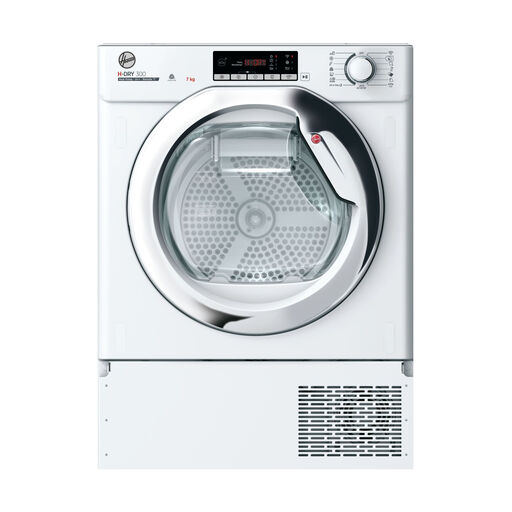
Consider this 7 kg heat pump model if you need an integrated dryer for smaller loads. Confirm cabinet fit and ventilation in its installation instructions, and check the permitted load and fabrics before relying on a rapid cycle.
 No image available
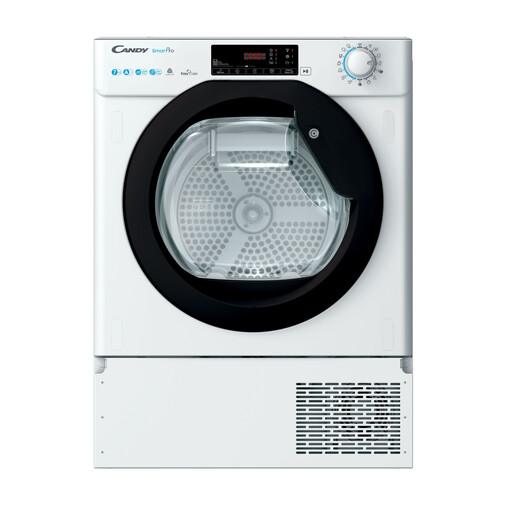
This 7 kg heat pump model is worth considering for a fitted utility-room position. Check the full installed dimensions and clearances against the cabinet, and confirm programme load limits if small batches are your priority.
 No image available
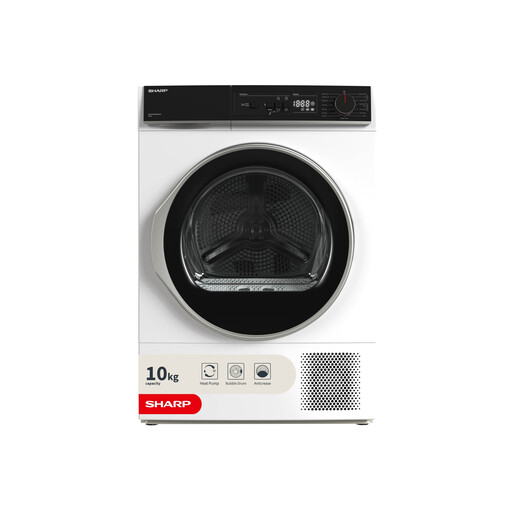
Consider the 10 kg capacity if larger loads are also a regular part of your laundry. For small batches, check the permitted loads and fabrics of the programmes you intend to use, plus the installed dimensions and current energy information.
 No image available
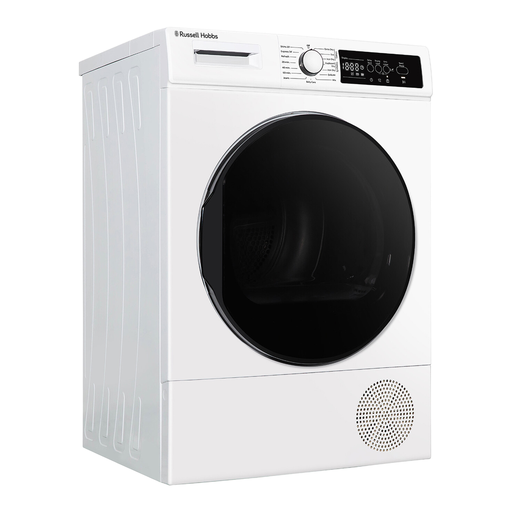
The 8 kg capacity may suit you if small batches are usual but larger loads occur sometimes. Check the load and fabric limits of any shorter cycles, the installation clearances and the exact model’s energy label before comparing it with other dryers.
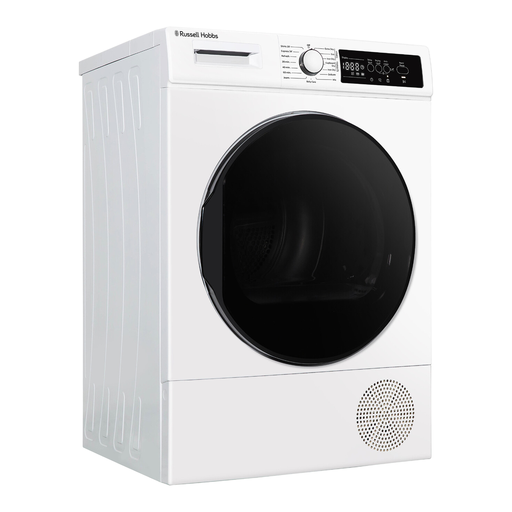 No image available
Choose the 9 kg capacity only if you also expect to use it for larger loads. Before relying on shorter cycles for small batches, confirm their permitted loads and fabrics, and check that the dryer fits with its required clearances.
A 7 kg model can suit mostly small loads, particularly when utility-room depth is tight. If you sometimes need more capacity, an 8 kg model may also work: AEG states that the separate TE718D4B SpeedDry programme handles up to 4 kg, so compare programmes as well as drum sizes.
A heat pump tumble dryer does not use the external exhaust vent required by a vented dryer. It still needs to be installed according to the exact model’s instructions, including its space, room and condensate requirements.
Direct drainage is possible only where the model supports it and the connection meets its instructions. Beko’s guidance for a compatible direct-drain hose specifies a maximum drain height of 80 cm and says the hose must not be kinked; check whether the hose or kit is supplied with the dryer you choose.
Compare energy information for the exact models and market in which you are buying, alongside programme duration for loads like yours. UK government energy-labelling guidance covers labels and product information for products in scope; use the applicable information rather than comparing figures without checking their basis.
Yes—check the exact model identifiers rather than assuming an entire brand is affected. The Office for Product Safety and Standards announced a corrective-action programme in April 2026 for specified Haier-manufactured heat pump dryers; London Fire Brigade also advises cleaning the filter after every load and not running a dryer overnight and unattended.