Technical activewear owners
If your laundry includes synthetic training kit, delicate performance fabrics or waterproof outerwear, check for programmes suited to those garments rather than choosing by drum size alone.


Choose programmes that suit the tumble-safe garments you regularly dry: a documented Sportswear or Outdoor programme matters more for technical outerwear than for ordinary gymwear. Then check the dryer’s dimensions, noise declaration and drainage arrangement against your utility room; neither capacity nor a garment-care feature replaces the instructions on each item’s care label.
If your laundry includes synthetic training kit, delicate performance fabrics or waterproof outerwear, check for programmes suited to those garments rather than choosing by drum size alone.
For recurring mixed loads, capacity and moisture-sensing options may matter alongside the practical question of how you will empty or drain collected water.
If the dryer has a defined space or sits near occupied rooms, compare its full dimensions, installation clearances, drainage arrangement and declared noise before ordering.
Start with the care labels and programmes your sportswear needs, then check whether the appliance and its water-handling arrangement will work in your utility room.
| Concern | What to check | Who this matters to |
|---|---|---|
| Garment care | Match the care label to the exact model’s Synthetics, Sportswear or Outdoor programmes; check its moisture-sensing options. | If my regular load includes technical fabrics or waterproof outerwear, I want a suitable programme without overriding the garment label. Around 36% of consumers put garment-specific care first. |
| Utility-room fit | Check maximum depth and required clearances, declared noise, and whether water is collected or can be drained. | When the utility room is tight or close to occupied rooms, I need the machine to fit and its water-handling and noise to be manageable. Utility-room fit comes first for around 29% of consumers. |
| Load flexibility | Compare rated capacity with your usual loads, and check the load and fabric limits of shorter cycles. | My sportswear loads vary between small batches and household laundry, so I care about usable cycles as well as drum size. Around 21% of consumers prioritise load flexibility. |
| Energy and upkeep | Compare the exact models’ energy labels and product sheets on a like-for-like basis; check the filter-cleaning routine. | If I run the dryer regularly, I want to understand its energy information and the maintenance I will still need to do. Around 14% of consumers place ownership effort first. |
Sportswear, Outdoor and Proofing programmes vary by model; a heat-pump design alone does not establish which technical garments a cycle suits.
Check the full programme list against the kit you own and follow each garment’s care label.
Similar-width dryers can have different maximum depths, while door clearance and the intended drainage arrangement also affect placement.
Measure the space and access route, then check the exact model’s installation instructions and drainage requirements.
Hisense specifies its DH1Q902BW2 Quick Dry 30' cycle for three lightweight shirts, not a full mixed sportswear load.
Check the stated fabric and load limits before relying on a short cycle for your routine laundry.
A self-cleaning condenser does not eliminate lint-filter care. London Fire Brigade advises cleaning the tumble-dryer filter after every load.
Follow the model’s cleaning instructions and avoid overloading sockets with multiple high-demand appliances.
A reference point for shoppers comparing named outdoor and delicate-garment programmes.
Relevant if you want to compare several named garment programmes with an integrated condensate-water drainage arrangement.
Relevant when capacity, moisture-led drying and utility-room water handling take priority.
A reference point for general tumble-safe sportswear loads where a small-load cycle may be useful.
These heat-pump dryers offer capacity choices for routine tumble-safe sportswear loads. Before selecting one for technical garments, check its complete programme list and your utility-room installation requirements.
 No image available
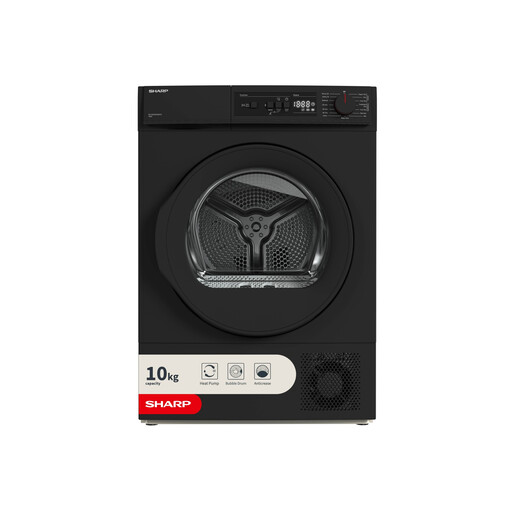
Consider the 10 kg capacity if you regularly dry larger tumble-safe loads. The title lists an A++ rating; check the exact energy label, available fabric programmes and drainage arrangement before choosing it for your room.
 No image available
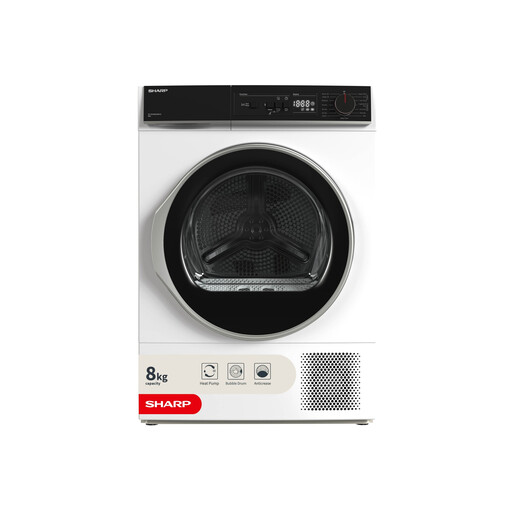
The 8 kg capacity is worth comparing with your usual load size. Its title lists an A++ rating; check the full programme list for your fabrics and measure the installation space before ordering.
 No image available
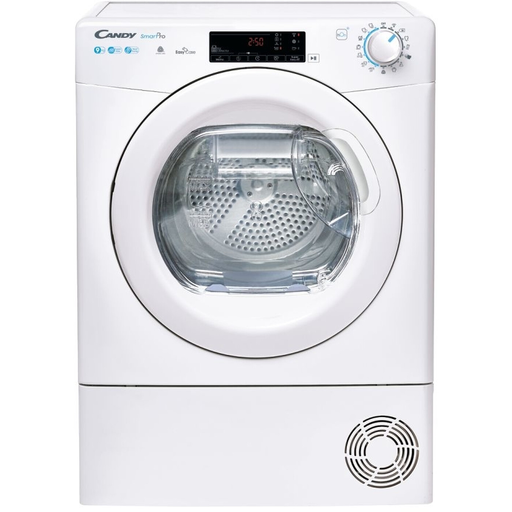
The 9 kg capacity may suit recurring household loads that include tumble-safe sportswear. The title lists an A++ rating; confirm suitable garment programmes and how collected water will be handled in your utility room.
 No image available
For recurring tumble-safe loads, the title identifies 9 kg capacity, sensor drying and Wi-Fi connectivity. Check which cycles suit your sportswear and whether the water-container arrangement works for your installation.
 No image available
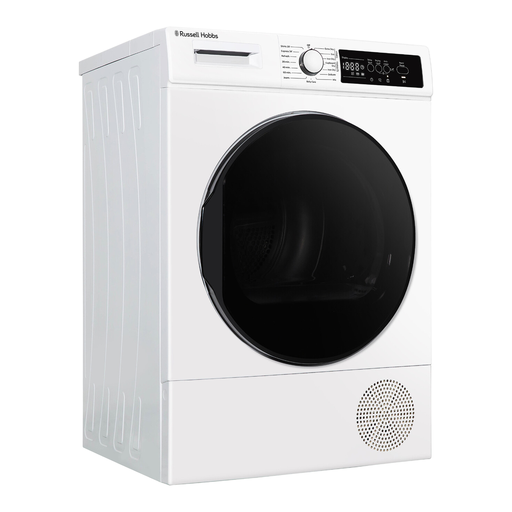
The 9 kg capacity is relevant if sportswear forms part of regular mixed loads. Check the programmes against your care labels, and compare the model’s noise declaration and drainage requirements with your utility-room plans.
A heat-pump dryer does not use the external venting arrangement of a vented dryer. You still need to follow its installation instructions, allow the required clearances and choose how to handle collected condensate.
A named programme is particularly relevant if technical sportswear or waterproof outerwear is a regular load; ordinary tumble-safe gymwear may not require one. Check each garment’s care label before using any cycle.
Clean the lint filter after every load, as London Fire Brigade advises, even if the dryer has a self-cleaning condenser. Follow the appliance instructions for its other cleaning tasks.
Use the energy label and product information sheet for each exact model rather than treating an older A++ or A+++ marking as directly equivalent to an A–G class. Energy Saving Trust advises using label information on energy use and other product characteristics when comparing appliances.