Households with technical sportswear
If you regularly dry eligible activewear or outdoor garments, look for sensor drying and check whether the exact model has a programme suited to each garment’s care label.


For tumble-safe sportswear, start with a heat-pump dryer whose sensor-controlled programme suits the garments’ care labels: it can stop at the selected dryness level rather than relying only on a timer. Then compare each model’s programmes, capacity and energy information with your usual loads; allow for potentially longer cycles, and check the load limit before relying on a fast programme.
If you regularly dry eligible activewear or outdoor garments, look for sensor drying and check whether the exact model has a programme suited to each garment’s care label.
If several loads go through the dryer each week, compare capacities that fit your normal loads and read the product-specific energy information rather than choosing by rating letter alone.
If a small sportswear load sometimes needs a quick turnaround, check the fast programme’s stated load limit and compare it with the time needed for your usual sensor-controlled cycle.
Start with garment care and your usual load size, then weigh electricity use, turnaround and maintenance against your routine.
| Concern | What to check | Who this matters to |
|---|---|---|
| Garment care | Check for sensor-controlled dryness levels and a programme appropriate to each tumble-safe garment’s care label. | I dry mixed sports fabrics and want the cycle to stop at the selected dryness level rather than guess a drying time; around 36% of consumers put garment care first. |
| Electricity use | Compare product-specific energy information between dryers with capacities suited to your normal loads. | With laundry to dry several times a week, I want to assess ongoing electricity use before choosing a drum size; for around 29% of consumers, that is the primary concern. |
| Same-day turnaround | Check the fast programme’s load limit and whether its instructions suit the garments you plan to dry. | Sometimes I need a small kit load dry that day, so the advertised cycle must fit the load I actually have; around 21% of consumers prioritise turnaround. |
| Routine upkeep | Read the filter and condenser-cleaning instructions, including what remains necessary on models with automatic condenser cleaning. | I will use the dryer regularly and need its cleaning routine to be manageable; upkeep comes first for around 14% of consumers. |
Lower-temperature heat-pump drying does not override a care label. Drying an unsuitable item or choosing the wrong programme can damage it.
Check each label, sort garments by fabric and thickness, and choose a suitable programme for the eligible load.
A rapid programme may be specified for a smaller load, while drying time varies with load size, fabric mix and starting moisture.
Check the programme’s load limit and compare the normal cycle with the sportswear basket you typically dry.
Energy Saving Trust notes that larger appliances can use more energy even when they share a rating.
Compare dryers of suitable capacity using their product-specific energy information as well as the label class.
An automatic condenser-cleaning feature does not replace lint-filter care. London Fire Brigade advises cleaning the tumble-dryer filter after every load.
Check the exact model’s maintenance instructions and follow them for the filter, condenser and any other required cleaning.
AEG’s TR849P4B is a 9 kg heat-pump model with listed SportWear and OutDoor programmes, alongside humidity-controlled drying.
Samsung states that its 9 kg DV90BB9445GBS1 has an 81-minute Super Speed programme for a 5 kg load.
LG lists Sensor Dry and an Auto Cleaning Condenser on its 9 kg FDV709GN heat-pump model.
These heat-pump dryers are options for households drying tumble-safe sportswear alongside other laundry. Check each model’s programme instructions against your garments’ care labels before choosing.
 No image available
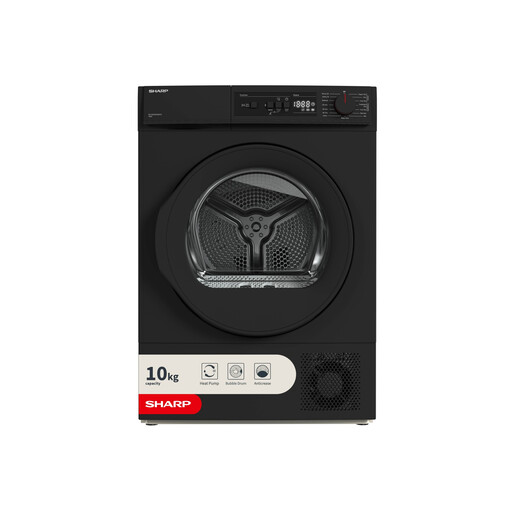
Consider this capacity if it suits your household laundry as well as your tumble-safe kit.
Stated capacity: 10 kg. Listed energy rating: A++. Check the exact programme list if you need a dedicated sportswear setting.
 No image available
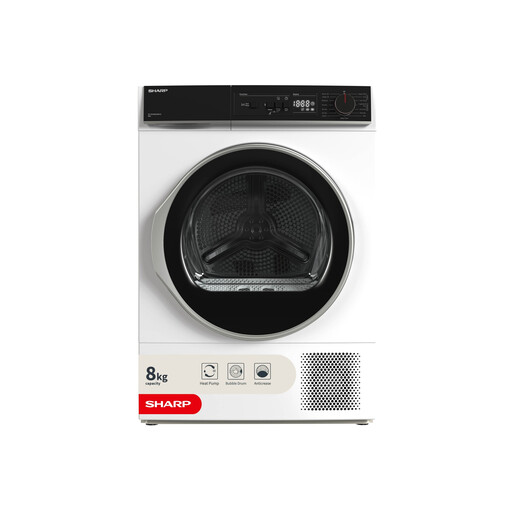
Consider this model if an 8 kg drum fits the loads you normally dry, including eligible sportswear.
Listed energy rating: A++. Check its programme list before relying on a dedicated sportswear cycle.
 No image available
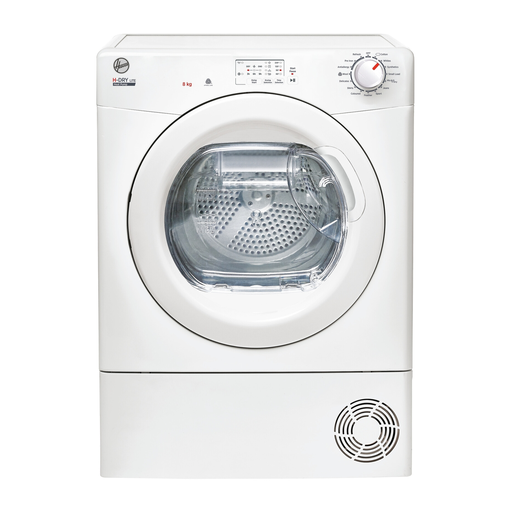
For varying eligible loads, its stated Sensor Dry feature is worth checking alongside the programmes suitable for your garments.
Listed energy rating: A+. The product name also specifies NFC One Touch and Aquavision; check the exact programme list if a sportswear setting matters to you.
 No image available
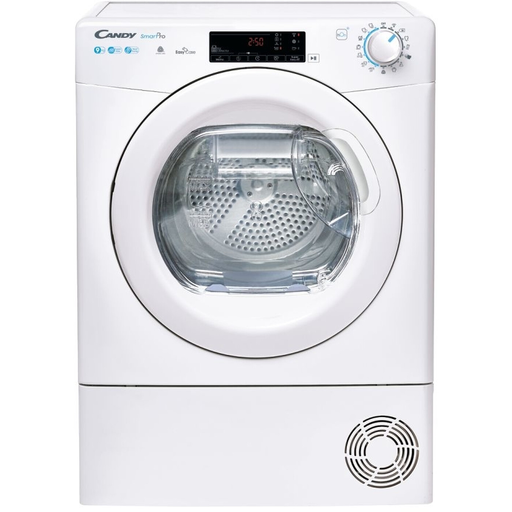
Consider its 9 kg capacity against your usual laundry load rather than assuming a rapid programme will suit every sportswear load.
Listed energy rating: A++. If quick drying matters, check the rapid programme’s permitted load and garment instructions.
 No image available
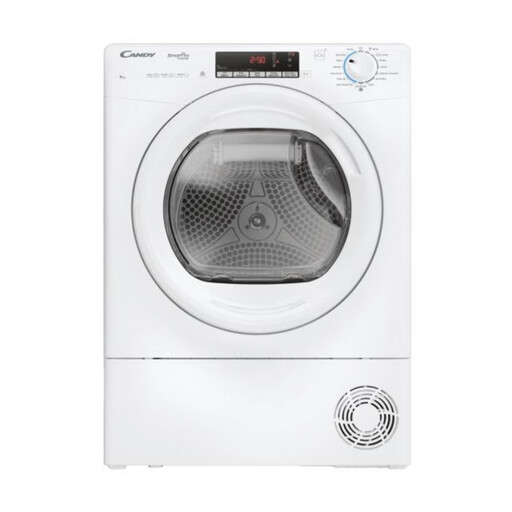
Its stated Sensor Dry feature is relevant if you want dryness control for loads that include tumble-safe sportswear.
The product name lists Wi-Fi connectivity and an A+++ energy rating. Compare the current product-specific energy information and confirm the programmes suitable for your kit.
No. Tumble dry a garment only if its own care label permits it, and choose a programme consistent with those instructions. Lower-temperature drying does not make a garment marked unsuitable for tumble drying safe to put in the dryer.
Heat-pump drying can take longer because it operates at lower temperatures. The time for an individual load also depends on its size, fabrics and starting moisture, so compare cycle information that reflects your usual laundry.
A humidity-controlled sensor programme is a useful choice when it suits the garment labels: it stops at the selected dryness level rather than running for a time you have to set. A timed cycle can under-dry or over-dry a load if that duration does not suit its contents.
Clean the lint filter after every load, as London Fire Brigade advises, and follow the model’s instructions for its other filters and condenser. Automatic condenser cleaning does not replace those remaining tasks.
Compare the product-specific energy information as well as the rating letter, preferably between dryers with capacities suited to your loads. Energy Saving Trust notes that larger appliances can use more energy even when they have the same rating.