
24/7 全天候客户支持

免费退货

当日/次日达

品质保障

开启新人专享福利: 全场免邮 | 低至 2 折 | 免费试用 30 天 JoyPlus 会员
下载 Joybuy
With energy bills remaining a key concern for UK households, choosing a new appliance like a tumble dryer requires careful thought. A heat pump tumble dryer is often presented as the solution for lower running costs, but navigating the market can be tricky. It's easy to fall for marketing hype or invest in features that don't deliver real value.
As a Joybuy Product Recommendation Officer, my role is to help you see past the clutter. Before you buy, be aware of these common pitfalls:
To make a smart investment, focus on the core parameters that directly impact performance, cost and convenience.
The drum size you need depends entirely on your household's laundry habits.
Choosing a drum that's too large for your needs can lead to wasted energy, while one that's too small means you'll be running it constantly.
Heat pump technology is inherently efficient because it recycles hot air in a closed-loop system, rather than venting it outside. This makes it a leading energy efficient tumble dryer type. The energy label gives a clear indication of running costs:
If there is one feature to prioritise, it is sensor drying. A sensor dry tumble dryer uses internal sensors to measure the moisture level in your clothes and automatically stops the cycle when they are dry. This has two key benefits:
This is far more efficient and gentle on fabrics than basic timed drying, where you have to guess the duration. For those with open-plan living spaces, also consider the noise level (measured in decibels, dB)—a quiet tumble dryer (around 62-65 dB) will be much less disruptive.
Based on these practical criteria, we've matched some standout models to different UK household needs.
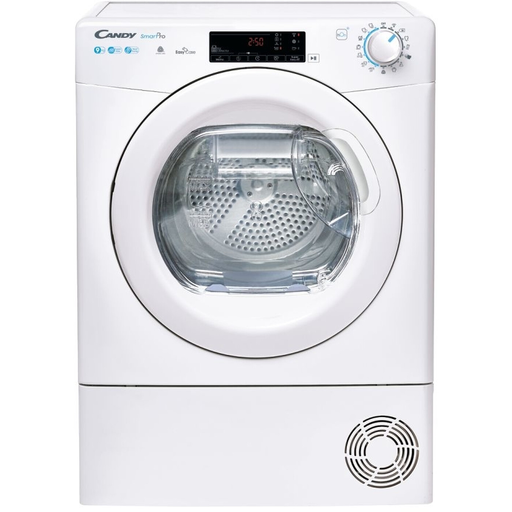
Why This Fits Their Persona: This model is ideal for families who need a large 9kg capacity and modern features without a premium price tag. It provides useful smart connectivity for managing laundry remotely, which is a practical benefit for busy schedules.
It avoids the "smart feature trap" by offering app connectivity as a value-add, not a core cost driver. The EasyCase in-door water tank also simplifies maintenance, countering the hidden chore pitfall.
Large 9kg capacity handles family-sized loads. Sensor Dry and a solid A++ energy rating ensure efficient operation.
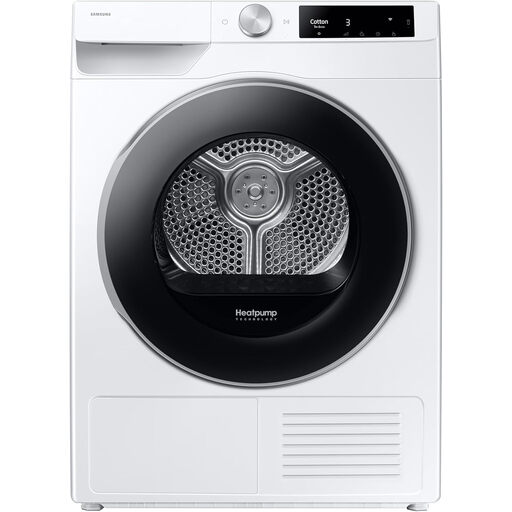
Why This Fits Their Persona: For those prioritising long-term running costs, this Samsung heat pump tumble dryer is a prime choice. Its top-tier A+++ rating, combined with intelligent drying technology, is designed to minimise electricity usage on every cycle.
It sidesteps the "misleading energy label" pitfall. The A+++ rating is backed by OptimalDry sensor technology and an AI Energy mode in the SmartThings app, which actively work to optimise consumption.
A+++ energy efficiency for maximum savings. The OptimalDry sensor system prevents over-drying, and it's a relatively quiet tumble dryer at 63 dB.
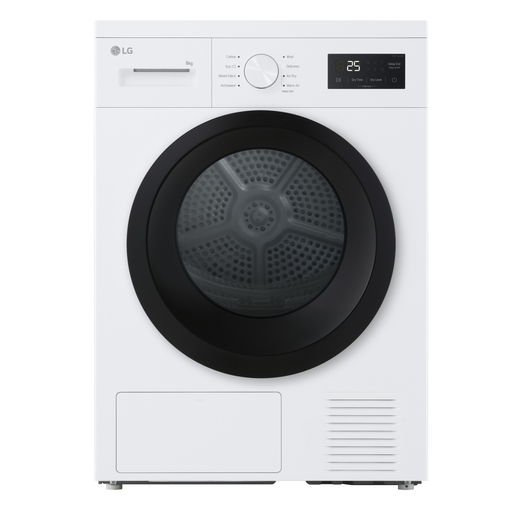
Why This Fits Their Persona: This LG model is for those who want a reliable, efficient appliance without unnecessary complications. Its 8kg capacity is perfect for smaller households, and it focuses on core performance and fabric care rather than complex smart features.
It completely avoids the "smart feature trap" by having no Wi-Fi connectivity. It delivers on its promises of efficiency (A++ rating) and effective drying with its Sensor Dry technology, focusing on what truly matters.
Features a useful Allergy Care cycle, approved by the British Allergy Foundation. The Sensor Dry function ensures efficient, gentle drying for its 8kg drum.
We have compiled a complete, real-time list of products that fully satisfy these strict selection criteria and UK safety regulations.
The running cost depends on the machine's energy rating and your electricity tariff. As a guide, an A+++ rated 9kg model can cost as little as ?40-?50 per year for average use, while an A++ model might be closer to ?60-?70. This is a significant saving compared to older C-rated vented dryers, which could cost over ?200 annually.
No, they do not. A freestanding heat pump tumble dryer is a self-contained unit. It extracts moisture from your clothes and collects it in a removable water container or drains it away via a plumbing hose. This makes them ideal for flats, modern homes or any room without an external wall for a vent.
To maintain efficiency and prevent fire risk, you must clean the main lint filter, usually located inside the door, after every single cycle. Most heat pump dryers also have a secondary filter or condenser unit at the bottom of the machine that requires cleaning every month or so. Neglecting this will reduce drying performance and increase energy consumption.