
24/7 全天候客户支持

免费退货

当日/次日达

品质保障

开启新人专享福利: 全场免邮 | 低至 2 折 | 免费试用 30 天 JoyPlus 会员
下载 Joybuy
For many UK households, a tumble dryer is a practical answer to damp weather, limited outdoor space and busy weekly laundry routines. Heat pump tumble dryers are particularly attractive because they dry at lower temperatures and reuse warm air, helping reduce energy consumption compared with traditional condenser designs.
However, a higher price or an impressive list of programmes does not automatically mean a suitable appliance. The right choice depends on capacity, energy rating, installation space, controls and how you actually dry your clothes.
An A+++ tumble dryer or A++ tumble dryer can use less energy than a lower-rated model, but your real running cost depends on load size, cycle frequency, selected programme, electricity tariff and maintenance. A lightly used 8kg dryer may cost less to run overall than an oversized appliance used inefficiently.
Also check whether the listing clearly identifies the energy efficiency class, capacity and model number. Some older product descriptions use rating terminology that may not align neatly with newer energy-label formats, so compare like-for-like specifications where possible.
A smart tumble dryer or Wi-Fi tumble dryer may offer remote monitoring, notifications, downloadable programmes and energy-use information. These functions can be useful if you regularly schedule laundry around work, children or off-peak tariffs.
They are less valuable if your dryer sits next to the washing machine and you usually unload it immediately. Connectivity should support your routine rather than replace more important features such as sensor drying, a reversible door or easy filter access.
Heat pump appliances are ventless, but they still require airflow, a level floor and regular maintenance. Lint filters need cleaning, and water tanks require emptying unless the appliance is connected to a suitable drain system.
A model that fits the width of a standard appliance space may still be too deep once door clearance and ventilation space are considered. Check the full dimensions, not just the headline width.
Choose capacity according to your normal washing loads rather than occasional bulky items.
Do not overfill the drum. Clothes need space to move so moisture can circulate effectively. A larger drum is not automatically more economical if most of your loads are small.
Both are ventless dryer types, but they work differently. A conventional condenser tumble dryer typically uses higher temperatures and can consume more electricity. Heat pump technology recirculates warm air and generally dries at lower temperatures, which may be more suitable for heat-sensitive fabrics.
Heat pump cycles can take longer than some high-temperature alternatives. If speed matters, look for dedicated quick programmes, but check the maximum load for those cycles. For example, a quick programme may be intended for approximately 1kg rather than a full drum.
A sensor dry tumble dryer detects moisture and adjusts or ends the cycle when the selected dryness level is reached. This can help reduce unnecessary drying time compared with relying only on a fixed timer.
Useful controls include:
Check the manufacturer’s instructions for garments that should not be tumble dried. Never dry items contaminated with flammable substances such as petrol, alcohol, solvents or cooking oil.
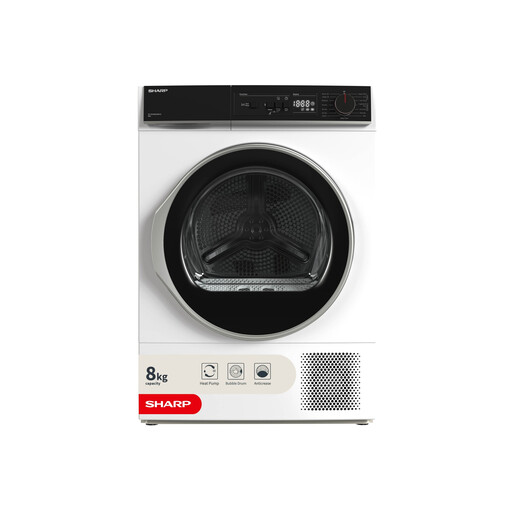
Why This Fits Their Persona: Its 8kg capacity suits couples and medium households that want heat pump drying without paying for a larger drum or smart connectivity.
It provides a clearly specified A++ rating, sensor drying and 15 programmes rather than focusing only on headline marketing features.
Five dryness levels, reversible door, LED drum light and 64 dB noise rating.
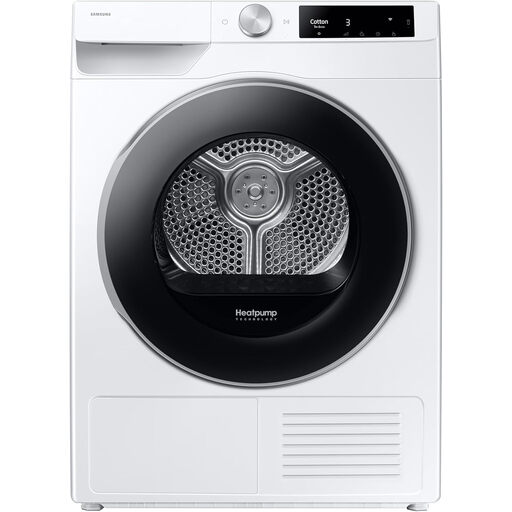
Why This Fits Their Persona: This white heat pump tumble dryer combines a 9kg drum with app controls for households that value connected convenience and detailed cycle management.
OptimalDry sensors adjust cycle timing, while SmartThings Wi-Fi provides notifications, remote monitoring and energy information.
A+++ class, Quick Dry 35', reversible door and a stated 63 dB(A) noise level.
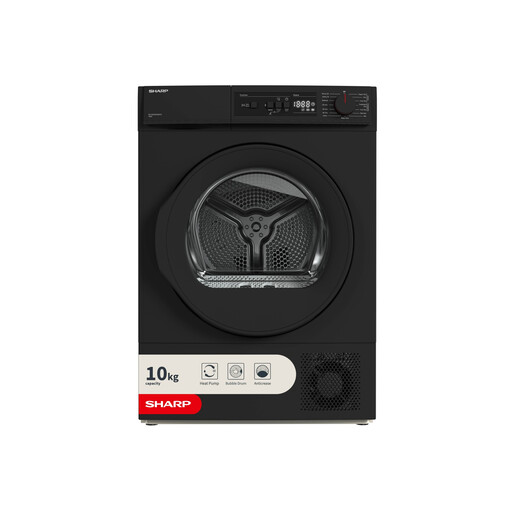
Why This Fits Their Persona: A 10kg drum is suited to larger families managing bedding, towels and substantial laundry loads throughout the week.
Its capacity is matched with sensor drying and five dryness levels, helping users avoid relying on a fixed timed cycle for every load.
15 programmes, Express 34 and Shirts 20 cycles, reversible door and 64 dB noise rating.
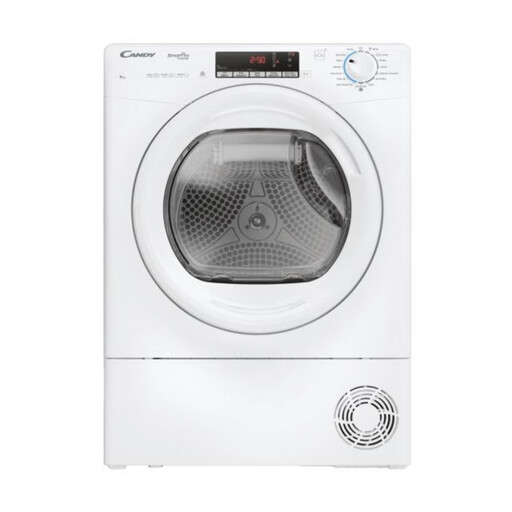
Why This Fits Their Persona: The 9kg drum, connected controls and additional app programmes suit busy households that want to manage laundry from a phone.
Sensor Dry helps prevent unnecessarily long cycles, while the EasyCase in-door water container makes the fill level easier to monitor.
A+++ class, Wi-Fi and Bluetooth, 14-plus programmes and anti-crease functionality.
We have compiled a complete, real-time list of products that fully satisfy these strict selection criteria and UK safety regulations.
Before ordering, measure the appliance space, door swing and route into the property. Confirm that the electrical connection is suitable and follow the installation manual. Do not use an extension lead unless the manufacturer specifically permits it.
For regular care:
These steps support airflow and drying performance over time. Warranty terms also vary, so check whether registration is required and whether parts and labour are covered separately.
They generally use less electricity than many conventional condenser dryers because they recycle warm air and operate at lower temperatures. Actual costs depend on the appliance’s rating, cycle settings, load size, usage frequency and your UK electricity tariff. Use the stated energy-consumption figure as a comparison point rather than relying only on the rating label.
No. They collect moisture in a tank or send it to a drain, so they are suitable for homes without an external vent. They still need a stable, well-ventilated installation area with the clearances specified by the manufacturer.
There is no fixed lifespan for every model. Service life depends on build quality, usage, installation and maintenance. Cleaning the filter after each cycle, keeping the heat exchanger clear and avoiding overloading can help maintain operation. Review the manufacturer’s warranty and parts coverage before purchase, particularly for frequent family use.