
24/7 全天候客户支持

免费退货

当日/次日达

品质保障

开启新人专享福利: 全场免邮 | 低至 2 折 | 免费试用 30 天 JoyPlus 会员
下载 Joybuy
For UK households, heat pump tumble dryers can offer lower-temperature drying and more efficient operation than traditional vented models. However, comparing appliances by energy label alone can lead to an unsuitable purchase. Drum size, installation space, cycle controls and maintenance requirements all affect everyday value.
As the Joybuy Product Recommendation Officer, I filter out marketing clutter and focus on the specifications that matter when choosing a dryer for family laundry.
A 9kg or 10kg capacity sounds generous, but the appliance still needs enough room around it for installation and ventilation. Measure the full route into your home, including doorways, staircases and the final position. Check the appliance depth as well as height and width, particularly if it will sit beneath a worktop or beside cupboards.
A larger drum can reduce the number of cycles for bedding and towels, but it may be unnecessary for a couple or smaller household. An 8kg tumble dryer is often a practical match for regular medium-sized loads, while a 9kg tumble dryer or 10kg tumble dryer is more appropriate when laundry baskets frequently contain bulky items.
An A++ tumble dryer or A+++ tumble dryer can be more appealing on the label, but annual energy consumption, cycle frequency and electricity tariffs also influence actual costs. For example, the Sharp KD-NHA0S6GW1D-EN lists annual consumption of 258 kWh. To estimate annual use, multiply the stated kWh figure by your electricity unit rate.
A lower rating does not automatically make a machine unsuitable, but a condenser dryer may cost more to run than a comparable heat pump model. Look at the total purchase price, expected usage and warranty rather than focusing on one letter.
A smart tumble dryer or Wi-Fi tumble dryer can offer remote monitoring, notifications and downloadable programmes. These features are useful if you regularly schedule laundry around work, school or off-peak tariffs. They add less value if you normally start and unload each cycle manually.
Also check compatibility with your home network, whether an app account is required and which functions remain available from the control panel.
Heat pump models recycle warm air and dry clothes at lower temperatures. This can be gentler on fabrics and generally supports more efficient operation, although cycles may take longer than some conventional alternatives.
A condenser tumble dryer collects moisture in a tank, so it does not require an external vent hose. This gives you more placement flexibility, but you must empty the tank unless permanent drainage is available. Vented models need a clear route for moist air to leave the property, making them less flexible in many flats and modern kitchens.
Use the following as a practical starting point:
Do not overfill the drum. Clothes need space to move so that warm air can circulate and sensors can detect moisture accurately.
A sensor dry tumble dryer measures moisture and can stop when the selected dryness level is reached. Look for several settings, such as iron dry, hanger dry, cupboard dry and extra dry. This is more flexible than relying only on a fixed timer.
Useful supporting features include anti-crease tumbling, reversible doors, drum lighting, child locks and delay start. Rapid programmes can be convenient, but check their maximum load. A cycle advertised for a small load may not replace a full-capacity programme.
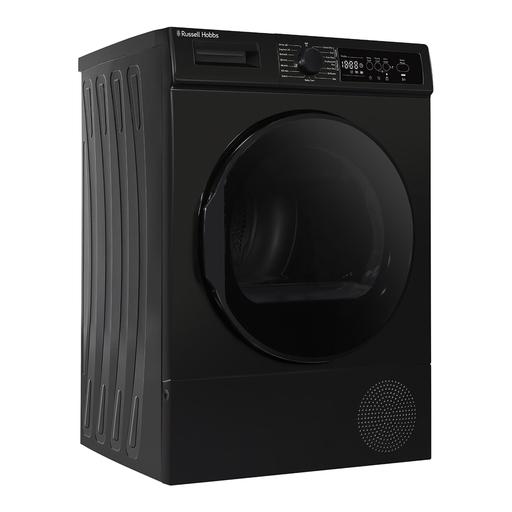
Why This Fits Their Persona: Its 8kg drum, 15 programmes and straightforward LED controls suit smaller families wanting heat pump technology without connected-app features.
The listed capacity and programme details make it easier to match the dryer to everyday loads rather than paying for an unnecessarily large drum.
8kg capacity; anti-crease, 24-hour delay start, pause and express programmes.
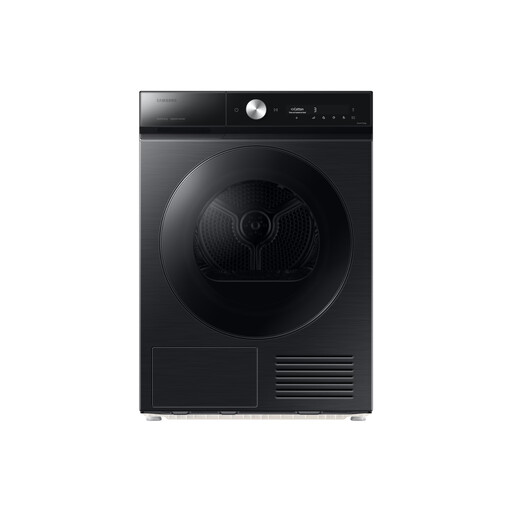
Why This Fits Their Persona: A 9kg drum, A+++ rating, 60dB noise level and Wi-Fi control suit households seeking premium convenience for frequent laundry cycles.
Its stated 60dB noise level and four dryness levels provide more useful comparison points than connectivity alone.
SmartThings Wi-Fi; 23 programmes; reversible door; 5kg Super Speed load stated at 81 minutes.
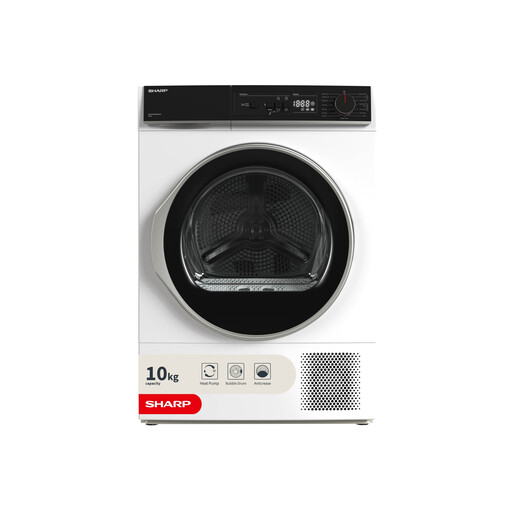
Why This Fits Their Persona: A 10kg drum is suited to families of around four to five people handling bedding, towels and larger weekly loads.
The stated 258kWh annual consumption, sensor drying and 10kg capacity help shoppers assess usage rather than relying on drum size alone.
A++ rating; 15 programmes; Express 34 and Shirts 20 cycles; two-way tumbling.
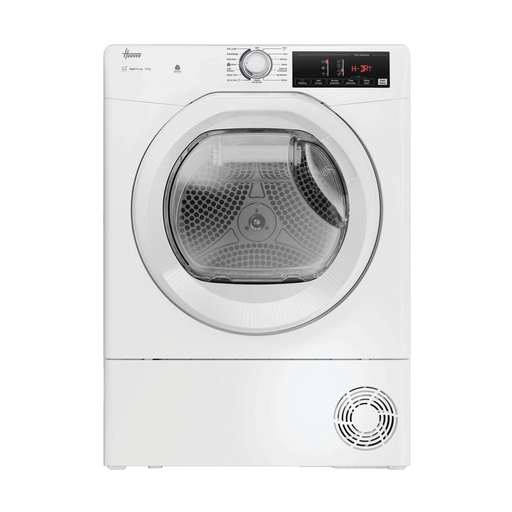
Why This Fits Their Persona: The 9kg capacity and Wi-Fi/Bluetooth controls suit busy households that want cycle notifications and additional programme access.
Sensor Dry and AquaVision tank visibility provide practical functions alongside its connected features.
A++ rating; 15 programmes; anti-crease; up to 24-hour delay start.
We have compiled a complete, real-time list of products that fully satisfy these strict selection criteria and UK safety regulations.
They generally use less electricity than conventional vented or condenser designs because they recycle warm air and dry at lower temperatures. Actual cost depends on the model’s stated kWh consumption, cycle length, load size, usage frequency and your electricity tariff.
Usually not. Most collect condensation in a removable tank. Some models may support a drainage connection, but installation requirements vary. Check the product manual and the position of the water container before purchase.
Service life depends on build quality, frequency of use, cleaning and correct loading. Regularly cleaning filters and heat exchangers, avoiding overloading and following the manufacturer’s installation guidance can help maintain performance over time. Always check the included warranty and any registration conditions before ordering.