
24/7 全天候客户支持

免费退货

当日/次日达

品质保障

开启新人专享福利: 全场免邮 | 低至 2 折 | 免费试用 30 天 JoyPlus 会员
下载 Joybuy
Heat pump tumble dryers can reduce wasted heat and offer lower-temperature fabric care, but choosing the wrong model can lead to long cycles, awkward maintenance and disappointing capacity. For UK households comparing energy-efficient tumble dryers, the headline energy rating is only part of the decision.
The most useful comparison starts with your typical laundry load, available floor space, preferred programmes and the practical cost of running and maintaining the appliance.
A larger drum is not automatically more suitable. An 8kg tumble dryer may suit a couple or medium household, while 9kg tumble dryers offer additional room for family loads and bedding. A 10kg tumble dryer can reduce the number of cycles for larger households, but it also needs enough space and may be less efficient if regularly used for small loads.
Check the size of your washing machine as well. A dryer with a similar or slightly larger capacity is usually easier to match to normal wash loads.
A++ and A+++ tumble dryers are commonly associated with lower energy use, but annual consumption, programme selection, load size and laundry moisture all affect electricity use. A dryer with a higher rating may cost more initially, so compare the stated annual kWh figure where available rather than relying only on the letter rating.
Also check whether the listing information is consistent. Some product descriptions may contain older or conflicting rating references. The official energy label supplied with the appliance should take priority.
Smart tumble dryers can offer app notifications, remote monitoring and downloadable programmes. These features may be useful if you often forget loads or want to manage laundry around a busy schedule. However, Wi-Fi does not replace useful basics such as sensor drying, a clear display, accessible filters and a practical water tank.
Likewise, an anti-crease function can help when clothes cannot be unloaded immediately, but it does not remove the need to follow care-label instructions or unload laundry promptly.
Measure the appliance space carefully, including door clearance, rear ventilation and access for delivery. Most freestanding tumble dryers are around 85cm high and 60cm wide, but depth varies. For example, the Sharp 8kg model is listed at 563mm deep, while the LG 8kg model is 660mm deep.
Allow the clearance specified in the instruction manual. Some heat pump dryers require at least 5cm behind the appliance, while others may specify different ventilation space. Place the machine on a stable, level floor and connect it directly to a suitable earthed wall socket rather than an extension lead.
Heat pump dryers recycle warm air and dry at lower temperatures than many conventional condenser or vented models. This can be gentler on fabrics and may reduce electricity consumption, although drying times can be longer.
Compare the following details:
Useful programmes vary by household. Look for adjustable dryness levels, delicate or wool settings, quick cycles and bedding capacity. Anti-crease tumble dryers periodically rotate laundry after a cycle, helping to reduce deep creases if unloading is delayed.
Noise also matters in open-plan homes. The models below are listed between 63dB and 66dB, so compare the stated figure if the appliance will operate near a living area or bedroom.
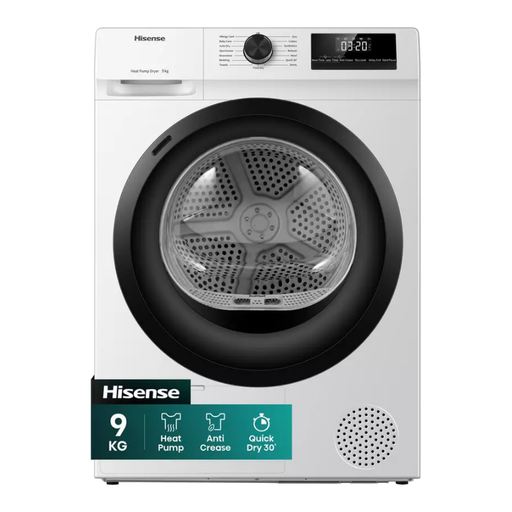
Why This Fits Their Persona: An 8kg capacity suits couples and medium-sized UK households that want everyday drying without moving to a larger drum.
It combines heat pump drying with three dryness levels and a stated A++ rating, rather than relying on a basic condenser design.
16 programmes, anti-crease function, 24-hour delay start and a listed 64dB noise level.
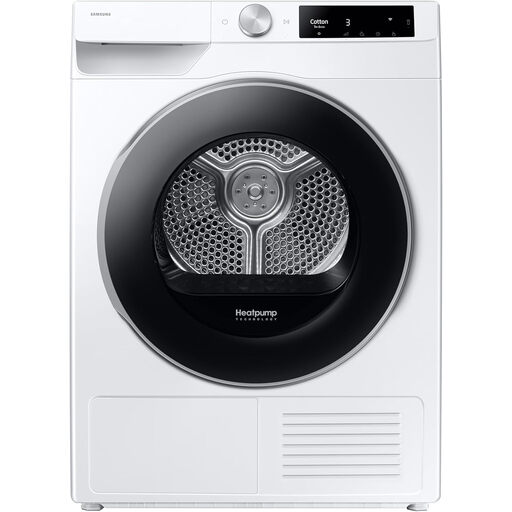
Why This Fits Their Persona: Suitable for households wanting a 9kg drum, connected controls and a higher stated energy rating for regular family laundry.
OptimalDry sensors are listed to adjust cycle operation, while SmartThings provides notifications and energy monitoring rather than only decorative connectivity.
A+++ rating, 63dB noise level, reversible door and a Quick Dry 35-minute programme for a 1kg load.
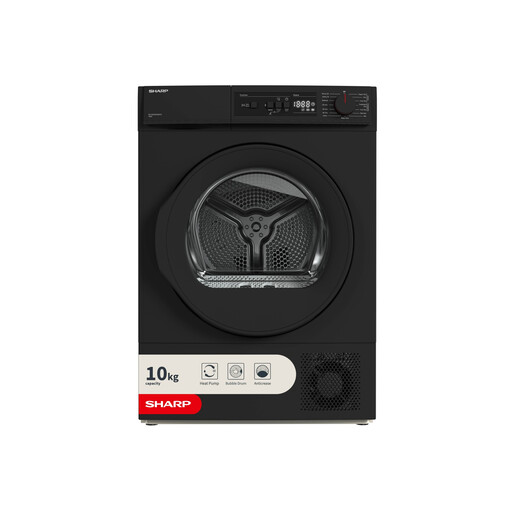
Why This Fits Their Persona: A 10kg drum is suited to larger households handling frequent loads, bedding and bulky textiles.
Its five sensor dryness levels and two-way tumbling provide more control than selecting a single timed cycle for every load.
A++ rating, 258kWh stated annual consumption, 15 programmes and a 64dB listed noise level.
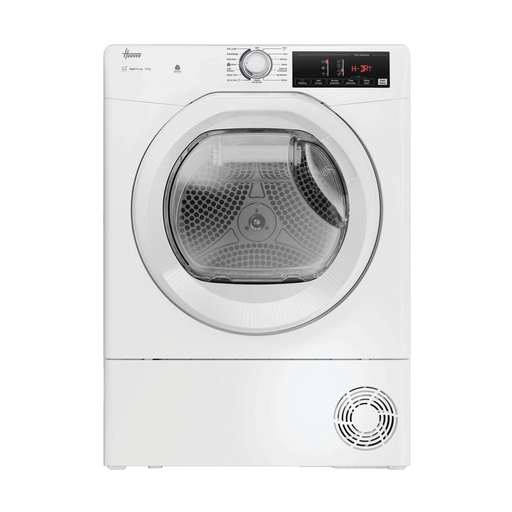
Why This Fits Their Persona: Families can use the 9kg drum for everyday laundry while accessing cycle notifications and additional controls through the app.
It pairs Wi-Fi and Bluetooth with sensor drying, anti-crease and a visible AquaVision water container.
9kg capacity, A++ rating, 15 programmes and a delay-start function of up to 24 hours.
We have compiled a complete, real-time list of products that fully satisfy these strict selection criteria and UK safety regulations.
Clean the lint filter after every cycle and empty the water tank as instructed. Keep the heat exchanger or condenser area clear, following the manufacturer’s cleaning schedule. Do not dry clothing contaminated with petrol, cooking oil, solvents or other flammable substances. Check pockets for matches and lighters, and allow the cool-down phase to finish before stopping a cycle.
They can use less electricity than many conventional condenser or vented models because they recycle warm air and dry at lower temperatures. Actual costs depend on the energy label, annual kWh figure, load size, programme and household electricity tariff.
Often, yes. Lower-temperature drying may result in longer programmes than high-heat alternatives. Sensor drying can help avoid unnecessary run time by stopping when laundry reaches the selected dryness level.
Service life depends on build quality, usage, ventilation and maintenance. Cleaning filters regularly, avoiding overloading and following the installation manual can help maintain airflow and performance. Always check the warranty terms and registration requirements before purchase.