Frequent-turnover holiday-let hosts
If towels and cotton bedding need drying between winter stays, recurring electricity use, workable load sizes and a routine cleaners can follow all affect the choice.


For repeated winter loads of cotton towels and bedding, compare heat-pump dryers first: Energy Saving Trust describes their heat-recycling design as more energy-efficient. Choose a drum that accommodates the property’s largest routine load, then check the exact model’s energy information, programme duration and maintenance instructions. A conventional condenser dryer may suit a tighter upfront budget, but compare running costs model by model.
If towels and cotton bedding need drying between winter stays, recurring electricity use, workable load sizes and a routine cleaners can follow all affect the choice.
Duvet covers, sheets and towels make the largest normal changeover load more useful for choosing capacity than bedroom count alone. Beko’s buying guidance also cautions against treating drum capacity as a guarantee that every bulky item will fit.
A shared cleaning routine matters when different people operate the dryer. Electrical Safety First advises cleaning the lint filter after every use and warns against overloading extension leads.
For repeated winter cotton loads, decide which drying type fits the property’s operating priorities, then check capacity and upkeep against the actual changeover routine.
Consider when: Winter drying is frequent and electricity use is a continuing concern; Energy Saving Trust describes heat-pump dryers as recycling heat.
Trade-off: The upfront cost can be higher, and programme duration varies by model, so compare the exact dryer rather than relying on its technology alone.
Consider when: Upfront budget or a particular installation constraint takes priority over recurring winter electricity use.
Trade-off: A lower purchase cost does not establish a lower cost over repeated use; compare the applicable energy information for the specific models.
| Concern | What to check | Who this matters to |
|---|---|---|
| Winter running cost | Compare each model’s applicable energy label and product information sheet alongside its declared programme data. | When the dryer runs through successive changeovers, I want electricity use to remain manageable; around 31% of consumers put running cost first. |
| Towel and bedding capacity | Match the rated capacity and manual’s load guidance to the largest normal towel-and-bedding load; measure the installation space. | If bulky cotton items have to be cleared between stays, splitting them into extra loads can disrupt the routine; roughly 25% of consumers prioritise load capacity. |
| Safe, manageable upkeep | Check the socket arrangement and the exact manual’s filter, condenser and water-container or drain instructions. | With cleaners sharing the appliance, I need maintenance steps that are easy to carry out consistently; about 25% of consumers make safe upkeep their primary concern. |
| Cotton drying control | Look for cotton programmes and confirm whether the exact variant offers sensor or automatic drying. | When sheets and towels must be ready for the next stay, I want a useful choice of drying settings without relying on a fixed cycle for every load; around 19% of consumers put drying control first. |
Energy Saving Trust’s comparison of particular dryers illustrates why the initial cost and electricity used over time can point in different directions; it is not a savings figure for every current model.
Compare the specific dryers’ energy information against the number of loads you expect to dry through winter.
Bedroom count does not tell you whether the property’s usual towels, sheets and duvet covers form a workable dryer load.
List the largest normal changeover load, follow the model manual’s loading guidance and check the space and door clearance before ordering.
Electrical Safety First advises cleaning the lint filter after every use. Other tasks vary: the Beko BM3T3822 manual, for example, calls for condenser checks at least every six months and cleaning if it is dirty.
Keep the exact model’s instructions at the property and add its filter, condenser and water-handling tasks to the cleaner handover.
Electrical Safety First warns that tumble dryers can draw substantial power and that an overloaded extension lead presents a fire risk.
Follow the appliance’s installation instructions and have a qualified electrician assess the socket arrangement if suitability is uncertain.
Beko offers heat-pump dryers that may be relevant to a holiday let comparing routine cotton loads and maintenance instructions.
Bosch is worth considering where rated capacity and automatic drying controls are important to the laundry routine.
Miele’s heat-pump range is another reference point for hosts comparing capacity and model-specific convenience features.
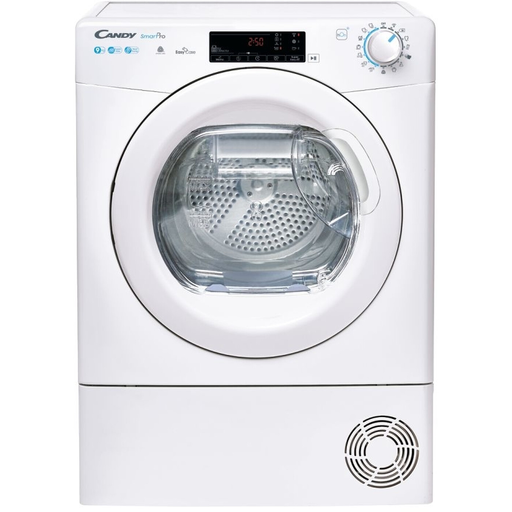
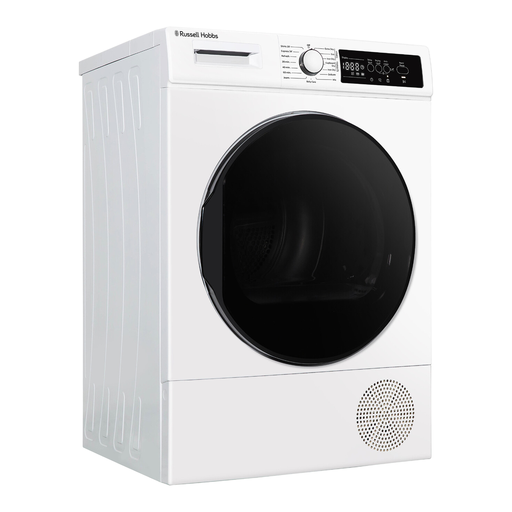
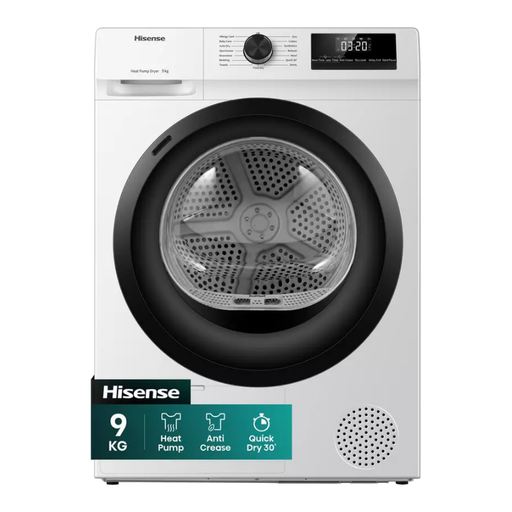
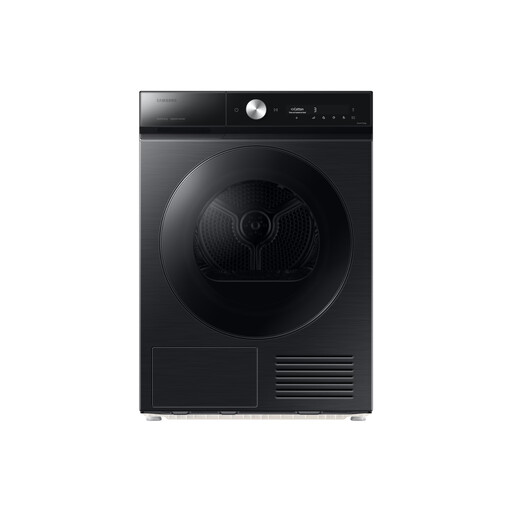
These heat-pump models are relevant to repeated winter laundry and are listed with a 9 kg capacity. Check the applicable energy documents, the manual’s bedding-load guidance and the installation requirements for the particular model before choosing.
 No image available
Consider this 9 kg model if routine towel-and-bedding loads are the main sizing concern. Check the exact energy documents and manual to assess running costs, loading and cleaner tasks.
 No image available
This 9 kg model is a capacity option for regular towel and bedding loads. Confirm its applicable energy class against the current label and product information sheet, and check dimensions and loading guidance before ordering.
 No image available
For a property handling larger cotton loads, this is another 9 kg option. Confirm that the brand and model on the appliance match its manual and energy documents; if automatic drying matters, check that feature for this exact model.
 No image available
Consider this 9 kg model when a smart dryer is of interest alongside capacity. Check the current energy documents and exact manual for bedding loads, filter cleaning and water handling before setting a staff routine.
 No image available
This 9 kg model is an option for recurring cotton loads if connected controls are useful to the property’s routine. Check the exact energy documents, bedding-load guidance and filter and water-container instructions before buying.
Yes, if repeated winter electricity use is an important part of the decision: Energy Saving Trust describes heat-pump dryers as recycling heat and being more energy-efficient. Compare the exact models’ capacity, energy information, programme duration and installation requirements before choosing one over a condenser dryer.
Use the largest normal changeover load rather than bedroom count alone. Beko gives an illustration of up to 25 hand towels in a 9 kg dryer, but that does not establish how a particular duvet cover or mixed bedding load will fit; follow the exact model’s manual.
Electrical Safety First advises cleaning the lint filter after every use. Follow the exact model manual for condenser checks and water-container or drain tasks; the Beko BM3T3822 manual, for example, calls for checking its condenser at least every six months and cleaning it if dirty.
Do not assume an extension lead is a suitable routine connection. Electrical Safety First warns that tumble dryers can use substantial power and that an overloaded extension lead can present a fire risk; follow the installation instructions and seek a qualified electrician’s advice if the socket arrangement is uncertain.
Check the exact dryer’s applicable energy label and product information sheet before comparing operating costs. GOV.UK says products within scope must display an accurate energy label at the point of sale, including online; confirm which documentation applies where the property is located, as Great Britain and Northern Ireland have different arrangements.