Shared-house apron washers
People washing small batches of kitchen, work or craft aprons who need to clear the airer from a communal room between uses.


Choose the airer around the space your housemates can spare while it is open, then consider how easily it can be put away. A winged rack suits a modest apron load if there is room for its spread; a compact tiered rack uses a narrower floor area, while a larger three-tier model makes more sense when several people regularly share a drying load. Whichever format you choose, indoor drying still needs a ventilation plan.
People washing small batches of kitchen, work or craft aprons who need to clear the airer from a communal room between uses.
Consumers with limited floor space who need to weigh a rack’s open footprint against its folded size and the drying space it offers.
Households that need to dry indoors and can choose a location with workable ventilation, rather than relying on heated bars or a cover to manage condensation.
Start with the space available while the airer is open and where it will go afterwards. Then match its layout to the apron load and agree how the household will manage electricity use and ventilation.
| Concern | What to check | Who this matters to |
|---|---|---|
| Shared-room space | Measure open height, width and depth at the intended spot, plus the folded rack’s storage gap. | If I have to clear the communal room after each wash, the rack cannot block a route or be awkward to store. Around 33% of consumers put shared-space fit first. |
| Apron-load layout | Compare drying length, stated load limit and the space between bars or tiers for the items you wash. | When several aprons go into one wash, I want room to separate them rather than bunch them together; around 20% of consumers make load layout their main concern. |
| Electricity and controls | Check the exact model’s rated wattage, cable reach and whether it has a timer. | If housemates take turns using the airer, I need an arrangement for how long it stays on. Keeping electrical use predictable comes first for around 20% of consumers. |
| Moisture and electrical setup | Choose a ventilated location, follow the manual and check the exact model against official safety alerts. If an extension lead is necessary, check its marked rating and do not daisy-chain leads. | I need to dry indoors without worsening condensation or overloading a shared socket; around 27% of consumers put moisture management and electrical setup first. |
More drying length does not tell you whether an airer fits the room. The cited 21m three-tier model is 144cm high and 75cm by 75cm when open; the cited 11m winged model is 148cm wide when open, despite folding to 7cm deep.
Mark out the open footprint where the airer would stand, then measure its intended storage space before choosing a format.
A cover may affect drying conditions around the laundry, but it does not remove moisture from the room. Energy Saving Trust advises increasing ventilation to help manage damp and condensation.
Use only a cover intended for the model, keep vents unobstructed and choose a location with a workable ventilation plan.
The Office for Product Safety and Standards reported a serious fire risk for the specific K130 Mini 3 Tier Electric Heated Airer in November 2024. That finding does not apply to every mini or three-tier airer.
Keep the model details and proof of purchase, inspect the plug and cable, and check official safety alerts for the exact airer before use.
These ranges illustrate different airer formats; compare the specifications of the particular model rather than treating a brand name as a guide to fit.
Lakeland’s range includes a Mini and a larger Deluxe three-tier airer, alongside other drying formats and accessories.
Status has winged and three-tier heated-airer formats, showing the difference between a wide, low rack and a taller drying layout.
Dunelm’s cited own-brand models include a winged airer and a covered two-tier format.
The JML DriBUDDI Compact is an enclosed drying pod for hanging garments, rather than a rack of open rails.
These Joybuy choices include winged and three-tier heated airers for apron loads. Before choosing one for a shared room, check its open and stored size and plan where indoor moisture will go.
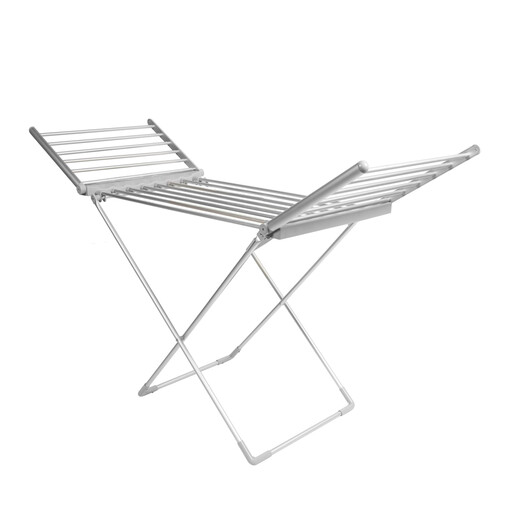 Image unavailable
Consider this for apron batches when a winged rack can be opened without obstructing the shared room. It has a three-tier layout; check its open size, stored size and rated wattage against your intended setup.
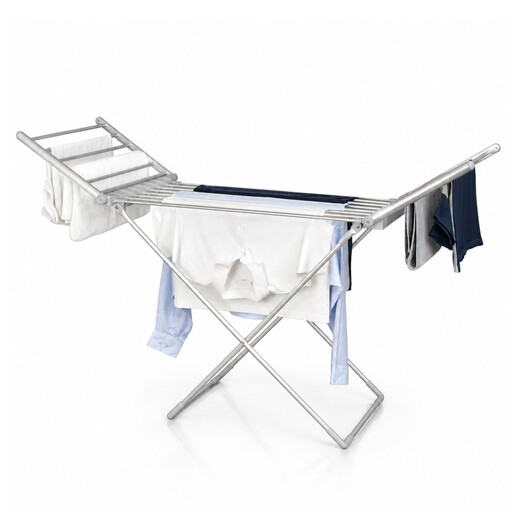 Image unavailable
This foldable winged option suits a room where the rack can be put away between apron loads, provided its open size fits. The named variant has a 230W rating and aluminium construction; check its open and folded dimensions before choosing a storage spot.
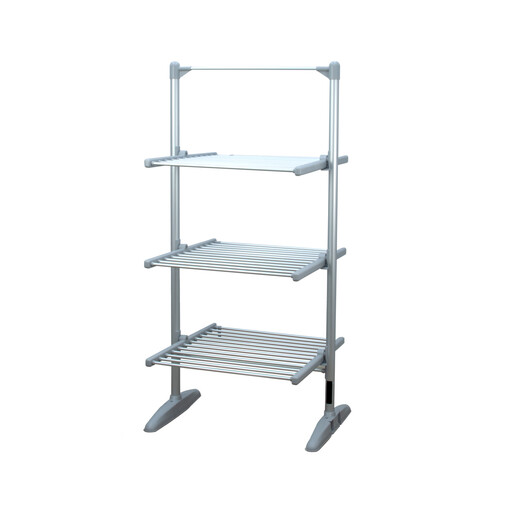 Image unavailable
Consider this three-tier layout when aprons and other laundry need separate hanging space and the shared room can accommodate it. The named variant is foldable, has aluminium construction and a 248W rating; check its open dimensions and folded depth before buying.
Choose a location with workable ventilation rather than making an unventilated room the routine drying spot. Energy Saving Trust advises using extractors and keeping vents unobstructed to help manage indoor damp and condensation.
No. A cover can be part of a model’s drying setup, but moisture released by the aprons still needs to be managed in the room. Check that the cover fits the exact airer and keep the room’s ventilation working.
Only use one if the airer’s instructions permit the arrangement and the total connected load stays within the lead’s marked rating. Electrical Safety First advises against overloading extension devices or daisy-chaining extension leads; account for other appliances sharing the lead.
No. The Office for Product Safety and Standards identified the specific K130 Mini 3 Tier Electric Heated Airer, SKU UK10529, as presenting a serious fire risk in a November 2024 report. Check alerts against the exact model you are considering rather than assuming that all small airers have the same finding.