Consumers focused on shirt care
If cotton shirts make up most of your drying load, look beyond maximum load weight. Usable hanger room or open rails matter when you want to keep shirts separated rather than bunching them with other laundry.


Choose a heated airer according to how many cotton shirts you dry together and the space available while it is open. Winged rails offer a more open layout if you have floor room; a tiered frame accommodates larger mixed loads, while an enclosed pod suits a smaller shirt-focused load if its hanger capacity fits. Leave space between shirts and ventilate the room: heating the laundry does not remove the moisture it releases.
If cotton shirts make up most of your drying load, look beyond maximum load weight. Usable hanger room or open rails matter when you want to keep shirts separated rather than bunching them with other laundry.
If the airer must be put away between washes, check both its folded size and the floor space it needs when open. A frame that stores neatly still needs room for shirts while in use.
If shirts share the airer with other washing, compare drying length, load limits and the space left between garments. Plan for room ventilation as well as somewhere to place the frame.
Choose it when: Shirts need to share drying space with a larger mixed load.
Trade-off: Stacked rails can leave less open hanging room for individual shirts, even when the stated load capacity is high.
Choose it when: You want a more open arrangement for shirts and have room to extend the wings.
Trade-off: The open frame needs horizontal floor space.
Choose it when: A smaller shirt-focused load fits its stated hanger or load capacity and a timed cycle is useful to you.
Trade-off: Its enclosed layout is less flexible for bulky or unusually long items than an open rack.
| Concern | What to check | Who this matters to |
|---|---|---|
| Shirt spacing | Check usable rail or hanger room against shirt length, and follow each garment’s care label. | If shirts are folded over crowded rails, I have less room to keep them hanging neatly. Around 40% of consumers put shirt spacing first. |
| Indoor moisture and electrical use | Plan for room ventilation and check the appliance load against the socket or any extension lead used. | When I dry laundry indoors, I need a place where moisture can be managed and the airer can be plugged in safely. Roughly 30% of consumers prioritise these indoor-use concerns. |
| Capacity and space | Compare the open footprint and folded size alongside drying length and the stated load limit. | I need room for shirts alongside other washing, but the frame must also fit my room and storage space. Around 30% of consumers make that balance their primary concern. |
Indoor laundry releases moisture. The Ministry of Housing, Communities and Local Government’s ventilation guidance for England explains that moisture trapped by ineffective ventilation can become condensation.
Choose a suitably ventilated drying position, keep fitted vents unblocked and deal with visible condensation. An airer cover does not ventilate the room.
A capacity figure does not show whether your shirts can hang without overlapping or whether the open airer fits your room.
Compare shirt length with the available hanging space, then measure the frame’s open footprint where you intend to use it.
Covers in the cited ranges are made for particular models or sizes. An unsuitable cover may not fit the assembled, loaded frame or its intended airflow arrangement.
Check whether a cover is supplied or expressly compatible with the exact model, and follow that airer’s instructions for its use.
Electrical Safety First warns that overloaded sockets and extension leads present a fire risk.
Use a wall socket where practical. If you need an extension lead, check its marked current rating against the combined connected load; never plug one extension lead into another.
Lakeland’s Dry:Soon range includes compact and tiered frames as well as enclosed drying formats.
Minky’s SureDRI range includes winged and multi-tier heated airers for different load layouts.
JML’s DriBUDDi line uses an enclosed warm-air format rather than exposed heated rails.
A three-tier winged heated airer, offering open rails for cotton shirts and a frame that folds away between loads.
These winged and tiered airers are options for drying cotton shirts indoors. Compare the room each frame needs when open and how you would space shirts across its rails.
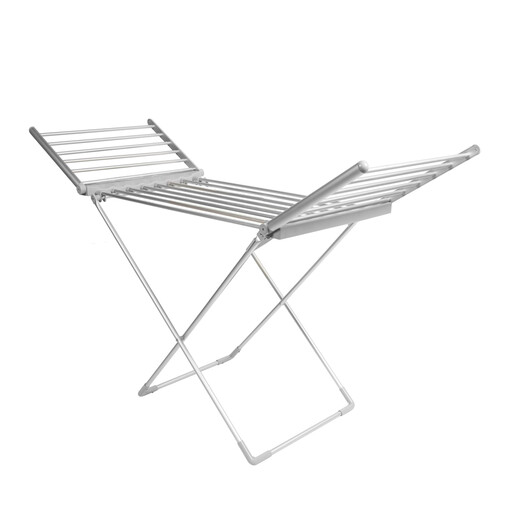 No image available
Consider the winged layout if you want more open rails for cotton shirts. Compare its open size with your drying space and check the instructions before using a cover: the listing mentions an included cover but also warns against covering the airer completely. Check the rated wattage if you plan to estimate electricity use.
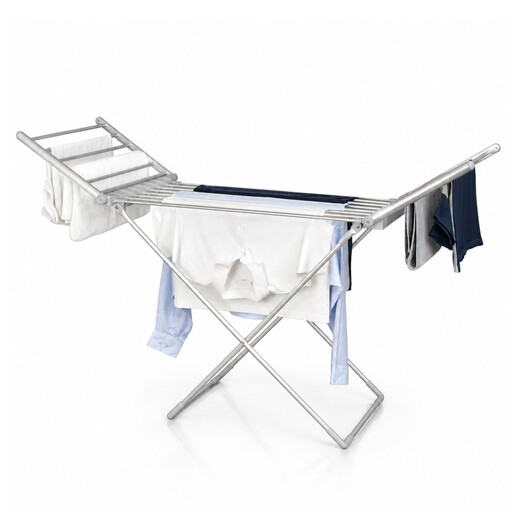 No image available
The winged format suits consumers looking for open shirt-hanging space, while the foldable frame can be put away between uses. Its title specifies 230W. Confirm the open dimensions before buying, and check exact-model cover compatibility if you want a cover.
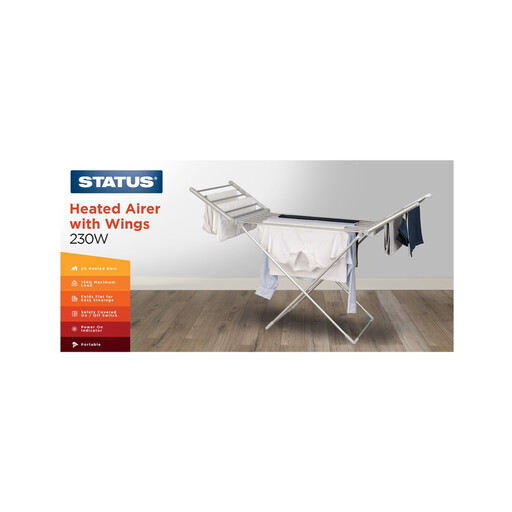 No image available
Consider this three-tier format when shirts share the airer with a larger mixed load, provided you can leave room between garments. Its title specifies 248W and a foldable aluminium frame. Check the open dimensions and exact-model cover compatibility before buying.
Choose a winged airer if you have horizontal floor room and want a more open arrangement for shirts; consider a tiered frame when shirts share space with a larger load. In either case, compare the open dimensions and usable hanging room, not just the quoted drying length.
Use a cover only when it is supplied for the airer or expressly compatible with that model, and follow its instructions. A cover does not remove moisture from the room, so you still need ventilation.
No. Indoor laundry still releases moisture that can become condensation without effective ventilation. Keep fitted vents unblocked and use the drying room’s ventilation as intended.
Only use one that can accommodate the combined load of everything connected to it. Electrical Safety First advises checking the lead’s rating, avoiding overload and never connecting one extension lead to another.
Use the exact model’s rated wattage, your expected running time and your electricity tariff. For context, Minky specifies 300W for its four-tier SureDRI and JML specifies 850W for the DriBUDDi Compact; those ratings alone do not establish what a drying cycle will cost.