Hosts handling frequent changeovers
If several pairs of shorts and other small garments must dry between stays, compare usable drying length and stated load capacity. A frame that folds away also matters once the laundry is finished.


For several pairs of cotton shorts between stays, choose a folding three-tier heated airer with enough stated drying space and load capacity for the whole changeover load. A compact covered pod is a more relevant choice for smaller loads when positioning or storage takes priority; either format still needs room ventilation, and an appliance supplied at a holiday let needs appropriate fire-risk and electrical-maintenance consideration.
If several pairs of shorts and other small garments must dry between stays, compare usable drying length and stated load capacity. A frame that folds away also matters once the laundry is finished.
Check both the space an airer occupies while open and where it will go between bookings. Folded depth and portability may matter more than capacity for occasional small loads.
Plan where the airer and its cable will sit, how guests will use it and how its condition will be checked. In England, fire-safety guidance for paying guest accommodation makes the property risk assessment relevant to that decision.
Choose it when: Several pairs of shorts need separate rail space during regular changeovers. The researched three-tier examples each offer 21m of drying space and a stated capacity of about 15kg.
Allow for: The open frame needs room around it, and a compatible cover may be a separate accessory. Check its open dimensions as well as its folded size.
Choose it when: Loads are smaller and a portable, enclosed unit is easier to position. The JML DriBUDDI Compact is listed with an included cover and a stated 10kg capacity.
Allow for: Its stated maximum power is 850W. A compact shape does not establish lower electricity use or a suitable drying time for a particular load of cotton shorts.
For consumers choosing an airer to dry cotton shorts in a holiday let, decide how much must dry at once, then check where the appliance can stand and be stored. Indoor moisture and the electrical setup need attention whichever format you choose.
| Concern | What to check | Who this matters to |
|---|---|---|
| Changeover capacity | Compare stated drying length and maximum load; leave enough rail space to separate the shorts. | If several pairs must be ready between stays, I need space for the whole load rather than a frame that forces garments into layers. Around 36% of consumers put changeover capacity first. |
| Storage and room fit | Check open dimensions, folded dimensions and the clear space available around the airer. | When the laundry area has to be cleared after each booking, I need an airer I can position and put away without obstructing the room. Storage and fit come first for around 28% of consumers. |
| Moisture and electrical setup | Check ventilation or extraction, the appliance's stated wattage, cable position and maintenance arrangements. | If an airer will be used inside my let, I need to manage moisture and keep the powered appliance suitable for that setting. Around 36% of consumers make those arrangements their primary concern. |
How quickly cotton shorts dry depends on the load, garment spacing and room conditions. A stated frame capacity or power rating cannot establish a fixed finish time in your property.
Choose enough rail space for the intended load and allow for ventilation and checking the garments before they are put away.
A compatible cover can retain warmth around the laundry, but water leaving the shorts still enters the indoor environment. Platform Housing Group advises leaving space around an airer, avoiding overloading and providing ventilation where possible.
Place the airer in a suitable room with ventilation or extraction, and include moisture management in the changeover routine.
In England, the Home Office's guidance for small paying guest accommodation addresses fire-risk assessment. The appliance's location, cable and use therefore need consideration when it is supplied or used at the property.
Record a suitable location, instructions, condition checks and maintenance arrangements within the let's existing risk-management process.
An airer adds to the electrical load of anything sharing an extension lead, reel or adaptor. Electrical Safety First warns that exceeding the arrangement's current rating can cause overheating.
Use a suitable wall socket where possible. If an extension is necessary, check its rating against the combined load, avoid connecting extensions together and fully unwind a cable reel.
Lakeland offers Dry:Soon airers in several layouts, including folding three-tier and smaller formats, with covers and accessories for compatible models.
A folding three-tier airer rated at 248W, listed as another way to arrange laundry where changeovers happen regularly.
JML's DriBUDDI Compact is a covered drying-pod format to consider for smaller loads.
Zennox has a covered three-tier airer for buyers who want the cover supplied with the frame.
These folding and winged heated airers are choices to assess for indoor holiday-let laundry. Compare their usable size and electrical requirements with your changeover load; their presence here does not establish how quickly cotton shorts will dry.
 No image available
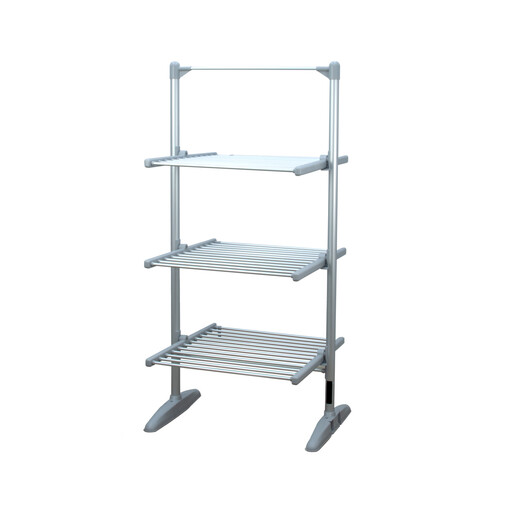
Consider this folding three-tier format if several garments need rail space between bookings. Confirm its open and folded dimensions and usable drying length against the room and storage space.
The product name states 248W. Check whether a compatible cover is part of the setup you want, and leave space between garments when drying indoors.
 No image available
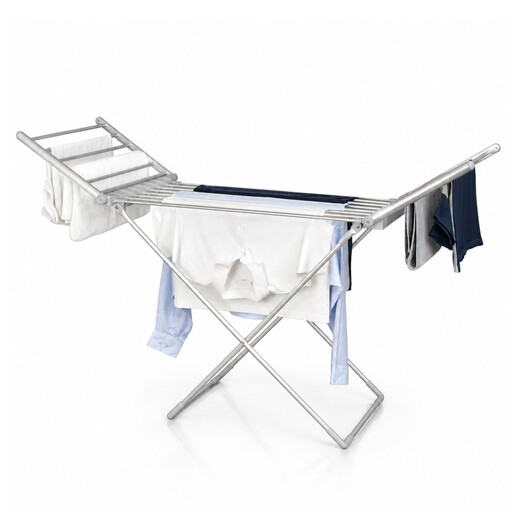
Consider the winged layout if it suits the way you spread smaller garments and store the airer between stays. Check its open dimensions and usable drying length before assigning it a changeover load.
The product name states 230W. Confirm cover compatibility if covered drying is part of your plan, while allowing for room ventilation either way.
 No image available
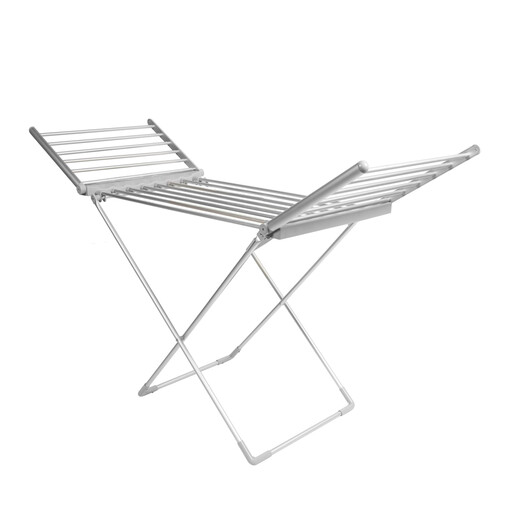
The three-tier winged layout is worth assessing if you need places to spread several garments. Check the open footprint, drying length and rated load against the shorts and other laundry you need to dry together.
Confirm the wattage when planning the electrical supply, and check the cover arrangement if that matters to your setup. Ventilation remains necessary for indoor drying.
Choose enough usable rail space to keep the intended load from being crowded together. As reference points, the researched three-tier airers offer 21m of drying space and a stated capacity of about 15kg; check the dimensions of the particular model you intend to use as well as its load rating.
No. Laundry still releases moisture indoors when it dries under a cover. Platform Housing Group advises leaving space around an airer, avoiding overloading and using ventilation where possible; choose a suitable room and manage its moisture whether or not you use a cover.
Yes, if it is supplied or used at the property, consider its placement and use within the property's fire-risk assessment. The Home Office's guidance on small paying guest accommodation supports applying the fire-safety duties in the Regulatory Reform (Fire Safety) Order 2005, as amended; Devon and Somerset Fire and Rescue Service says the responsible person must carry out a suitable and sufficient assessment and act on its results. Check the applicable national guidance for properties elsewhere in the UK.
No fixed annual test applies automatically to every appliance. The Health and Safety Executive says the Electricity at Work Regulations require equipment that could cause injury to be maintained safely, but do not prescribe one testing frequency or method for all equipment. Set inspection and maintenance arrangements according to the appliance and how it is used at the property.
Only use a suitable extension whose marked rating accommodates the combined load of everything connected to it. Electrical Safety First warns against overloading extensions and connecting one extension to another; fully unwind a cable reel before use. A suitable wall socket avoids making an extension part of the airer's regular setup.