Residents short on space
If you usually wash only a few removable cushion covers, the airer needs to fit while open and be easy to put away afterwards. Compare its deployed footprint and storage dimensions before focusing on maximum load.


For a few cushion covers and limited shared space, start with a foldable winged heated airer; consider a larger three-tier or enclosed dryer if it will also handle regular communal laundry. Check the open footprint and whether the covers fit, and plan for ventilation: heating wet laundry does not remove the moisture it releases indoors.
If you usually wash only a few removable cushion covers, the airer needs to fit while open and be easy to put away afterwards. Compare its deployed footprint and storage dimensions before focusing on maximum load.
If the same airer will sometimes hold towels, bedding or several people’s smaller loads, hanging space and the stated maximum damp load become more important. Check that a larger appliance can still stand in an appropriate shared space.
If condensation is already a concern, choose a drying location with effective ventilation. Government housing guidance explains that moisture trapped indoors can turn into condensation; a heated airer does not replace ventilation.
For cushion covers in a student house, decide whether putting the airer away, managing indoor moisture or accommodating shared laundry is the main constraint.
Choose it when: You dry a few covers at a time and need to reclaim the room afterwards.
Trade-off: Exposed rails offer no enclosed drying chamber; check that each cover can be arranged on them without adding an improvised cover.
Choose it when: The household also needs hanging space for regular, larger laundry loads.
Trade-off: A larger rack needs room while open, and its cover must be supplied or approved for that model.
Choose it when: A contained unit will regularly handle a fuller wash load, rather than just occasional cushion covers.
Trade-off: Check the available height, rated power and intended run time; enclosure does not remove the need to ventilate the room.
| Concern | What to check | Who this matters to |
|---|---|---|
| Space and storage | Measure the open footprint and the space available for storage; check how the covers will lie across the rails. | If I only dry a few covers, I need an airer I can put away without taking over a shared room. Around 40% of consumers put compact storage first. |
| Moisture and ventilation | Check that the intended drying room has usable ventilation, such as an appropriate window or extractor fan. | I need to dry indoors without leaving wet laundry in a closed room where condensation can build up. Around 30% of consumers put moisture management first. |
| Shared-load capacity | Compare the stated maximum damp load and usable hanging space; confirm whether a cover is supplied or approved for the exact model. | If housemates will also use the airer for towels or other laundry, I need space beyond a few cushion covers. Around 30% of consumers put shared-load capacity first. |
A three-tier airer may accommodate shared laundry yet be awkward to use if it obstructs a small room while open.
Measure the intended floor space, access around the airer, socket reach and storage location. Compare open dimensions, not just drying length.
Wet covers still release moisture indoors. Government housing guidance links ineffective ventilation with trapped moisture and condensation.
Dry in an appropriately ventilated room, keep intended vents clear and deal with visible condensation promptly.
The instructions for the researched STATUS winged airer warn against covering its heated bars during use. A blanket or sheet is not a substitute for a model-specific cover.
Use a cover only if it is supplied with or expressly approved for the exact airer, and follow that model’s loading and safety instructions.
The Office for Product Safety and Standards reported a serious fire risk in a specific Mini 3 Tier Electric Heated Airer because its internal wiring was insufficiently secured. That finding should not be applied to every three-tier model.
Check the exact model and seller details, inspect the plug and cable, and consult current official safety alerts when considering an unfamiliar electrical airer.
The Dry:Soon range includes a compact Drying Pod, three-tier airers and model-specific accessories, giving shoppers several formats to compare.
Model 63091 is a foldable three-tier heated airer listed with a cover and wheels, relevant if one appliance will serve broader household loads.
An enclosed, fan-assisted format to consider when regular full laundry loads matter more than drying a few cushion covers.
These foldable heated-rail airers offer two ways to plan for occasional cushion-cover drying: a winged format for smaller loads and a three-tier format if the household also needs more hanging space. Check the open dimensions and rail arrangement against your covers and room before choosing.
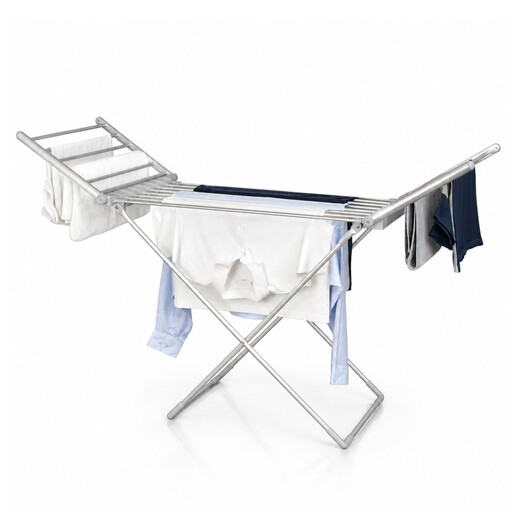 Image unavailable
The winged, foldable format is worth considering when a few cushion covers are the usual load and the airer must be put away after use. Its stated power is 230W; check its open dimensions and whether your covers can be arranged on the rails.
Do not cover the heated bars during use. Choose a ventilated place to dry the covers.
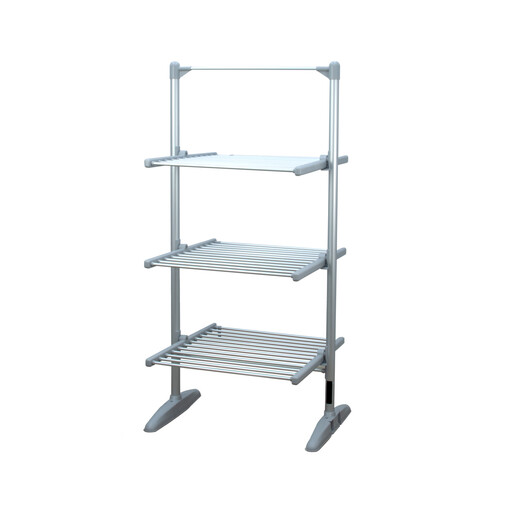 Image unavailable
The foldable three-tier format is worth considering if housemates will use the airer for laundry beyond cushion covers. Its stated power is 248W; measure the space it needs while open and check how the covers will fit across its rails.
Check whether a cover is approved for this exact model rather than adding a blanket or sheet. Indoor drying still calls for ventilation.
Dry cushion covers there only if the room can be effectively ventilated. Government housing guidance explains that moisture from indoor laundry can become trapped and lead to condensation; use the home’s intended ventilation and avoid blocking vents.
No: rated power alone does not establish drying time. Compare the airer’s format and usable hanging space, then consider the covers’ fabric, how they are arranged and the room’s ventilation when planning where to dry them.
Do not use a sheet as an improvised cover. The instructions for the researched STATUS winged airer say not to cover its heated bars during use; use only a cover supplied with or expressly approved for your exact model.
Check its model identifier, seller information and current official safety alerts before buying or using it. The Office for Product Safety and Standards identified a serious wiring-related fire risk in one specific Mini 3 Tier Electric Heated Airer, so similar appearance is not enough to establish that two products have the same safety history.