What matters when choosing?
Count what may be drying at the same time, measure the space available both open and folded, and decide how the room will be ventilated.
| Concern |
What to check |
Who this matters to |
| Separate hanging space |
Compare usable rail length and bar arrangement with the number of cloths and other items drying together. |
When housemates wash face cloths frequently, I need room to spread them out instead of stacking them on one rail. Around 33% of consumers put separate hanging space first. |
| Room and storage space |
Measure the open footprint, clear walking space and the storage gap for the folded airer. |
If our shared room must be cleared between drying sessions, I need an airer that can be put away without blocking daily use. Storage and footprint come first for around 25% of consumers. |
| Indoor moisture |
Check how the room is ventilated; do not treat an airer cover as a substitute for ventilation. |
I want a regular place to dry damp cloths, but I also need to keep moisture from building up indoors. Around 25% of consumers make moisture management their primary concern. |
| Electricity and controls |
Compare rated wattage and likely running time; check timer features and the appliance instructions. |
With repeated small loads, I want to know how long the airer will be on and who will switch it off. For around 17% of consumers, electricity use and control take priority. |
Heated airers on Joybuy
These winged and three-tier airers are options for a shared drying station that may also hold laundry beyond face cloths. Check their open size and usable hanging space against your room and usual load.
 No image available
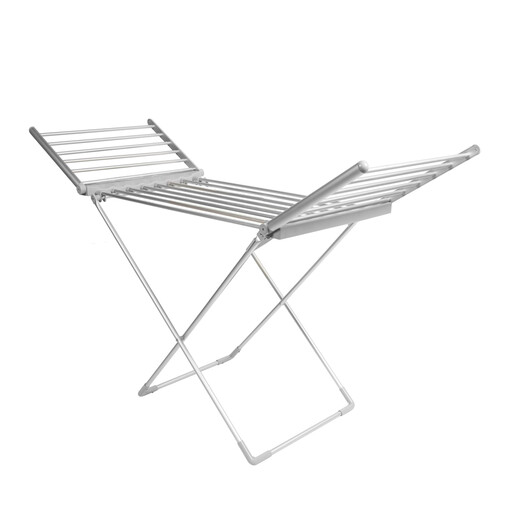
Pifco 3-Tier Winged Heated Airer
Consider this layout when several housemates need places to hang small items. Check its open dimensions and usable rail spacing against the room and the number of face cloths drying together.
Joybuy
 No image available
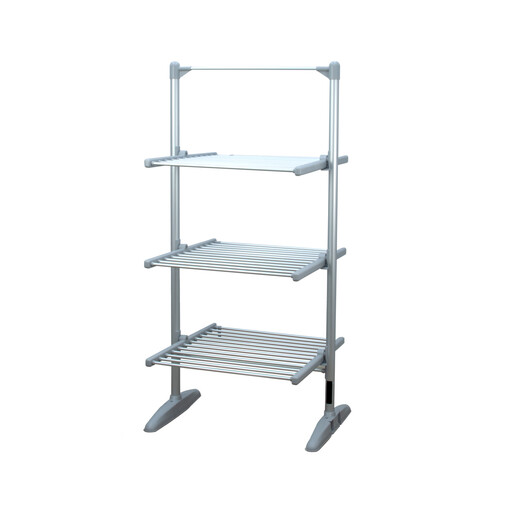
Status 3-Tier Heated Clothes Airer, 248 W
Consider a three-tier format if the shared station will hold more than face cloths. Its product name specifies a foldable aluminium design and a 248 W rating; check the open footprint, cable reach and usable rail spacing for your intended position.
Joybuy
 No image available
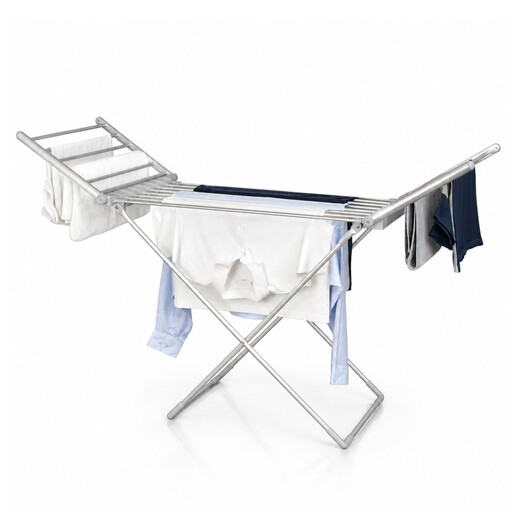
Status 230 W Winged Heated Clothes Airer, Silver
A winged format is worth considering when housemates need hanging positions for small items. Its product name specifies a foldable aluminium design; check its open and folded dimensions, cable reach and usable rail length before choosing where it will go.
Joybuy
Frequently asked questions
Will a heated airer prevent condensation when face cloths dry indoors?
No. A heated airer does not remove moisture from the room. The Ministry of Housing, Communities and Local Government’s ventilation guidance for England explains that moisture from clothes drying can become trapped without effective ventilation, so use the ventilation available in your home even if the airer has a cover.
How much drying space do face cloths need in a shared house?
A compact rack may be enough for a small rotation if the cloths can hang separately. Daewoo Electricals lists 6 m of drying space for its compact model; consider a larger format when housemates will also dry towels or everyday laundry, and check its open dimensions before buying.
How can I compare electricity use between heated airers?
Compare both rated power and how long each airer is likely to run for your usual load. Wattage describes power use while operating, but a lower rating alone does not establish which model will use less energy over a complete drying session.
Can I use a heated airer with a damaged cable or plug?
No. Stop using it and follow the appliance instructions for arranging a suitable repair or replacement. The Health and Safety Executive advises that electrical equipment should be in good condition, including its cable.


