What matters when choosing?
Choose the format around the loads your house will dry, then check whether its open dimensions, storage position and electrical setup work in the intended room.
Winged heated airer
Consider it: When face cloths and other small items make up most washes and the rack needs to fold away.
Trade-off: A winged rack offers less drying length than the cited three-tier examples.
Open three-tier airer
Consider it: When housemates also need room for ordinary laundry alongside face cloths.
Trade-off: Check the space it occupies while open: a 75 × 75 cm footprint is listed for the cited 21 m model.
Three-tier airer with a matching cover
Consider it: When you want the enclosed setup described by Dunelm and have a ventilated place for it.
Trade-off: Confirm that the cover fits the airer; enclosing wet laundry does not remove the need to ventilate the room.
| Concern | What to check | Who this matters to |
|---|
| Frequent small loads |
Check the instructions for partial-load use and whether face cloths can be spaced across the available bars. |
If I wash only a few face cloths at a time, I want a rack proportionate to that routine rather than capacity I rarely use. Around 40% of consumers put small-load suitability first. |
| Shared space and storage |
Measure the open footprint and folded position, and check that the cable reaches a suitable socket. |
When the drying spot is shared, I need to put the airer away without leaving it across the room between washes. Storage and placement are the main concern for around 30% of consumers. |
| Moisture and electrical safety |
Check that the room can be ventilated and that the intended socket or extension setup is suitable. |
If condensation or crowded sockets are already an issue, I need a workable drying location before adding another appliance. Roughly 30% of consumers make moisture and electrical safety their primary concern. |
Joybuy product choices
These choices include two heated-airer formats for indoor laundry and a heated towel rail to consider only if its bars suit your face cloths. Check placement, ventilation and the instructions for your intended load before choosing.
 No image available
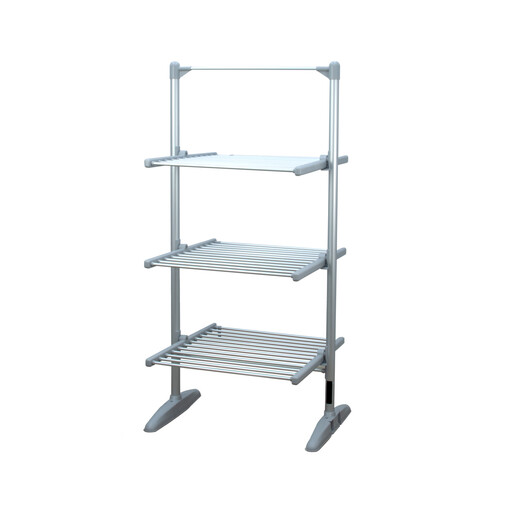
Status Three-Tier Foldable Aluminium Heated Airer, 248 W
Consider this tiered format if face cloths will share the airer with other laundry.
The product title specifies a foldable aluminium airer rated at 248 W. Check its open footprint, socket reach and instructions for partial loads before buying.
Joybuy
 No image available
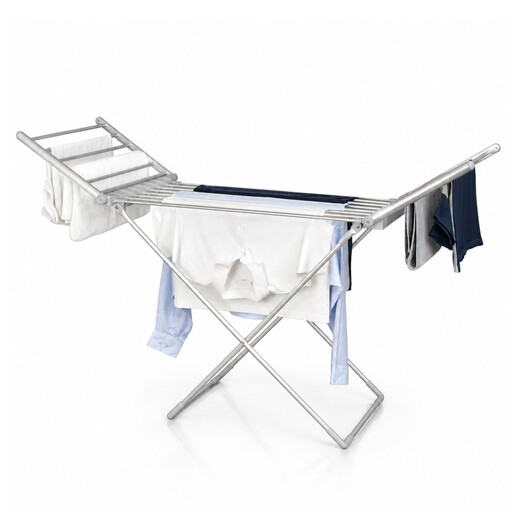
Status Winged Foldable Aluminium Heated Airer, 230 W, Silver
Consider the winged format for regular small washes if its open position fits your shared drying space.
The product title specifies a foldable aluminium airer rated at 230 W. Check the open and folded dimensions, cable reach and instructions for partial loads.
Joybuy
 No image available
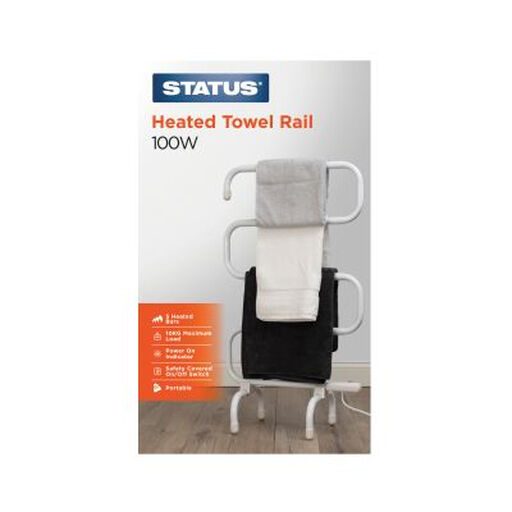
Status Five-Bar Freestanding Aluminium Heated Towel Rail, 100 W, White
This is a heated towel rail rather than a clothes airer; consider it only if its five bars suit how you intend to place the face cloths.
The product title specifies a freestanding aluminium rail rated at 100 W. Check its storage position, reach to a suitable socket and instructions for your intended use.
Joybuy
Questions about use
Can I use a heated airer for just a few face cloths?
Yes, if the model’s instructions permit use with a partial load. Space the cloths rather than layering them, and compare a winged rack with a three-tier model if you seldom need room for a larger wash.
Does a covered heated airer still need ventilation?
Yes. A cover does not remove the moisture released by wet cloths into the home. South Derbyshire District Council advises drying indoors in a room with the door closed and a window open and/or an extractor fan running.
Can a heated airer use an extension lead?
Use a suitable wall socket where possible; if an extension is necessary, it must be undamaged and able to carry the connected load. Electrical Safety First advises against overloading or chaining extension leads and says cable reels should be fully unwound.
What if damp or mould keeps returning while we dry laundry indoors?
Ventilate during drying and report recurring damp or mould to your landlord or housing provider rather than assuming the airer is the only cause. South Derbyshire District Council notes that leaks and other property defects can also cause damp.
Should I check a heated airer for recalls before using it?
Yes. Check the exact model against current UK product-recall information; Electrical Safety First directs consumers to recall information from the Office for Product Safety and Standards.


