Small-load flat dwellers
If you mainly dry shorts, T-shirts and other small garments, a frame that fits while open and folds away afterwards may matter more than maximum capacity.


For a few cotton shorts or a modest wash load, start with a folding winged airer if you have room for its open width; choose a mini tiered airer when the open floor footprint matters more. A larger tiered model makes more sense for recurring bigger loads, but check its open dimensions, storage space and cable reach before choosing capacity you may not use.
If you mainly dry shorts, T-shirts and other small garments, a frame that fits while open and folds away afterwards may matter more than maximum capacity.
If washing accumulates regularly but floor area is scarce, a tiered frame lets you consider vertical rail space as well as the space it occupies on the floor.
If you dry indoors, consider where moisture will go and whether the airer can reach a suitable socket without an overloaded extension setup.
Measure the space with the airer open before comparing drying length: a folding frame can store neatly yet still be too wide for the place where you intend to use it.
| Concern | What to check | Who this matters to |
|---|---|---|
| Open footprint and storage | Measure the available width and depth while drying, then check folded depth and cable reach. Lakeland lists a 60 × 63 cm base for its Dry:Soon Mini; The cited winged airer is 148 cm wide when open. | If I need to walk past the airer and put it away between loads, its open footprint comes first. Around 42% of consumers would make fit and storage their primary concern. |
| Usable rail space | Compare drying length and stated load limit with the garments you normally dry; check whether shelves can be opened partly rather than assuming every rail must be used. | Shorts are only part of my regular washing, so I need enough accessible rails for the rest of the load too. Roughly 33% of consumers would put usable capacity first. |
| Indoor moisture and electrical use | Choose a location you can ventilate. If an extension device is necessary, check its rating and follow its instructions rather than overloading or daisy-chaining it. | If condensation is already a concern, I need a drying place that does not leave moisture trapped indoors and a safe way to connect the airer. About 25% of consumers would prioritise moisture and electrical setup. |
More rail metres do not tell you whether an airer fits beside furniture. The cited 11 m winged model is 148 cm wide when open, while Lakeland lists a 60 × 63 cm base for its 13 m Dry:Soon Mini, which uses more height.
Measure the intended position with the frame open and the storage gap with it folded, then choose rail space that suits your usual load.
Rated wattage does not establish how long your shorts will take to dry, and electricity use depends on operating time as well as the model.
Use the exact airer's wattage, your likely running time and your electricity tariff when assessing running cost.
Department of Health and Social Care guidance identifies drying laundry as a source of moisture in the home. A covered airer still needs an appropriate drying location.
Use a space you can ventilate, keep vents clear and investigate recurring condensation or mould rather than relying on the airer's heat.
Electrical Safety First warns that an overloaded extension device can overheat and create a fire risk.
Use a suitable wall socket where practical. If you need an extension device, check its rating, do not daisy-chain devices and fully unwind a cable reel before use.
Lakeland's Dry:Soon range includes a Mini three-tier airer as well as larger tiered options.
Beldray offers tiered heated airers for people considering more rail space for regular indoor loads.
Minky offers a winged heated airer and a covered four-tier sureDRI model, covering different load sizes.
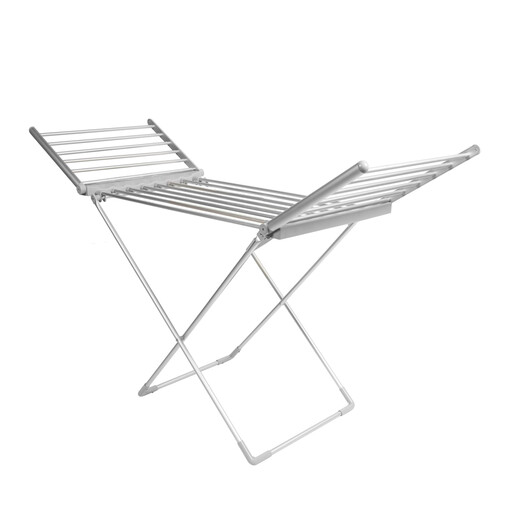
A foldable aluminium three-tier airer rated at 248W, worth considering when the frame has to be stored away between small loads.
These heated airers offer folding winged and three-tier layouts to consider for indoor drying. For limited floor space, confirm each model's open dimensions before deciding whether its layout suits your room.
 No image available
Consider this three-tier winged layout for shorts and other small garments if its opened frame fits your drying position.
Check the open footprint, folded storage space and cable reach against the space available; follow each garment's care label.
 No image available
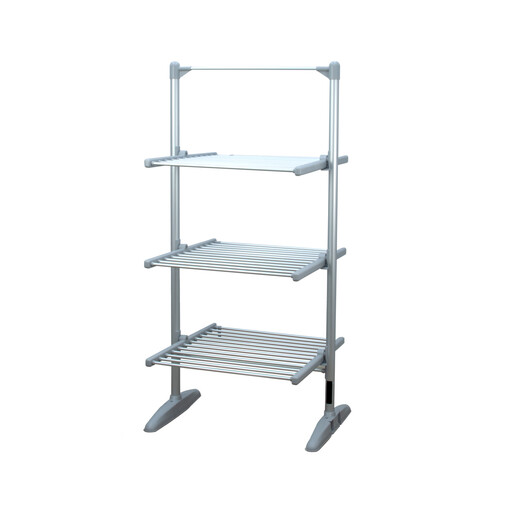
Consider a three-tier frame when shorts form part of recurring larger loads, rather than choosing extra capacity for occasional small loads alone.
The product name specifies a foldable aluminium design and a 248W rating. Check its open footprint, folded depth and cable reach before deciding where it can be used.
 No image available
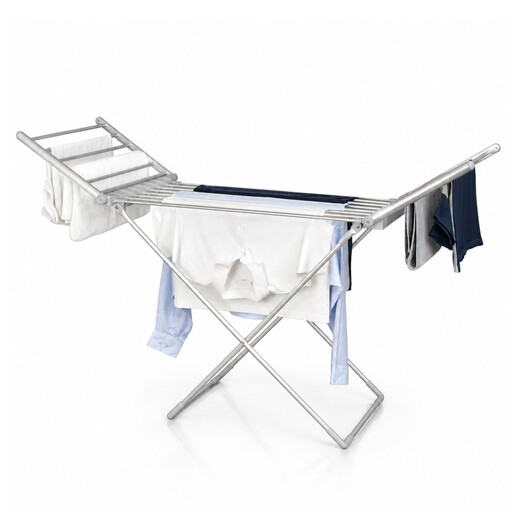
This winged layout is worth considering for shorts if you have enough width to open it and want to fold it away afterwards.
The product name specifies a 230W rating, foldable aluminium construction and the Silver variant. Check the open width, folded depth and cable reach for your room.
Choose a winged layout for a small load if its open width fits; choose a mini tiered layout when floor footprint is the tighter constraint and you have height available. For scale, the cited winged model is 148 cm wide when open, while Lakeland lists a 60 × 63 cm base for its Dry:Soon Mini.
Check the shorts' care label and the airer's instructions before placing them on heated rails. Cotton blends, prints and garment details may have different care requirements, so do not assume one method suits every pair.
Unplug the airer and let it cool before cleaning, then follow the instructions for your model. Minky's instructions specify a soft damp cloth, thorough drying and no immersion in water; check the product manual before folding or storing its cover.
No: wet laundry still releases moisture into the room. Department of Health and Social Care guidance identifies indoor laundry drying as a source of household moisture, so use a ventilatable location and investigate recurring condensation or mould.
Check the marking and product instructions for the specific airer. GOV.UK guidance says CE marking continues to be recognised alongside or instead of UKCA marking in applicable cases in Great Britain, where the Electrical Equipment (Safety) Regulations 2016 govern electrical equipment placed on the market. Northern Ireland has different market arrangements; a marking is not a substitute for checking the plug, cable and instructions before use.