For a few tea towels, start with a fold-flat winged airer if it fits safely when open and its lead reaches a suitable socket. Extra tiers make more sense if the same airer will regularly hold other laundry; a covered warm-air dryer offers a different, enclosed layout but calls for closer attention to its electricity use and instructions. Whichever format you choose, check the exact model, its placement requirements and the utility room’s ventilation.
Who might need which format?
Small-batch utility-room users
If you mainly dry a rotation of tea towels, look at the space an airer takes while open, where it goes afterwards and whether its lead reaches a suitable socket. Maximum laundry capacity may matter less than an accessible layout.
Households drying mixed loads
If tea towels will share the airer with routine laundry, the number of tiers, stated drying length and load limit become more useful checks. A larger rack still needs enough clear space during use.
Users who prefer an enclosed load
If you would rather arrange laundry inside a covered, fan-assisted dryer than across heated bars, compare its capacity, rated power and operating instructions with those of a rack.
What matters when choosing?
Decide where the airer can stand safely, then choose a layout for your usual load. Compare electricity use and model-specific instructions before adding capacity you may rarely use.
| Concern | What to check | Who this matters to |
|---|
| Footprint and storage |
Measure the space available while the airer is open and where it will be stored; check that the bar layout accommodates your usual tea-towel load. |
I need somewhere to hang a few tea towels without blocking the utility room, and I want to put the airer away between uses. Around 36% of consumers put a small, stowable setup first. |
| Moisture and electrical safety |
Check stable, dry placement away from water, the exact model’s instructions and safety notices, and how the room is ventilated. |
If the room is prone to condensation or has nearby water sources, I need a position where I can use an electrical airer safely and manage moisture. Safety and damp management are the first concern for around 29% of consumers. |
| Electricity use |
Compare rated wattage and likely operating time together; check whether the exact model has a timer or automatic shut-off. |
I expect to use the airer regularly, so I want to understand how long it runs as well as its power rating. Around 21% of consumers prioritise controllable electricity use. |
| Mixed-load capacity |
Check drying length or bar arrangement and the stated load limit against the laundry you will actually hang. |
I want tea towels to share the airer with a routine wash, so a layout for larger loads matters more to me than the smallest footprint. That is the primary need for around 14% of consumers. |
Mistakes to avoid
-
Choosing a large rack for a few tea towels
A three-tier rack can serve household laundry, but it also needs room when open. A 75 × 75 cm open footprint is listed for the Home 21m three-tier model.
Measure the operating space and storage gap. Choose the larger layout if you will regularly use it for other laundry.
-
Treating wattage as a drying-speed score
Rated power describes electrical input, not how quickly a particular load will dry. Heated-bar racks and covered warm-air dryers also arrange laundry differently.
Compare wattage alongside likely running time, usable layout and the instructions for any cover; do not assume a lower rating means less electricity for a completed load.
-
Checking the brand but not the exact model
UK Office for Product Safety and Standards notices identify faults in particular heated airers, including overheating, earthing and wiring faults. A notice about one model does not describe every product from that brand.
Compare the make, model and any article number, barcode or batch details with GOV.UK product-safety notices before purchase or use. Do not use a product that matches a recall notice.
-
Putting an electrical airer in a wet, unventilated spot
Drying laundry adds moisture indoors. UK government guidance explains that condensation can contribute to damp and mould when moisture is not removed; the airer also needs a placement that follows its electrical safety instructions.
Use a stable, dry position away from splashes, keep the room’s intended ventilation working and do not use an appliance with a damaged lead or plug.
Brands and ranges to consider
Dry:Soon by Lakeland
Lakeland offers Dry:Soon formats ranging from compact tiered racks to larger racks and enclosed designs, giving utility-room users different layouts to assess.
- Lakeland describes its Mini three-tier airer as suited to tighter spaces and states that its standard 21m rack folds to 8 cm deep.
- Check the precise model: the UK Office for Product Safety and Standards recalled the separate Dry:Soon Airer with Heater, model 53432, in 2024 because of a fire risk.
Minky
Minky’s sureDRI range includes a covered four-tier rack for households considering regular mixed loads.
- Minky lists its four-tier sureDRI model with 23 m of drying length, a 20 kg maximum load and a 300 W rating.
- If the airer will hold only a few tea towels, check whether a four-tier layout fits the space and the task.
JML DriBUDDi
The DriBUDDi Compact is a covered, fan-assisted alternative to hanging laundry directly across heated bars.
- JML lists an 850 W rating, capacity of up to 10 kg of damp clothing and automatic shut-off at the end of a set cycle.
- Its rated power is higher than the cited heated-rack examples; wattage alone does not establish electricity use for a completed load.
Joybuy products for this task
These heated airers and freestanding towel rails offer bar layouts for tea towels, with tiered options if you also dry other laundry. Check each model’s open size, socket reach and instructions against your utility room.
 No image available
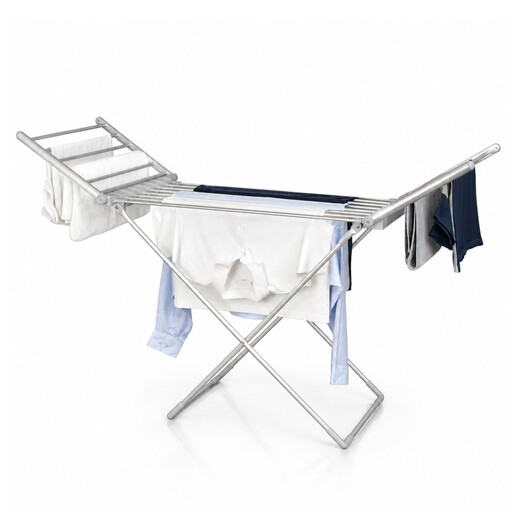
STATUS 230W Foldable Aluminium Winged Heated Airer, Silver
A foldable winged layout is worth considering for a regular tea-towel rotation when storage space matters. Its stated rating is 230 W; check the open dimensions and lead reach against the intended position, and follow the instructions on placement and covering the bars.
View on Joybuy
 No image available
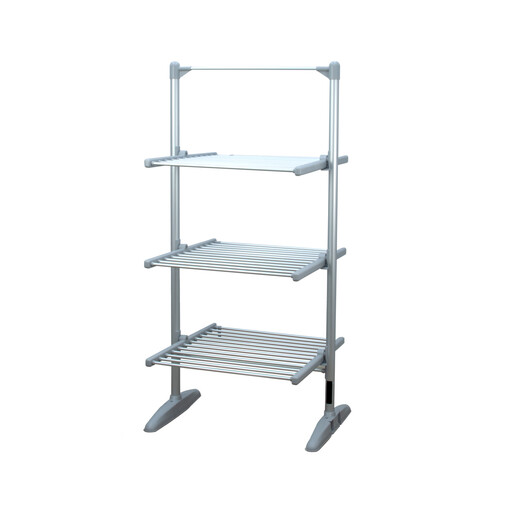
STATUS 248W Three-Tier Foldable Aluminium Heated Airer
The three-tier layout is more relevant if tea towels will regularly share space with other laundry. The title specifies 248 W and a foldable design; check its open and folded dimensions and lead reach before choosing a place for it.
View on Joybuy
 No image available
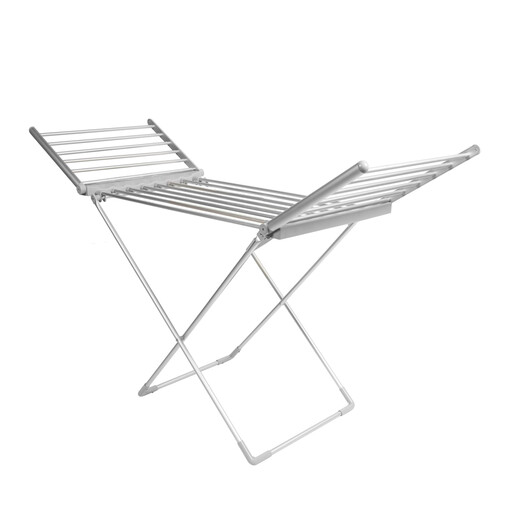
Pifco Three-Tier Winged Heated Airer
The winged, three-tier format gives tea towels room alongside some other laundry. Joybuy describes 20 heated bars and a 12 kg drying capacity; confirm its rated wattage before comparing electricity use, and follow the exact instructions for any cover.
View on Joybuy
 No image available
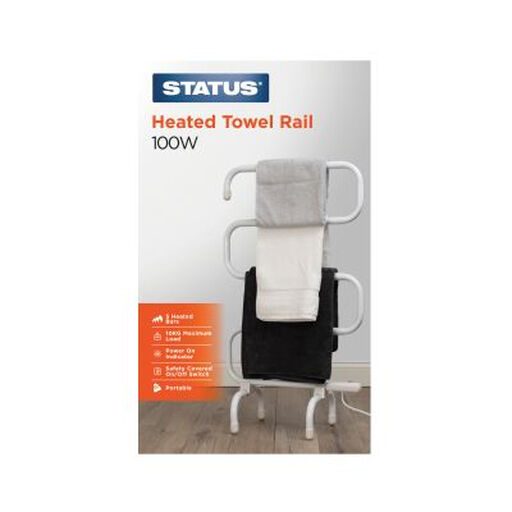
STATUS 100W Five-Bar Freestanding Heated Towel Rail, White
This freestanding towel rail offers a five-bar layout to assess for a small tea-towel routine; it is not a tiered clothes airer. The title states 100 W. Check whether its bar spacing, storage arrangement and lead reach suit the room, and use it on a dry, level surface away from water.
View on Joybuy
 No image available
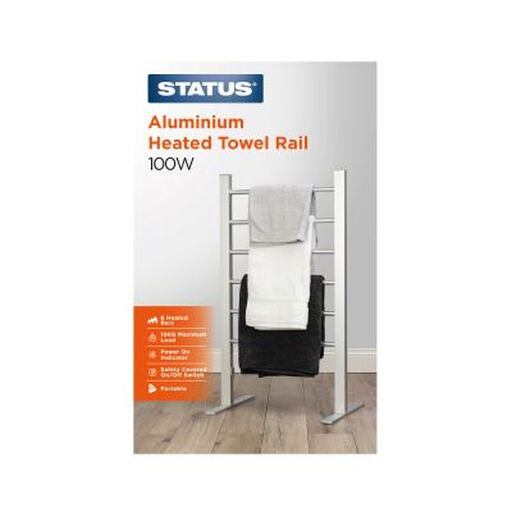
STATUS 100W Six-Bar Freestanding Heated Towel Rail, Silver
The six-bar towel-rail layout may suit several tea towels or small garments if you prefer a rail to a tiered rack. The title states 100 W, but confirm the rated power for this exact model before comparing electricity use; also check its dimensions, storage arrangement and lead reach.
View on Joybuy
Frequently asked questions
Do I need a three-tier heated airer just for tea towels?
A three-tier airer is more useful if you will also dry routine household laundry. For a few tea towels, compare the space it takes while open with a smaller winged airer or towel rail; A 75 × 75 cm open footprint is listed for the Home 21m three-tier model.
Does lower wattage mean a heated airer uses less electricity?
Lower rated wattage means less electrical input over the same operating time, not necessarily less electricity for a completed dry load. Compare the appliance’s power rating, likely running time and the way you would arrange your usual load.
Can I use a heated airer without ventilating the utility room?
No: the moisture leaving the tea towels still needs a way out of the room. UK government guidance identifies drying laundry as an indoor moisture source and explains that condensation can contribute to damp and mould when moisture is not removed. Keep the room’s intended ventilation working.
What safety check matters before buying or using one?
Check the exact make and model against GOV.UK product-safety notices, using article, barcode or batch details where relevant. UK Office for Product Safety and Standards notices describe fire-related faults in identified heated airers; follow the instructions for your particular appliance rather than assuming a notice applies to every similar-looking model.


