Small-load holiday-let operators
If face cloths and the occasional hand towel are the usual load, focus on enough separated rail space for the busiest changeover and a format that fits away between cleaning shifts.


Choose an airer that holds the largest face-cloth batch between changeovers without crowding the drying room. A compact folding model suits small loads; extra tiers make more sense when towels or other linen share the rack, while a timer may help staff manage a set operating period. Whichever format you choose, use it in a dry, ventilated area and keep appliance checks part of the property routine.
If face cloths and the occasional hand towel are the usual load, focus on enough separated rail space for the busiest changeover and a format that fits away between cleaning shifts.
When towels or other linen regularly join the face cloths, usable drying space and room to separate items matter more than choosing the smallest rack.
Where an airer is kept at a guest property, staff need a suitable place to operate it and a routine for checking its condition and receiving recall notices. Electrical Safety First advises registering appliances supplied with a property.
For face cloths between holiday-let changeovers, establish where the airer can be used safely, then size it for the busiest batch rather than choosing by tier count alone.
| Concern | What to check | Who this matters to |
|---|---|---|
| Controlled operation | Check the operating instructions and whether staff have a dry, level position away from water. Plan condition checks and appliance registration; a timer does not replace these steps. | If staff operate an airer at a guest property, I want its location and condition managed rather than relying on a timer alone. Around 42% of consumers would put safe, controlled operation first. |
| Small batches and storage | Measure both the open drying area and the storage space. Check that the rails accommodate the busiest face-cloth batch with room between items. | When face cloths are my main load, I need the rack to fit away after cleaning without sacrificing space between cloths; around 33% of consumers would prioritise compact drying and storage. |
| Mixed-linen capacity | Compare drying-space length, open dimensions and stated load capacity if towels or other linen will share the rack. Leave room around the airer and between items. | At a busy changeover, I may need to dry towels alongside face cloths without crowding the rack. Mixed-linen capacity would be the primary concern for around 25% of consumers. |
Daewoo Electricals lists its large three-tier model at 20 m of drying space and 30 kg maximum load, but also at 150 cm high when open. That scale may take up more room than a small face-cloth batch warrants.
Count the largest simultaneous batch before choosing. Allow for a larger rack when hand towels, towels or other linen regularly need the same drying space.
A controlled operating period does not remove the moisture released by indoor laundry. GOV.UK guidance for England identifies condensation as a common cause of damp and mould.
Use an appropriately ventilated drying room, position the airer away from water and investigate persistent condensation or mould.
A power rating describes electricity input, not how long a particular batch will take to dry. Load size, spacing, room conditions and cover use can affect the result.
Compare rated power where it matters to you, and try a representative face-cloth batch before building a drying time into the cleaning schedule.
A supplied airer needs attention to wear and damage as well as a suitable operating location. Electrical Safety First describes portable appliance testing as a way to check appliance safety and advises registering supplied appliances for recall notices.
Have staff check the plug, cable and frame for visible damage, follow the manufacturer's instructions and arrange any further inspection appropriate to the property and letting arrangement.
The Mini three-tier format is relevant when small linen needs vertical drying space without a large floor footprint.
Daewoo Electricals lists compact, winged and larger three-tier heated airers, giving operators formats for different batch sizes.
The digital heated airer is relevant where staff want to set an operating period as part of the cleaning routine.
These winged and three-tier airers relate to face-cloth batches and, where needed, additional small laundry. Compare their fit in the drying room and the manufacturer's operating instructions before choosing.
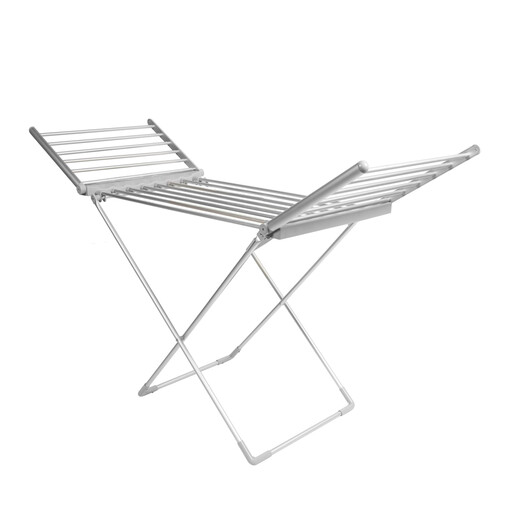 Image unavailable
Consider this winged format if face cloths sometimes share the rack with other small laundry.
Check its open dimensions against the drying room and confirm the rail space needed for your batch. Follow its instructions for indoor use and keep the room ventilated.
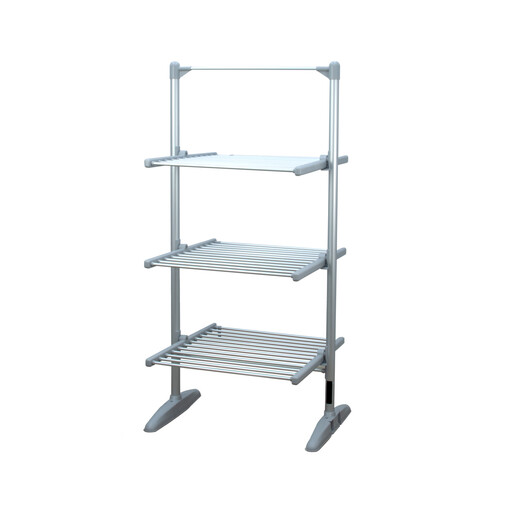 Image unavailable
Consider this three-tier format when towels or other linen regularly join the face-cloth load.
The product name states a 248 W rating. Joybuy describes a covered switch and non-slip feet; place the airer on a dry, level surface away from water, and check that its open and stored sizes fit your space. Follow the instructions not to cover the heated bars during operation.
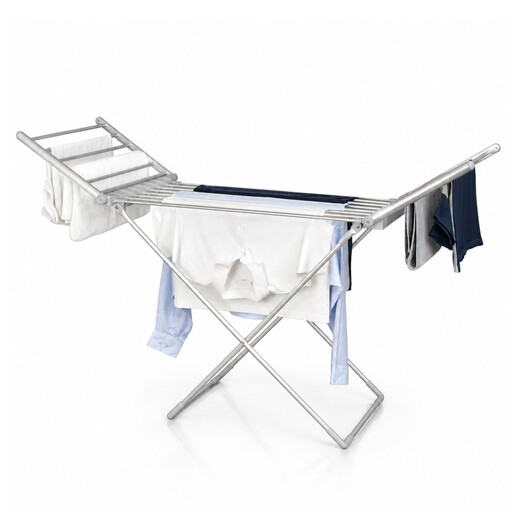 Image unavailable
Consider this winged format for recurring face-cloth loads with occasional additional small laundry.
The product name states a 230 W rating and foldable design. Measure the space available both during use and when the airer is put away; use it on a stable surface away from water and follow the instructions not to cover its heated bars during operation.
Start with the largest batch you must dry at one time and leave space between cloths. Daewoo Electricals lists a compact airer with 6 m of drying space, while its winged model has 10 m; compare the rack's open dimensions with your room as well as its stated drying length.
Choose a dry, level location away from water instead. Joybuy's instructions for the Status three-tier airer specify that placement; follow the instructions for the particular model you buy and keep it clear of guest access where staff are responsible for operating it.
No. Indoor drying still releases moisture into the room. GOV.UK guidance for England identifies condensation as a common cause of damp and mould, so use appropriate ventilation and investigate condensation that persists.
Check the airer's visible condition, follow its operating instructions and register it for manufacturer safety notices. Electrical Safety First describes portable appliance testing as a safety check; the applicable duties and any inspection schedule depend on the property's UK nation and letting arrangement, so establish those requirements for the property rather than assuming one rule applies to every holiday let.