Hosts handling larger changeover loads
If pillowcases go through the wash with sheets or towels, compare hanging space and the stated load limit for the whole batch, not just whether a few pillowcases will fit.


For pillowcases dried alongside other changeover linen, start with a heated rack that has enough stated hanging space and load capacity for the whole batch: the three-tier examples from Lakeland and Dunelm state 20–21m of drying space and loads of up to 15kg. A compact enclosed dryer may suit a smaller load, but JML states a 10kg limit for its DriBUDDi Compact. Whichever format fits the laundry area, plan for indoor moisture and include the appliance in the property’s electrical-maintenance routine.
If pillowcases go through the wash with sheets or towels, compare hanging space and the stated load limit for the whole batch, not just whether a few pillowcases will fit.
If the drying area must be cleared between stays, check both the space an airer occupies while open and how it stores after use.
Indoor drying calls for a suitable ventilated location. A heated airer also needs the visual checks and maintenance appropriate to how it is used in the property.
Size the airer for your usual changeover load before weighing timer controls and storage convenience; also decide where damp linen can dry with adequate ventilation.
| Concern | What to check | Who this matters to |
|---|---|---|
| Changeover load | Compare stated hanging length and maximum load for the exact model; leave room between items. | If pillowcases share the airer with sheets or towels, I need enough space for the batch without crowding it; around 33% of consumers put load capacity first. |
| Turnaround control | Check for a timer or automatic switch-off, and follow the exact model’s instructions on covers. | When the next arrival sets a firm laundry window, I want a defined operating period without assuming it guarantees dry linen; roughly 27% of consumers prioritise turnaround control. |
| Storage and fit | Check open dimensions, folded size and the space needed to set up and put away the airer. | If the utility area must be cleared after laundry, I need an airer I can use and store there; about 20% of consumers make space their primary concern. |
| Moisture and electrical care | Choose a ventilated location and plan visual checks and risk-based maintenance for the appliance. | If indoor drying could add to condensation, I need a suitable location and a safe maintenance routine before considering convenience features; around 20% of consumers place these concerns first. |
Wattage describes electrical input, not how quickly a particular load of pillowcases will dry. A timer sets an operating window, but it does not establish that the linen will be ready at its end.
Compare the controls and instructions for the exact model, then try the usual linen load before building drying time into a changeover schedule.
A stated load limit tells you what a model claims it can hold; tightly packed linen may leave less space for air to circulate. The Lakeland and Dunelm rack figures and JML dryer limit are not comparable pillowcase-drying tests.
Allow space around articles and check both the load limit and usable hanging area for the batch you normally wash.
A heated airer does not remove moisture from the room. Energy Saving Trust identifies ventilation as important when managing condensation from indoor laundry.
Use an appropriately ventilated location, keep relevant vents clear and investigate recurring condensation rather than extending the drying period.
The Health and Safety Executive says electrical equipment that could cause injury must be maintained in a safe condition; a fixed annual portable-appliance-testing schedule is not a blanket requirement.
Check the plug, lead and casing, remove damaged equipment from use, and set inspection or testing intervals according to the equipment and its environment.
Lakeland lists standard and Deluxe three-tier Dry:Soon racks, each with 21m of stated drying space and a load limit of up to 15kg.
Dunelm lists a three-tier heated rack with 20m of stated drying space, a load limit of up to 15kg and a 300W rating.
The Minky Sure Dri four-tier rack is a flat-folding option with 23m of stated drying length.
JML’s DriBUDDi Compact is an enclosed hot-air dryer with a stated 10kg damp-clothing capacity and an 850W heating element.
These foldable heated racks are options to assess when drying pillowcases alongside other holiday-let laundry. Compare their stated configurations with your available space and follow each model’s instructions on what may cover the heated bars.
 No image available
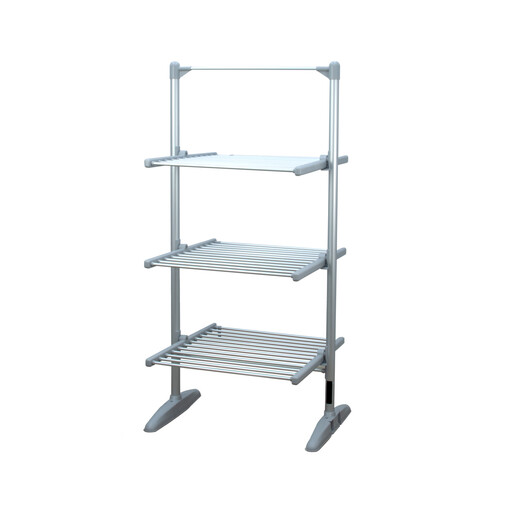
Consider this three-tier format if you need a rack for pillowcases alongside other changeover laundry and want to fold it away afterwards.
Its name specifies a 248W rating and aluminium construction. Check its open dimensions and load limit against your usual batch before ordering.
Follow the listing’s instruction not to cover the heated bars during operation; check the instructions if automatic switch-off is important.
 No image available
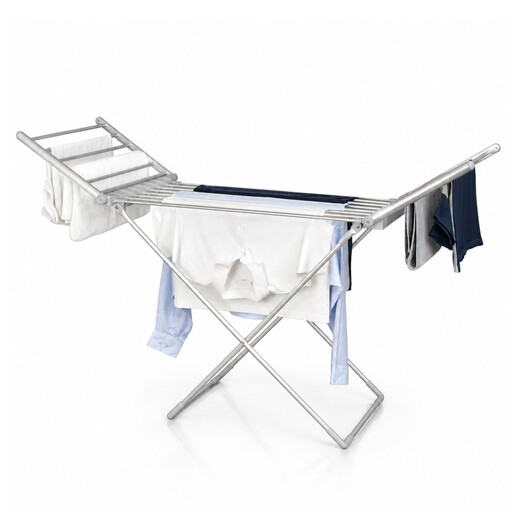
Consider the winged format if it fits your laundry area and you need a foldable rack for pillowcases and other washing.
Its name specifies a 230W rating and aluminium construction. Check the open dimensions and load limit for your usual batch rather than assuming they match another rack.
Follow the listing’s instruction not to cover the heated bars while in use; check the instructions if a timer matters to your routine.
Not as a blanket annual requirement. The Health and Safety Executive says electrical equipment that could cause injury must be maintained in a safe condition, while inspection and testing should reflect the equipment and its environment; visual checks remain important.
Use a suitable ventilated drying area rather than relying on the heated airer to manage room moisture. Energy Saving Trust advises reducing indoor clothes drying where possible and improving ventilation to address condensation; keep relevant vents clear and follow the airer’s placement instructions.
Check that the appliance instructions permit it and that the extension device is rated for everything connected to it. Electrical Safety First advises against overloading or daisy-chaining extension devices and says cable reels must be fully unwound to achieve their current rating; use a suitable wall socket where practical.
Use the property’s fire-risk assessment to decide where and how a heated airer can be used, and check the requirements applicable to the property’s location. The Home Office guidance for small paying guest accommodation addresses fire-safety responsibilities within its scope; it does not make one appliance arrangement suitable for every holiday let.