Hosts managing several guests’ wet items
Swimsuits, towels and small laundry loads may need drying space at the same time. These hosts need to assess how much can be spread out without treating a maximum load rating as a drying-time promise.


Choose a tiered heated airer when several guests need space to spread out swimwear and towels; a winged model is more suited to smaller loads, while an enclosed warm-air dryer keeps a batch together. Check that the appliance can be positioned safely and that the property’s guest-use arrangements meet the requirements of its UK nation before putting it into service.
Swimsuits, towels and small laundry loads may need drying space at the same time. These hosts need to assess how much can be spread out without treating a maximum load rating as a drying-time promise.
A folding airer may be easier to put away between stays, but its open dimensions still need to fit a suitable indoor location away from water.
Capacity is only part of the decision when guests can operate the airer. Its condition, placement, instructions and the property’s fire-safety arrangements also matter.
Match the format to the usual wet load, then assess where the airer will stand and how guests will use it.
Consider it when: several guests’ garments need separate drying space and there is room for a tall frame.
Trade-off: it may fold flat for storage but still needs a suitable location while open.
Consider it when: smaller loads and a folding, spread-out layout matter more than the drying length of the tiered examples.
Trade-off: the researched Status winged model has less stated drying space than the 21–23 m tiered examples, so several guests’ towels may need another drying arrangement.
Consider it when: keeping a smaller batch together inside a covered unit is the priority.
Trade-off: JML states a 10 kg capacity and 1,200 W heating element for DriBUDDi; compare its expected use time as well as its power rating with a rail-style airer.
| Concern | What to check | Who this matters to |
|---|---|---|
| Room for wet items | Compare drying length and maximum load, then check whether garments can be spaced apart. | If several guests return with wet swimwear and towels, I need enough room to spread them out; around 33% of consumers would put this capacity need first. |
| Storage and placement | Measure both the open footprint and folded size against the intended room and storage spot. | I need the airer out of the way between stays without squeezing it into an unsuitable place when in use. Roughly 27% of consumers would prioritise that space constraint. |
| Contained drying | Check cover compatibility or inclusion, allow airflow around garments and plan for room ventilation. | When wet items would otherwise be spread around guest rooms, I would rather keep a manageable load together; around 20% of consumers would make contained drying their main concern. |
| Guest safety | Check the appliance’s condition and instructions, its proposed location and the property’s fire-safety arrangements. | If guests can operate an electrical airer, I need to know how it can be used safely before supplying it. Approximately 20% of consumers would put that responsibility first. |
The Status winged model is listed at 230 W, while JML lists a 1,200 W heating element for DriBUDDi. Power rating describes electrical input, not how long a particular swimsuit will take to dry.
Compare the load you expect to dry, the unit’s wattage and likely operating time. If running cost matters, calculate it using your electricity tariff and intended use rather than assuming that lower wattage guarantees a lower cost per load.
A maximum load rating does not mean every item can be piled onto the same rails. Crowding reduces the space available for air to circulate around the fabric.
Spread items across the available bars and split a larger load if necessary. Use a cover only in the way specified for that airer.
The Office for Product Safety and Standards reported a serious fire risk in a specific Mini 3 Tier Electric Heated Airer because its internal wiring was insufficiently secured. That finding concerns the identified product, not every three-tier airer.
Keep the model details and instructions, check the appliance’s condition and relevant product-safety information, and do not give guests a damaged or identified unsafe unit to use.
GOV.UK’s self-catering holiday-home guidance addresses England. Requirements for a particular property must be considered in its own jurisdiction rather than assumed from guidance for another UK nation.
Identify whether the let is in England, Scotland, Wales or Northern Ireland, then check the applicable fire-safety and electrical-equipment requirements before setting guest-use instructions.
These product lines illustrate different formats; a brand’s inclusion does not establish that a particular model suits the property.
Lakeland’s Dry:Soon range includes a folding, three-tier option for hosts considering vertical drying space.
The Sure Dri line includes a covered, tiered format for a larger mixed load.
Status offers a winged heated-airer format to consider for smaller guest loads and folding storage.
DriBUDDi is an enclosed warm-air alternative to an exposed rail airer.
These folding tiered and winged airers relate to drying swimwear and small guest laundry loads. Compare the available space for each one, and assess the appliance and the property’s guest-use arrangements before supplying it.
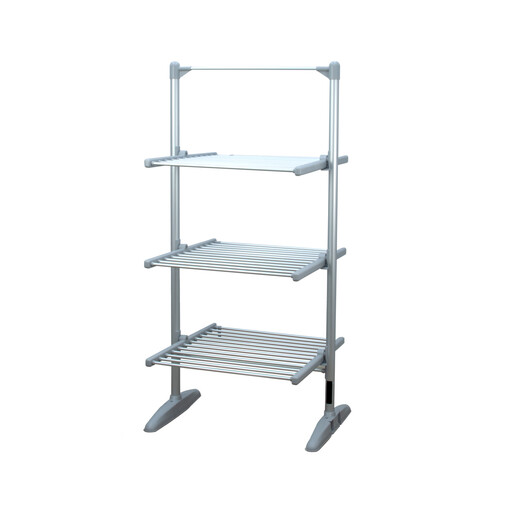 Image unavailable
Consider this tiered format when several wet items need separate places to hang. Its product name specifies a 248 W aluminium airer that folds for storage; check its open and folded dimensions against your available space before buying.
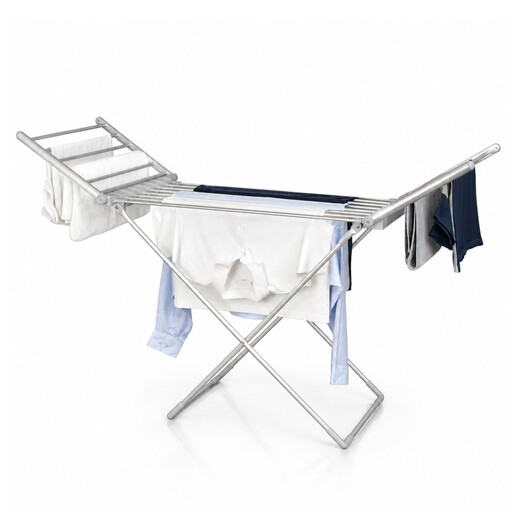 Image unavailable
The winged layout is worth considering for a smaller guest load when folding storage matters. The product name specifies 230 W and an aluminium frame; confirm its open dimensions and leave space around garments when planning where it will stand.
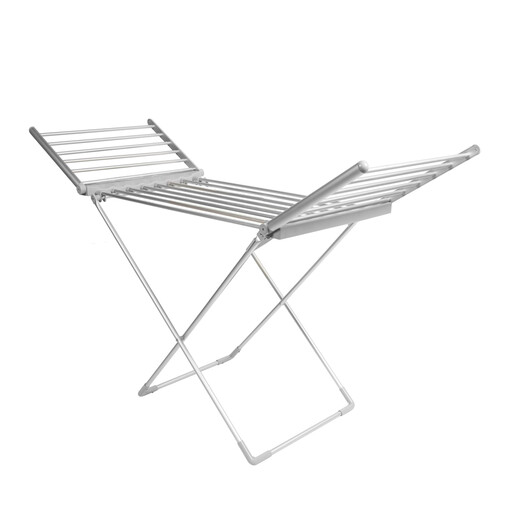 Image unavailable
This combines a tiered frame with wings for hosts assessing how to separate smaller wet items. If covered drying matters, check what comes with this variant and follow its covering instructions; also confirm that its placement and permitted load suit the property.
A heated airer can be considered for guest use only after the host has addressed the property’s safety obligations and the appliance’s condition and operating arrangements. For self-catering holiday homes in England, GOV.UK provides electrical-safety guidance, and Devon and Somerset Fire and Rescue Service says a suitable and sufficient fire-risk assessment is required; check the rules applying to the nation and property concerned.
A compatible cover can retain warmth around a tiered airer; a cover can support quicker drying on the relevant model. Follow the particular airer’s covering instructions, keep garments spaced for airflow and ventilate the room to manage moisture.
Allow enough space to separate the wet items guests commonly need to dry together, rather than choosing by the maximum load figure alone. Lakeland lists 21 m and 15 kg for its researched three-tier model, while the researched Minky four-tier model is listed at 23 m and 20 kg; neither figure promises a particular drying time.
A heated airer’s specifications alone cannot establish a same-day result for every swimsuit. Wetness, fabric thickness and room humidity affect drying time; check the garment’s care label and avoid setting a fixed turnaround expectation without assessing conditions in the property.
Keep its instructions available and check the cable, plug, switch, frame and feet for damage, removing the airer from use if its condition is in doubt. For a property in England, incorporate appropriate inspection and maintenance arrangements into the property-specific fire-risk assessment, following applicable guidance and the manufacturer’s instructions.