For a few table napkins at a time, start with a foldable winged airer or compact drying pod that fits the space available while it is open. A three-tier airer makes more sense if housemates will also use it for regular clothing loads. Whichever format you choose, check storage space, socket reach and ventilation: a cover does not remove moisture from the room.
Who is this for?
Small-batch napkin dryers
If the usual load is a few napkins and tea towels between laundry days, space for spreading out those items matters more than capacity for a full wash. Winged airers offer flat-drying space, and compact formats are options for small loads.
Shared-space organisers
When an airer must be put away after each use, compare its open footprint with its folded size. A model that stores flat can still obstruct a communal room while it is in use, so agree where it will stand before choosing one.
Moisture- and safety-conscious renters
Indoor drying needs a location with usable ventilation and a suitable electrical connection. UK government ventilation guidance explains the condensation risk when moisture is trapped indoors, while Electrical Safety First advises against overloading extension leads.
What matters when choosing?
Choose the format around the load housemates will actually share, then check whether it fits the room, can be stored afterwards and can be used safely near a socket.
Winged airer
Choose when: A few napkins need room to lie spread out, and the airer can be folded away after use.
Allow for: Wings can take up considerable width while open, even when the folded frame is slim.
Covered winged airer
Choose when: Housemates will add other light laundry and want a cover around the rack.
Allow for: The cover does not reduce the rack’s open footprint or replace room ventilation.
Compact drying pod
Choose when: A smaller floor footprint matters more than conventional rack space for spreading out napkins.
Allow for: Check the particular pod’s assembly requirements and electricity use rather than assuming all compact formats operate alike.
Three-tier airer
Choose when: The appliance will regularly serve shared clothing loads as well as napkins.
Allow for: More tiers are of little use for napkins alone unless the household can make use of the extra drying space.
| Concern |
What to check |
Who this matters to |
| Small, frequent loads |
Look for space to spread out napkins and a setup that suits the number dried at one time. |
If I dry just a few napkins between meals, I want a usable surface without setting up a large laundry rack. Around 36% of consumers put small-batch convenience first. |
| Storage and floor space |
Measure both the open footprint and the folded size; check the route to the storage spot. |
When the dining area has to be cleared after drying, I need an airer that will not block it for long. Roughly 29% of consumers prioritise shared-space fit. |
| Indoor moisture |
Choose a drying location with usable ventilation, including unobstructed trickle vents where fitted. |
If condensation is already a concern at home, I need a place where damp air can be managed while the napkins dry. Around 21% of consumers put moisture management first. |
| Electrical use |
Check wattage and cable reach; if using an extension lead, check its marked rating and the combined load. |
With sockets shared by several appliances, I want to avoid an overloaded lead and understand the airer’s electricity use. Approximately 14% of consumers make electrical safety and energy use their main priority. |
Mistakes to avoid
-
Buying for a full wash when the usual load is napkins
A large three-tier airer can serve shared clothing loads, but its capacity alone does not make it convenient for a few small items. Setup and the space it occupies matter every time it is used.
Decide with housemates whether this will be a general laundry appliance. If it will mainly dry napkins, measure compact formats before choosing a tower.
-
Assuming a cover takes care of indoor moisture
A cover can enclose the drying area, but laundry still releases moisture indoors. UK government ventilation guidance says trapped moisture can become condensation and contribute to damp and mould.
Agree a ventilated drying location and keep fitted trickle vents unobstructed. Do not rely on a cover in a room where moisture cannot be managed.
-
Plugging into whichever extension lead is free
Other appliances may already be drawing power through the same lead. Electrical Safety First warns that exceeding an extension lead’s maximum rating can cause overheating and advises against daisy-chaining leads.
Use a suitable wall socket where practical. If an extension lead is needed, check its marked rating and the combined load of everything connected to it.
-
Treating similarly named mini airers as the same product
The UK Office for Product Safety and Standards reported a serious fire risk for a specific Mini 3 Tier Electric Heated Airer, model K130, SKU UK10529. That notice must not be assumed to identify every three-tier airer.
Check the exact model identifiers and current product-safety notices before buying; a generic listing title or image is not enough to establish which product is offered.
Brands to consider for these airer formats
Dry:Soon
Lakeland’s Dry:Soon range includes compact, winged and three-tier airers. Its Deluxe three-tier model is a reference point for households considering a shared laundry appliance rather than a napkins-only rack.
- Lakeland states that the Deluxe has 21m of drying space, a 15kg load capacity and a timer.
- That capacity is less relevant if the household normally dries only a few napkins; check the open setup as well as the stated 8cm folded depth.
Minky
Minky’s cited Wing Heated Clothes Airer is a covered winged format for a household that wants one rack for napkins and other light laundry.
- The covered model is listed with 12m of drying space and a 16kg load capacity.
- The stated 148cm by 54cm operating area still needs room when the wings are open; arrange items so the stated capacity does not become a substitute for adequate spacing.
JML
The cited JML DriBUDDI Compact is a covered drying pod for consumers comparing floor footprint with rack space.
- This model is listed with a 64cm by 64cm footprint and 10kg capacity.
- Its maximum wattage is listed as 850W. Compare likely operating time and electricity use with any rack-style alternative rather than judging by footprint alone.
BLACK+DECKER
The cited BLACK+DECKER three-tier airer is another tower-format reference for a house that intends to dry clothing loads as well as napkins.
- Retailer Robert Dyas states 21m of drying space, a 15kg maximum load and 300W power for this model.
- Those capacity figures do not establish napkin drying time or whether a tower is practical in a particular communal room.
Joybuy product choices
These winged and three-tier airers offer choices for a shared house deciding whether the appliance will dry mainly napkins or serve other laundry too. Check each model’s open dimensions and socket reach against the intended drying spot.
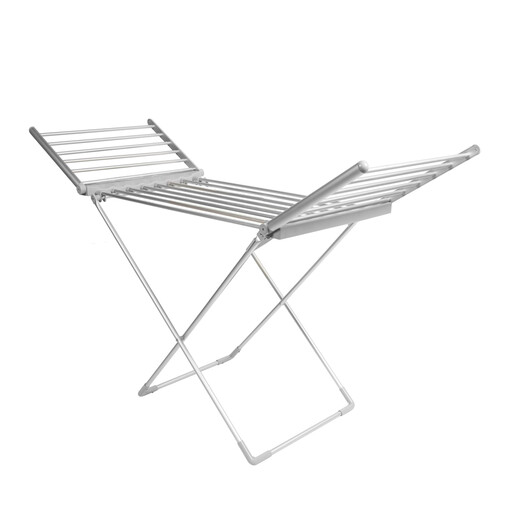 No image available
Pifco 3 Tier Winged Heated Airer
Consider this winged three-tier format if housemates expect to dry napkins alongside other laundry. Check its open footprint, storage space and reach to a suitable socket before choosing where to use it.
View on Joybuy
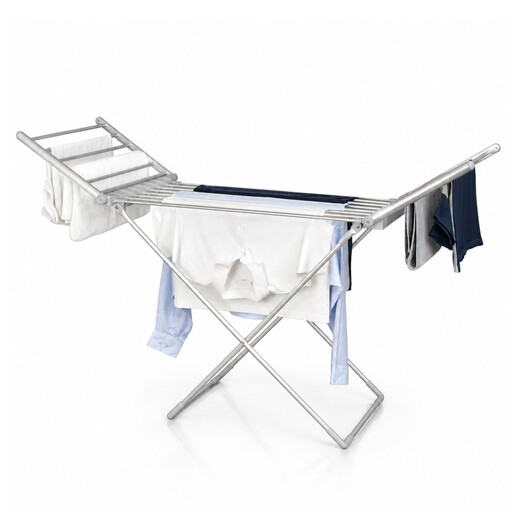 No image available
STATUS 230W Foldable Aluminium Heated Airer with Wings, Silver
This foldable winged model is worth considering when napkins are the main load and the airer must be put away afterwards. Its stated power is 230W; confirm its open and folded dimensions and cable reach for the shared room.
View on Joybuy
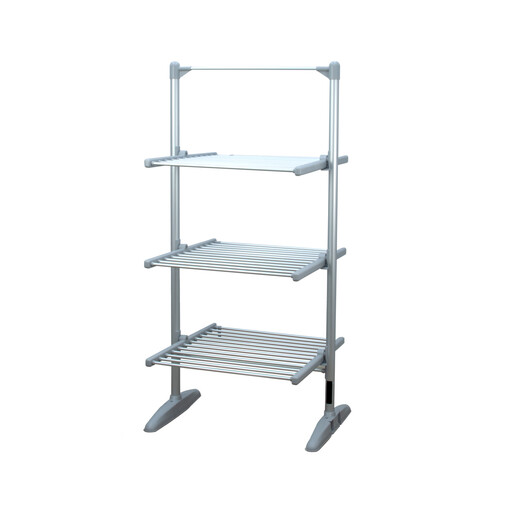 No image available
Status 3 Tier 248W Foldable Aluminium Heated Clothes Airer
Consider this three-tier model if the household will also use the airer for larger laundry loads. It is described as foldable and rated at 248W; confirm that its open size, folded size and cable reach work in the available space.
View on Joybuy
Common questions
Do I need a three-tier airer just for table napkins?
Usually not if napkins are the only regular load: a winged rack or compact pod may be easier to accommodate and put away. A three-tier airer becomes more useful when housemates also plan to dry regular clothing loads; Lakeland and Robert Dyas each state 21m of drying space for the cited tower models.
Will an airer cover prevent condensation?
No. A cover does not remove the moisture released by indoor drying. UK government ventilation guidance explains that moisture trapped without effective ventilation can become condensation, so choose a drying spot where the room’s ventilation can be used.
Can I use an extension lead for a heated airer?
Only use a suitable lead without exceeding its marked current rating, taking every connected appliance into account. Electrical Safety First advises against overloading or daisy-chaining extension leads; a suitable direct wall socket is preferable where practical.
How should I compare two airers’ electricity use?
Compare stated wattage alongside the time each airer would need to run for your load; wattage alone does not establish energy use for a complete drying session. For a calculation at stated maximum wattage, divide watts by 1,000 to get kilowatts, then multiply by hours of operation. Do not treat heat-up time as the time needed to dry napkins.


