For a few cotton shorts washed regularly, start with a fold-flat winged heated airer if it fits your shared drying spot and storage space. A three-tier airer makes more sense for combined household loads, while a covered pod is an option if you want warm air circulated around hanging clothes and can follow its operating limits. Whichever format you choose, drying indoors still requires ventilation and a suitable electrical setup.
Who each format suits
People drying small, frequent loads
If you wash a few cotton shorts and everyday items at a time, a fold-flat winged airer is worth comparing first. Check its open footprint as well as its stored size: it needs to leave the shared room usable while drying and have somewhere practical to go afterwards.
Housemates combining laundry
If several people agree to use one drying station, compare three-tier airers for their rail layout and stated load limit. A larger rack still needs an agreed position where it can stand securely without obstructing a communal route.
People considering a covered pod
A covered warm-air system may appeal if you can set aside a suitable ventilated space for it. Check the exact unit’s loading, timer and cooling instructions before choosing it; Beldray’s pod instructions, for example, specify machine-spun garments and a cooling period before reuse.
What matters when choosing
Fold-flat winged airer
Choose it when: You usually have a modest load and need to put the airer away between laundry sessions.
Allow for: Its wings need floor space while open, and clothes dry on exposed rails rather than inside an enclosure.
Three-tier airer
Choose it when: Housemates regularly combine loads and can agree on a stable place for a taller rack.
Allow for: Extra capacity may go unused if you normally dry only a few shorts.
Covered drying pod
Choose it when: You want a unit that circulates warm air around hanging clothes and have room to use it as instructed.
Allow for: Operating rules differ from those for open rails. Beldray specifies 1000 W and a three-hour maximum operating time for its pod drying unit.
| Concern |
What to check |
Who this matters to |
| Shared space and storage |
Compare the fully open footprint with the planned drying spot, then check the folded size and cable reach. |
I need to clear the communal room after each wash, so the airer must fit both while open and in storage. Around 36% of consumers put shared-space fit first. |
| Capacity and turnaround |
Check the stated load limit, usable rail layout and any timer or operating-time limit for the exact model. |
When several of us have washing to dry, I need enough room to spread the clothes without taking over more of the house. For around 36% of consumers, usable capacity or turnaround is the primary concern. |
| Moisture and electrical safety |
Plan for effective room ventilation; check the power rating, plug, cable, instructions and any extension lead’s marked rating. |
I need to dry clothes indoors without trapping moisture or overloading a shared socket. That is the main priority for around 28% of consumers. |
Mistakes to avoid
-
Choosing by drying space without measuring the room
A three-tier rack may accommodate a combined load yet still obstruct a kitchen, lounge or route through the house. Folding flat does not tell you whether the airer fits when open.
Measure the intended drying position and storage gap, then compare both with the exact model’s dimensions and the route its cable would take.
-
Assuming heated rails remove moisture
Heating an airer does not remove the moisture released by clothes. The UK Government’s existing-home ventilation guide explains that moisture trapped without effective ventilation can become condensation.
Agree on a ventilated drying location and keep the home’s intended ventilation paths usable, including trickle vents where fitted.
-
Using an overloaded extension lead
Electrical Safety First warns that overloaded extensions and adaptors can overheat, and that a cable reel left wound can also overheat.
Check the lead’s marked rating against everything connected to it. Do not daisy-chain extensions, and fully unwind a cable reel before use.
-
Assuming every three-tier model has the same safety record
The UK Office for Product Safety and Standards reported a serious fire risk involving one specific Mini 3 Tier Electric Heated Airer with insecure wiring. That report does not establish the condition of other three-tier models.
Identify the exact model you intend to use, check current product-safety alerts or recalls, and inspect its plug and cable for damage.
Brands to consider
Lakeland Dry:Soon
Lakeland’s Dry:Soon range includes three-tier racks and drying pods, giving shoppers both open-rail and covered warm-air formats to compare.
- Lakeland states that its standard three-tier model provides 21 m of drying space and folds to 8 cm deep.
- Check the exact variant: Lakeland attributes the 15 kg load limit and timer to its deluxe three-tier model, not every product in the range.
Minky
Minky’s winged heated-airer format is relevant when a rack needs to be folded away after a small shared-house load.
- Minky states that its 12 m heated airer has a 16 kg capacity and folds for storage.
- Minky markets a separate cover for 12 m winged heated airers; check its fit against the dimensions and instructions of the airer you choose.
Beldray
Beldray has both winged heated racks and a covered heated-pod system, which call for different placement and operating checks.
- Beldray specifies 12 m of drying space, a 15 kg capacity and 230 W for its cited winged model.
- Beldray’s separate pod instructions specify a 1000 W drying unit, machine-spun garments, a three-hour maximum operating time and cooling before reuse; those limits must not be assumed to describe its winged rack.
Joybuy heated airers
These airers offer fold-away options for drying cotton shorts indoors, including a three-tier format to consider if housemates combine loads. Compare each model’s open size with your agreed drying spot before choosing.
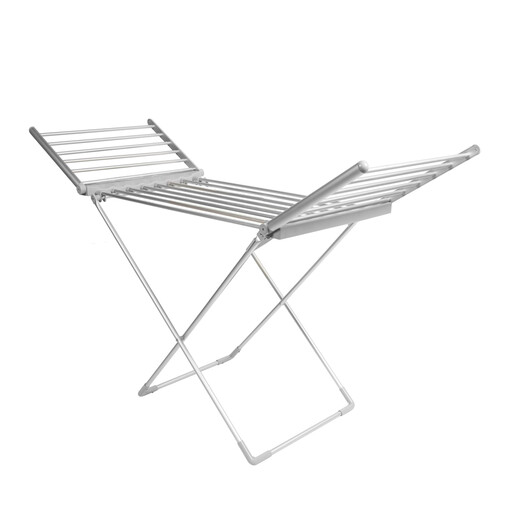 No image available
Pifco 3 Tier Winged Heated Airer
Consider this winged, three-tier format if a shared drying station needs to accommodate more than a few shorts. Check its open and folded dimensions against your space, and confirm the power rating and the instructions for any supplied cover before use.
View on Joybuy
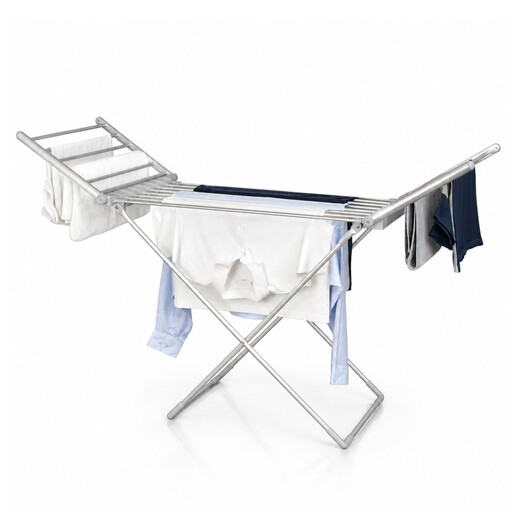 No image available
STATUS 230W Foldable Aluminium Heated Clothes Airer with Wings, Silver
The foldable winged design is worth considering for frequent loads that must be put away between uses. Its stated power rating is 230 W; confirm the open and folded dimensions before assigning it a shared drying spot.
View on Joybuy
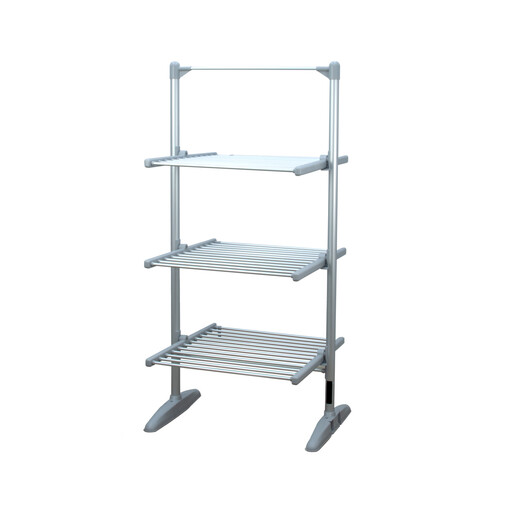 No image available
STATUS 248W Foldable Aluminium 3 Tier Heated Clothes Airer
Consider this foldable three-tier airer if housemates plan to share one drying station rather than drying only a few shorts at a time. Its stated power rating is 248 W; confirm its open and folded dimensions and check the exact model against current product-safety alerts.
View on Joybuy
Common questions
Should I choose a winged airer, a three-tier rack or a covered pod?
For small, frequent loads of cotton shorts, start with a winged airer that fits both the drying spot and its storage space. A three-tier rack suits agreed combined loads; a covered pod suits a household willing to allocate space for warm-air drying and follow the exact unit’s loading, operating and cooling instructions.
Will a heated airer prevent damp when I dry clothes indoors?
No: clothes still release moisture into the home. The UK Government’s existing-home ventilation guide explains that moisture can become condensation without effective ventilation, so use the room’s intended ventilation and keep fitted trickle vents unblocked.
Can I use an extension lead for a heated airer?
Use one only if the total connected load stays within its marked rating and the arrangement follows its instructions; a wall socket is preferable where practical. Electrical Safety First warns against overloading and daisy-chaining extensions, and says cable reels must be fully unwound to achieve their current rating.


