What should you check first?
For cotton shirts in a small flat, check the open and stored size before comparing rail length, then decide whether hanger use, drying time or room for other laundry matters most.
| Concern |
What to check |
Who this matters to |
| Open size and storage |
Measure the full open width, depth and height against the drying spot, walking space and storage gap. Check folded depth separately. |
When the airer has to stand near furniture and disappear after use, fitting it in both positions comes first; around 31% of consumers put space and storage first. |
| Shirt spacing and hangers |
Check whether the exact model permits hangers and whether its rail and tier spacing lets shirts hang apart. |
If I dry shirts frequently, I want them separated and straightforward to put away; roughly 25% of consumers prioritise that shirt-friendly layout. |
| Indoor moisture |
Choose a drying position with appropriate ventilation, and watch for recurring condensation rather than relying on heated rails to manage moisture. |
Where windows or walls already collect condensation, I need a workable way to manage moisture; around 13% of consumers make this their main concern. |
| Drying time and electricity use |
Compare the model’s wattage and any timer, while treating drying-time claims as specific to their stated loads and conditions. |
If shirts need to be ready between washes, I care about the wait as well as how long the airer runs; roughly 19% of consumers put this balance first. |
| Room for mixed laundry |
Compare drying length and stated wet-load limits, including any limits for individual arms or tiers. |
When shirts share a wash with other clothes, I need enough space to avoid crowding the load; around 12% of consumers prioritise mixed-laundry capacity. |
Heated airers on Joybuy
These Status options cover a foldable three-tier airer and a winged airer for indoor laundry. For either one, check the open and folded dimensions and the space available between shirts before choosing it for a small flat.
 No image available
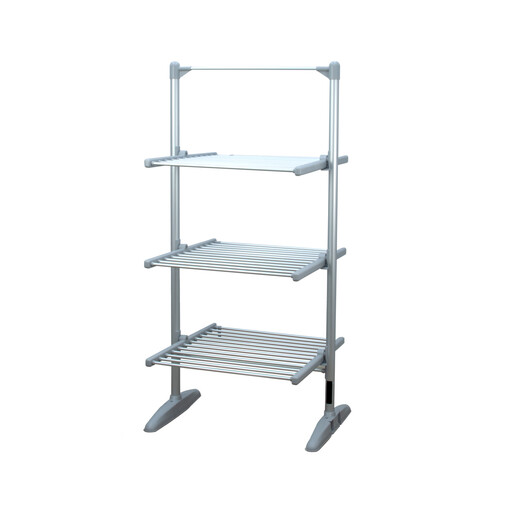
Status 3-Tier Heated Clothes Airer, 248W
Consider this tiered layout if you want to dry shirts alongside other laundry and can leave enough room around the open airer.
The product title specifies a foldable aluminium design. Confirm its open size, folded depth and usable shirt spacing against your room and storage spot.
View on Joybuy
 No image available
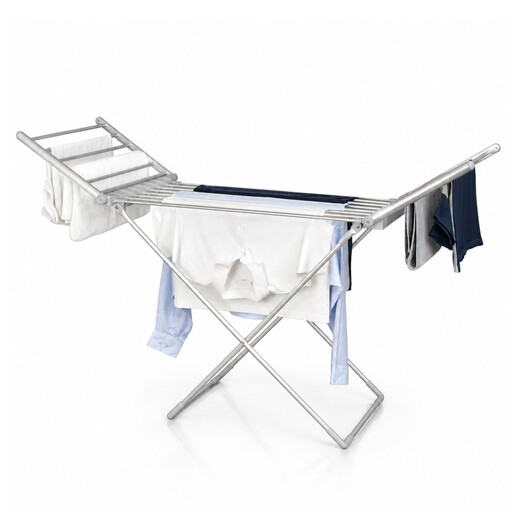
STATUS Winged Heated Clothes Airer, 230W, Silver
Consider the winged layout if it fits your drying position, but check the rail arrangement before planning to use shirt hangers.
The product title specifies foldable aluminium construction. Confirm the open width, folded depth and clearance between shirts before ordering.
View on Joybuy
Questions about drying shirts indoors
Will a heated airer dry cotton shirts faster than an unheated indoor airer?
A heated airer can shorten drying time, but there is no single time to expect for cotton shirts. Which? reported around four to seven hours for a cotton load in its heated-airer testing, depending on the model; load size, spacing and room conditions also matter.
How do I work out a heated airer’s electricity use?
Multiply its stated power in kW by the hours it runs to estimate electricity use in kWh. A 300W airer is rated at 0.3kW, so its running time and your electricity tariff determine the resulting cost; Minky specifies 300W for the larger model discussed here.
Should I choose an airer with a cover?
Choose a cover only if it is designed for the exact airer and suits your drying routine. Lakeland says its compatible covers can support quicker drying, but inclusion varies by model, and a cover does not remove moisture from the room.
How can I limit condensation while shirts dry indoors?
Manage the room’s moisture separately from heating the airer. UK government guidance identifies drying laundry as a source of indoor moisture; use appropriate ventilation, check for condensation and address recurring damp or mould promptly.
What electrical-safety check should I make before buying?
Check current UK recall information against the exact make and model, then keep those details for future checks. Electrical Safety First points consumers to the Office for Product Safety and Standards for current recall data.


