For regular batches of sports tops, consider a three-tier heated airer if you have room to set it up and store it; a winged airer is worth considering when longer garments and folded storage matter more. A heated pod offers an enclosed format with a timer on some models, but a standalone pod needs a compatible frame. Whichever format you choose, check the garment labels and ventilate the drying room: heating the clothes does not remove moisture from the home.
Who might need a heated airer?
Frequent sports-top washers
If several training tops go into the wash each week, usable hanging space and the permitted wet-load limit matter more than they would for an occasional small load. Lakeland and Dunelm list three-tier examples with 20–21 m of drying space and 15 kg load limits.
Small-space indoor dryers
If the airer has to be put away after each load, compare its dimensions both open and folded. Lakeland describes compact storage for a three-tier model, while Minky says its SureDRI XL winged model folds flat.
People drying kit between sessions
If the next training session is close, a fitted cover or enclosed pod may appeal. Check the exact model and arrangement: Beldray describes a pod with a timer and vented cover, while Dunelm offers a compatible cover for its rail airer.
What matters when choosing?
Three-tier heated airer
Consider it when: several tops and other kit need rails in the same drying session.
Allow for: the open footprint and a cover that may be a separate accessory.
Winged heated airer
Consider it when: longer garments also need space and a flat-folding layout suits your storage spot.
Allow for: the width of the wings when the airer is open.
Heated drying pod
Consider it when: an enclosed setup and a timer suit your drying routine.
Allow for: a compatible airer if buying a standalone pod, and check its stated wattage.
| Concern |
What to check |
Who this matters to |
| Space for repeat loads |
Compare drying-space length and the wet-load limit with a typical batch of tops and accompanying kit. |
When several tops need drying together, I want enough rails to spread them out without exceeding the load limit. Around 27% of consumers put capacity for repeat kit washing first. |
| Turnaround between sessions |
Check whether a cover or pod fits the exact model and whether a timer is included; wattage alone does not establish drying time. |
If I need a top for my next session, the drying arrangement takes priority over storing the airer compactly. For around 33% of consumers, getting kit ready between sessions is the main concern. |
| Floor space and storage |
Measure the intended position against the open dimensions and the storage spot against the folded dimensions. |
I need to put the airer away after use, and its open frame still has to fit the room. Compact setup and storage come first for around 20% of consumers. |
| Moisture and electrical setup |
Plan for effective ventilation and check the appliance instructions, socket arrangement and stated wattage. |
If laundry dries indoors regularly, I need a room where moisture can escape and an appropriate electrical setup. Around 20% of consumers make moisture management and electrical use their primary concern. |
Checks that are easy to miss
-
Assuming a cover manages room moisture
A cover may retain warmth around clothes, but moisture still enters the room as they dry. UK government ventilation guidance warns that trapped household moisture can contribute to condensation.
Choose a drying spot with effective ventilation, keep designed vents unobstructed and follow the appliance and home-ventilation instructions.
-
Judging electricity use by wattage alone
Wattage describes electrical input, not how long a particular load will take to dry. For context, Dunelm lists 330 W for its three-tier airer, the covered Minky SureDRI XL is listed at 260 W, and the Beldray EH3788 pod is listed at 1200 W; these figures do not establish comparable drying times.
Consider both the stated wattage and how long you expect to run the exact appliance. Follow its instructions rather than assuming that one format will finish a load sooner.
-
Buying a pod without checking the frame
A standalone pod needs an airer that fits it. Beldray also offers a complete pod-and-airer set, so the contents depend on the product selected.
Check the compatible frame dimensions, what is included and the heater clearances before ordering.
A standalone pod may require a separate compatible three-tier airer.
-
Overloading an extension arrangement
Electrical Safety First warns that overloaded extension leads, adaptors and sockets can overheat and create a fire risk.
Check the appliance instructions and the extension's rating. Do not daisy-chain extensions, and fully unwind a cable reel before use.
Relevant brands to consider
Dry:Soon
Lakeland's Dry:Soon range includes folding three-tier heated airers and fitted covers for indoor drying.
- Lakeland lists 21 m of drying space, a 15 kg load limit and an 8 cm folded depth for its standard three-tier model.
- Check the open footprint and whether the selected bundle includes a cover. Lakeland says its fitted cover retains heat and speeds drying; that is the retailer's claim, not a measured result for every load.
Dunelm
Dunelm offers a three-tier heated airer and a compatible cover for buyers considering a vertical rail layout.
- Dunelm lists 20 m of drying space and a 15 kg load limit for its three-tier model.
- Confirm whether the chosen listing includes the cover. Dunelm says its compatible cover retains warmth and speeds moisture evaporation.
Minky
Minky positions its SureDRI XL winged airer for longer garments as well as everyday laundry.
- The SureDRI XL is listed at 18 m of drying space, a 20 kg capacity and an included cover; Minky says the airer folds flat.
- Measure the available width before choosing a winged setup, even if its folded shape suits your storage space.
Beldray
Beldray offers both a complete heated pod-and-airer set and a standalone pod for a compatible three-tier frame.
- Beldray lists 15 m of drying space and a 7 kg load limit for its complete set; the EH3788 pod is listed with a timer and 1200 W heating element.
- Check which components are included and whether a standalone pod fits your frame. Its stated wattage should not be read as a guaranteed drying-time result.
Joybuy heated airers for indoor drying
These Joybuy choices are heated rail airers for drying sports tops indoors. Compare their layouts and stated wattages with your available space and drying routine; check garment labels before applying heat.
 No image available
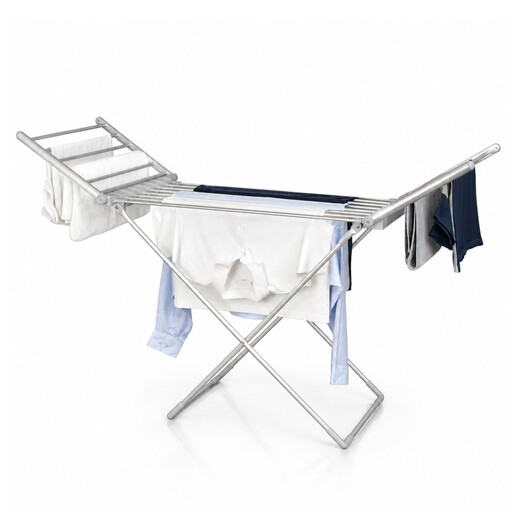
STATUS 230W foldable aluminium winged heated airer, silver
Consider the winged layout if you want to spread sports tops across an open frame and fold the airer away afterwards.
The product title states a 230 W rating. Check its open dimensions against your drying spot and follow each garment's care label.
View on Joybuy
 No image available
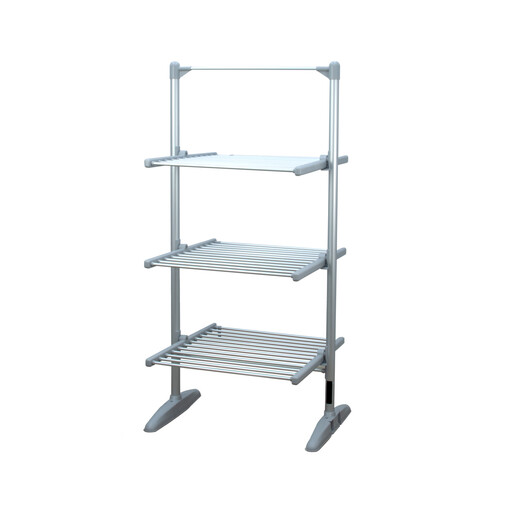
STATUS three-tier 248W foldable aluminium heated airer
The three-tier layout is worth considering when several sports tops and other garments need rail space in one session.
The product title states a 248 W rating. Check the open and folded dimensions, drying space and permitted load for your intended use.
View on Joybuy
 No image available
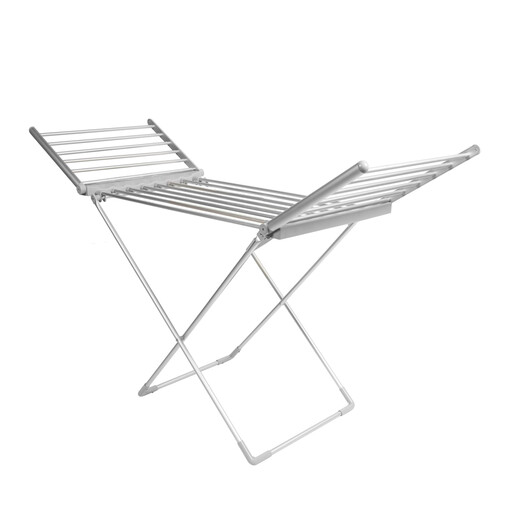
Pifco three-tier winged heated airer
Consider this three-tier winged layout if you need to arrange sports tops alongside longer items and can accommodate the open wings.
Check its dimensions and drying-space length against your load. If using a cover, confirm the correct arrangement in the appliance instructions rather than covering the airer in a way those instructions prohibit.
View on Joybuy
Frequently asked questions
Is a cover useful when drying sports tops?
A fitted cover may be useful for retaining warmth around a heated airer. Dunelm and Lakeland say their compatible covers speed moisture evaporation, but the cover must fit the exact model; leave space between garments and follow the appliance instructions.
Will a heated airer remove moisture from the room?
No. Water leaving the clothes enters the indoor air unless it is ventilated away. UK government ventilation guidance warns that trapped moisture can contribute to condensation, so use the airer in a room with effective ventilation.
Can I use an extension lead with a heated airer?
Use one only if the appliance instructions permit the arrangement and the extension is suitable for the combined electrical load. Electrical Safety First advises against overloading or daisy-chaining extensions; check the lead's condition and rating, and fully unwind any cable reel.


