Who each format suits

Hand-towel-only sharers

If the main task is drying towels between bathroom uses, a compact rail avoids leaving a laundry-sized rack in a communal room. Lakeland’s Dry:Soon towel-airer example specifies 2.7 m of drying space and a 6 kg load limit; check whether the towels you normally share would fit.

Small-space, mixed-laundry sharers

When housemates also dry occasional clothing, a winged airer offers a different balance of drying space and storage. Beldray specifies a 15 kg limit and fold-flat storage for its winged example; its open footprint still needs checking.

Households sharing regular laundry loads

A tiered airer is worth considering if several people will use the same rack for towels and clothing. Beldray’s three-tier example specifies 20 m of drying space and a 30 kg limit, while Minky’s four-tier sureDRI has separate per-arm and per-layer limits. Neither capacity figure replaces checking how an individual rack may be loaded.

What matters when choosing

Compact towel rail

Choose when: The house mainly dries a few hand towels and has limited communal floor space.

Trade-off: A towel-focused rail has less room for clothing or a shared laundry load.

Winged airer

Choose when: Towels share the rack with occasional clothing and it needs to fold away.

Trade-off: The wings need clear floor space while open.

Tiered airer

Choose when: Several housemates intend to dry regular laundry loads on one rack.

Trade-off: Its larger frame and model-specific loading limits may be unnecessary for hand towels alone.

Concern What to check Who this matters to
Drying capacity Compare drying length and maximum load separately; check how the exact model may be loaded. If our towels must share the rack with regular laundry, a short towel rail may leave too little room. Around 31% of consumers would put shared-load capacity first.
Shared-room space Measure the open footprint and folded size, and check cable reach to a suitable socket. When we need to put the airer away between uses, its size in the room matters as much as storage. Roughly 31% of consumers would prioritise manageable shared-space use.
Moisture and electrical safety Check the manual’s placement instructions and keep the home’s intended ventilation working; inspect the socket and any extension arrangement. If towels dry indoors repeatedly, we need a dry, stable location without trapping moisture or using an overloaded connection. For about 38% of consumers, moisture control and electrical safety would come first.

Mistakes to avoid

  • Expecting heat to remove moisture from the room

    Water leaving damp towels enters the indoor air. The Ministry of Housing, Communities & Local Government explains that ineffective ventilation can leave moisture trapped and lead to condensation.

    Choose a location with working ventilation, keep fitted trickle vents clear and report recurring damp or mould as a housing issue rather than relying on another airer.

  • Buying a laundry rack for a towel-only task

    Lakeland specifies 2.7 m of drying space for its Dry:Soon towel rail, while Beldray and Minky list much greater drying lengths for named tiered models. Extra space helps only if the house will use it.

    Count the towels normally drying at once and measure the intended location before choosing a format.

    An unnecessarily large rack also occupies more shared-room space while in use.

  • Treating wattage as a drying-time promise

    A rated wattage does not, on its own, tell you how quickly damp towels will dry. Spacing, towel thickness and room conditions also matter.

    Compare usable drying space and load limits alongside the rating. To plan electricity use, multiply the rated power in kW by the hours the airer actually runs.

  • Overloading an extension arrangement

    Electrical Safety First warns that appliances exceeding an extension lead’s, reel’s or adaptor’s maximum current rating can cause overheating and fire.

    Prefer a suitable wall socket. If an extension is necessary, check its rating and the combined appliance load, do not daisy-chain extensions and fully unwind a cable reel.

Brands to consider for these airer formats

Dry:Soon

A towel-focused option to compare with larger laundry airers.

  • Lakeland specifies 2.7 m of drying space, a 6 kg limit and 2- and 4-hour timers for its heated towel airer.
  • That smaller format may not cover a household’s regular laundry; check the particular model’s availability before planning around it.

Beldray

Winged and tiered models offer different amounts of space for towels and clothing.

  • Beldray specifies a 15 kg limit and fold-flat storage for its winged example, and 20 m of drying space for its three-tier example.
  • Check the open footprint and the exact model’s load limit rather than applying one model’s figures to the range.

Minky

A larger tiered format for households intending to share an airer for laundry.

  • Minky specifies 23 m of drying capacity and a 20 kg maximum load for its four-tier sureDRI model.
  • The same model has separate per-arm and per-layer limits; its size may be disproportionate if the house dries only hand towels.

STATUS

Towel rails, winged airers and tiered airers provide formats for different shared-house loads.

  • Joybuy’s named STATUS listings include a 230 W winged airer and a 248 W three-tier airer.
  • Check the supplied instructions for placement, use and storage; the named listings warn against using the airers near water.

Joybuy products for different loads

These STATUS choices range from towel-focused rails to winged and tiered clothes airers. Start with the towels and laundry your house actually needs to dry, then check that the chosen model fits a dry location near a suitable socket.
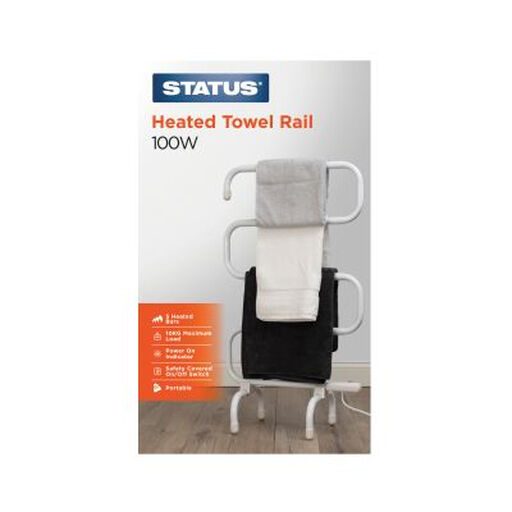
White STATUS 100W freestanding five-bar heated towel rail

STATUS 100W freestanding five-bar heated towel rail, white

A towel-focused choice when the house does not need a full laundry rack. The product name identifies five bars and a 100 W rating; measure the intended dry, level location and keep the room ventilated.

View on Joybuy
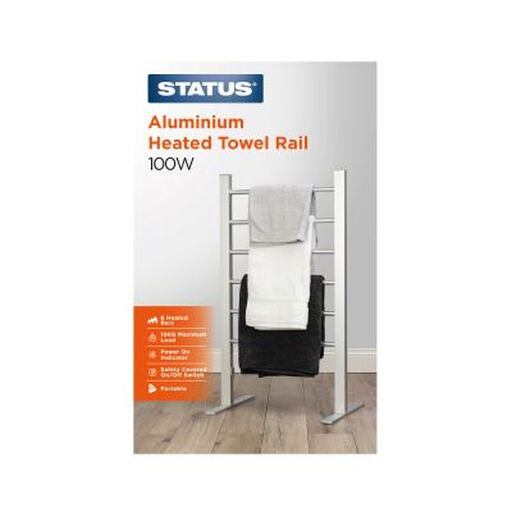
Silver STATUS 100W freestanding six-bar heated towel rail

STATUS 100W freestanding six-bar heated towel rail, silver

Consider this towel-focused format if a six-bar layout suits the towels shared by the house. The title states 100 W, but confirm the rating in the manual; also check the rail’s dimensions and cable reach for the intended dry location.

View on Joybuy
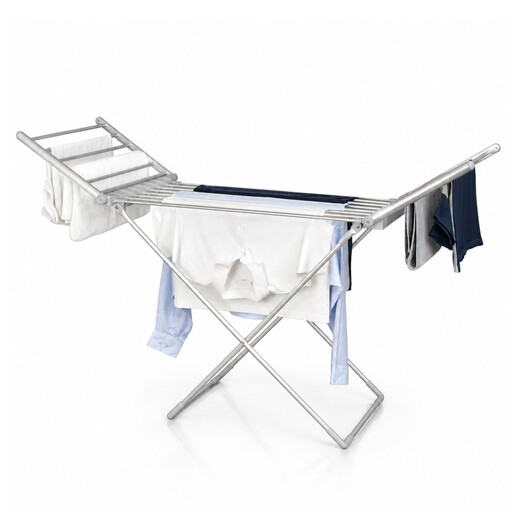
Silver STATUS 230W folding winged heated clothes airer

STATUS 230W folding winged heated clothes airer, silver

For hand towels alongside occasional clothing, this winged format folds for storage. The named model is rated at 230 W; check its open footprint and cable reach, and follow its instructions on placement and covering the heated bars.

View on Joybuy
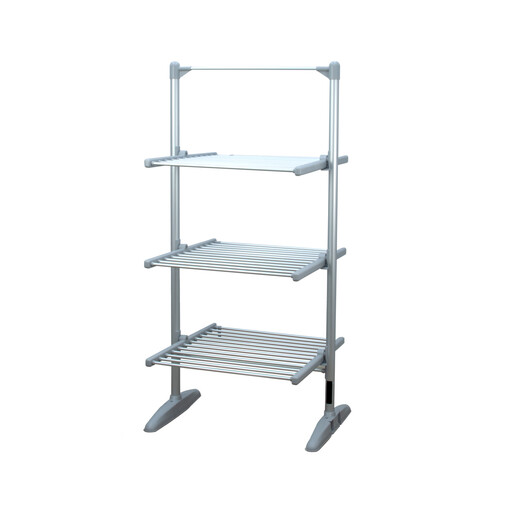
STATUS 248W folding three-tier heated clothes airer

STATUS 248W folding three-tier heated clothes airer

This three-tier format is relevant when housemates intend to share a rack for towels and larger laundry loads, rather than hand towels alone. The named model is rated at 248 W; check its open dimensions and cable reach, and let it cool before folding it away as instructed.

View on Joybuy

Frequently asked questions

Will a heated airer prevent condensation?

No: moisture leaving hand towels still enters the indoor air. The Ministry of Housing, Communities & Local Government explains that without effective ventilation, moisture can become trapped and form condensation. Keep the home’s intended ventilation working, including fitted trickle vents.

Can I put a heated airer in a student-house bathroom?

Only use the intended location if the exact model’s instructions allow it and the airer can stand on a dry, stable surface away from water. The named STATUS listings warn against placement near water sources. If those conditions cannot be met, choose another ventilated room.

Can I use an extension lead?

Use one only if it is suitable for the combined appliance load and can be used as instructed; a suitable wall socket is preferable. Electrical Safety First warns against exceeding an extension device’s current rating. Do not daisy-chain extensions, and fully unwind a cable reel during use.

What if a socket looks scorched or breakers keep tripping?

Stop using the affected setup and report it to the landlord or accommodation provider. Electrical Safety First advises students to report scorching around sockets and repeated circuit-breaker or RCD trips rather than attempting electrical work themselves.