What matters when choosing?
Start with the size of your usual workwear load, then check the space available while the airer is open and the conditions in the drying room.
| Concern |
What to check |
Who this matters to |
| Workwear capacity |
Compare drying length and stated load limit with your usual load; leave room to spread garments out. |
If several people need the airer, I want enough room for workwear without leaving pieces piled together. Roughly 42% of consumers put load capacity first. |
| Space and storage |
Measure opened height and width, folded depth and clearance around the intended position. |
When the room is shared, I need to use the airer and then put it away without blocking anyone's route. Around 33% of consumers prioritise the space it takes up. |
| Moisture and electrical safety |
Choose a ventilated position; check the exact model's loading instructions, plug and cable, and avoid overloaded sockets. |
If the room already gets condensation, I need to dry clothes without ignoring damp or an unsafe electrical setup. About 25% of consumers make moisture and electrical safety their main concern. |
Joybuy heated airers for this use
These winged and three-tier airers are relevant to drying washable workwear indoors. Match each frame to your usual load, available room and storage space rather than choosing by tier count alone.
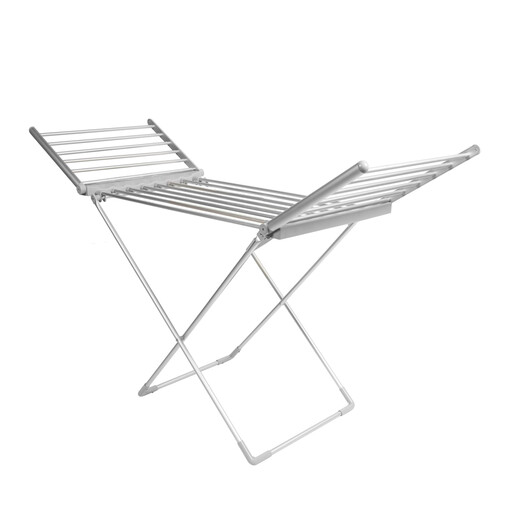 Image unavailable
Pifco 3-Tier Winged Heated Airer
Consider this three-tier winged format for workwear loads when you need to compare both vertical and open-wing space. The Joybuy listing states a 12kg capacity; check the opened dimensions and usable drying length against your room and garments.
If using a cover, follow the instructions for this exact model rather than covering the frame in a way its instructions prohibit.
View on Joybuy
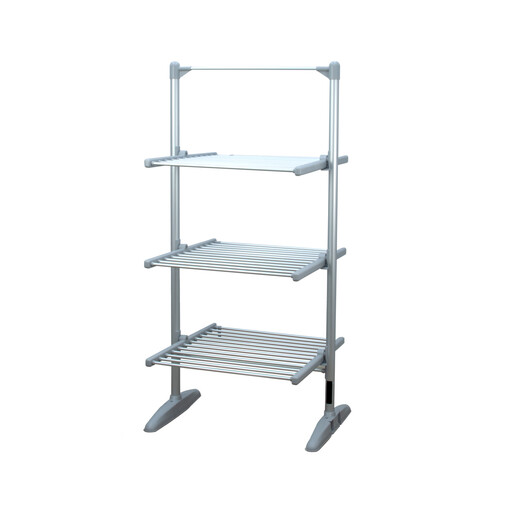 Image unavailable
Status 3-Tier Foldable Aluminium Heated Clothes Airer, 248W
Consider this three-tier frame if shared workwear loads make a vertical layout useful. Its product name specifies a 248W rating and a foldable aluminium frame; compare the opened dimensions, drying length and load instructions with your available space and usual wash.
View on Joybuy
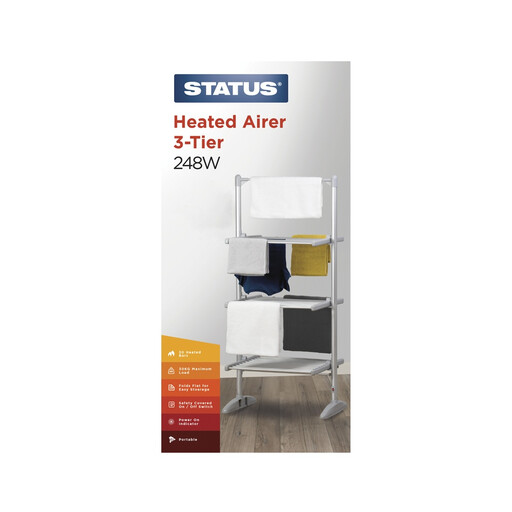 Image unavailable
STATUS 230W Foldable Aluminium Winged Heated Clothes Airer, Silver
Consider this winged layout for personal workwear loads when putting the airer away matters. The product name specifies 230W and a foldable aluminium frame, while the Joybuy listing states a 15kg maximum load. Check its opened dimensions and drying length: a load limit alone does not show how many garments will fit without crowding.
View on Joybuy
Common questions
Is a winged or three-tier heated airer more suitable for student workwear?
A winged airer generally suits a smaller personal load and a need for flat drying space; consider three tiers for repeated or shared loads if the taller frame fits. For scale, the cited winged model states 11m of drying space and a 10kg capacity, while the cited Dunelm and Lakeland three-tier models state 20–21m and 15kg. Measure the open frame before choosing.
Can I use a covered heated airer in an unventilated bedroom?
A cover is not a substitute for ventilation. Use only a cover intended for the exact airer and follow its instructions; drying clothes indoors still adds moisture to the room, as UK government guidance explains.
What should I check before plugging in a heated airer?
Check that the plug and cable are sound, place the airer on a stable, dry surface and follow the model's loading and operating instructions. Avoid overloaded sockets or extension arrangements: London Fire Brigade identifies overloaded sockets as a common cause of electrical fires.
What if mould or persistent damp appears where we dry laundry?
Ventilate while drying, reduce avoidable moisture and report persistent damp or mould to the landlord or managing agent in rented accommodation. UK government guidance identifies drying laundry as one source of indoor moisture, so do not assume changing the airer alone will resolve the problem.


