Students with little storage space
If you dry a small rotation of cotton shirts and need the floor back afterwards, compare winged airers and the folded dimensions of any tower you consider.


Choose a fold-flat winged heated airer for a small cotton-shirt load when clearing the shared room after use matters most. A three-tier model makes more sense when housemates need more hanging space in a limited floor area, provided there is room to use it safely and ventilate the room while laundry dries.
If you dry a small rotation of cotton shirts and need the floor back afterwards, compare winged airers and the folded dimensions of any tower you consider.
If several people dry shirts in one session, a three-tier layout offers stacked hanging space. Check the exact model’s load limit and whether shirts can hang apart rather than crowding the rails.
If windows regularly mist up or the room smells damp, plan where laundry can dry with ventilation. A heated airer does not replace attention to persistent damp or mould.
For cotton shirts in a shared student house, decide how much laundry must hang at once and where the airer will be stored. Before using either format indoors, also consider ventilation and access to a suitable socket.
Choose it when: A modest shirt load and putting the airer away promptly matter more than accommodating a shared wash.
Trade-off: A compact winged model may leave less room to separate shirts than a larger three-tier model.
Choose it when: Several housemates need vertically stacked hanging space for shirts and other laundry.
Trade-off: The loaded tower still needs a stable position and sufficient clearance in the shared room.
| Concern | What to check | Who this matters to |
|---|---|---|
| Storage and floor space | Compare open and folded dimensions, and identify a stable position that keeps doorways clear. | If the shared room needs to be cleared after each wash, I need an airer I can put away easily; around 33% of consumers put storage space first. |
| Room for shirts | Check usable drying length and the stated load limit; make sure shirts can hang without being packed together. | When housemates dry shirts together, I need enough separate hanging space for the usual load. Around 25% of consumers prioritise shirt capacity. |
| Condensation and damp | Choose a ventilated position without blocking vents, and watch for recurring condensation or damp. | If the room already gets condensation, I need a drying setup that does not leave moisture unmanaged; for around 25% of consumers, this is the primary concern. |
| Electricity and sockets | Check the exact model’s rated power and plug, plus an extension lead’s current rating if one is needed. | With shared sockets serving other appliances, I need to know the airer can be connected without overloading them. Around 17% of consumers put electricity use and socket safety first. |
A wattage figure describes rated electrical power, not how long a load of cotton shirts will take to dry. Models with different layouts may also hold different amounts of laundry.
Compare rated power alongside usable hanging space, the load limit and the time you expect to run the airer.
GOV.UK identifies indoor laundry drying as a source of moisture, while City of York Council explains how moist air can condense on cold surfaces.
Ventilate the room and pay attention to recurring condensation, damp smells or mould. Report persistent problems to the landlord or accommodation provider.
A convenient spot for the airer is not necessarily a safe place to connect it if an extension lead is already supplying other appliances. Electrical Safety First warns against overloading sockets.
Use a sound wall socket where the cable safely reaches. If an extension lead is necessary, check its current rating and the combined connected load; do not daisy-chain adaptors.
A three-tier airer can offer more hanging space, but it also takes up room while loaded. Extra capacity may offer little practical value for a small shirt-only wash.
Start with the number of shirts you normally dry together, then check that the chosen airer fits both its in-use position and its storage spot.
Lakeland’s range includes compact and three-tier heated airers for different load sizes.
Relevant winged and three-tier listings give students two different layout options.
A three-tier heated airer for shoppers comparing stacked hanging space with a foldable frame.
A three-tier option for shoppers who want a cover and selectable timer and heat controls.
These Joybuy choices cover a winged, three-tier format for modest loads and a separate three-tier format for shared laundry. Check the space available for shirts, use and storage against the exact model before choosing.
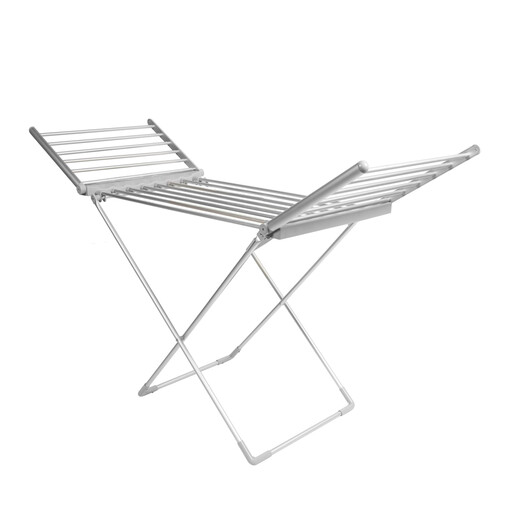 No image available
Consider this winged layout for a modest shirt load when putting the airer away between uses matters. Check its open and folded dimensions, usable shirt spacing and rated power against your room and socket position.
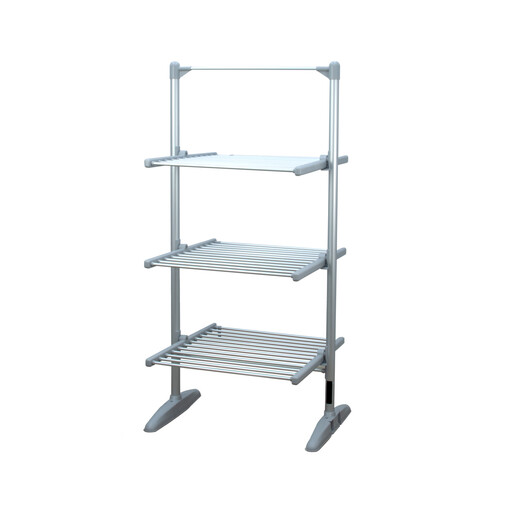 No image available
Consider this three-tier model when several shirts need hanging space in one session. Its title states a 248 W rating and foldable aluminium construction; check the open and folded dimensions and usable rail spacing before relying on it for a shared load.
Yes. Heated rails do not remove the moisture released by drying shirts. GOV.UK identifies indoor laundry as a source of moisture, so use a ventilated room and raise persistent damp or mould with your landlord or accommodation provider.
Only if the lead is undamaged and the combined connected load stays within its stated current rating. Electrical Safety First warns that overloaded sockets create a fire risk; use a wall socket where the airer’s cable safely reaches one.
Leave space between shirts rather than layering damp garments over the same bars. Follow the particular airer’s instructions, including its load limit and whether it permits hangers.
Ask your landlord or accommodation provider which electrical-installation information applies to your tenancy and UK nation. Report a damaged socket or fitting rather than using it for a heated airer.