Households with frequent shared laundry
If several housemates wash workwear and other clothes each week, usable rail space, stated load capacity and a clear shut-off routine matter more than drying metres alone.


For frequent shared loads of washable workwear, look for a heated airer with enough stated capacity and usable rail space; a timer can make the shut-off routine easier to share. A basic or winged model may suit different loads, but check its open footprint and included accessories, leave space between garments, ventilate the room and use a safe electrical setup.
If several housemates wash workwear and other clothes each week, usable rail space, stated load capacity and a clear shut-off routine matter more than drying metres alone.
An airer that folds away can be useful, but its open footprint, access for loading and cable reach must also fit the room without obstructing a shared route through it.
For smaller or less frequent loads, a basic model may meet the need if its capacity fits the washing and its controls and accessories suit the household’s routine.
For washable workwear in a shared house, start with the amount and shape of the laundry, then measure the space available for use and storage. Check controls, socket access and ventilation before settling on a model.
| Concern | What to check | Who this matters to |
|---|---|---|
| Usable capacity | Compare stated drying length and maximum load, then check whether shirts, trousers and heavier items can hang with space between them. | I need several housemates’ work clothes to fit without packing every rail tightly. Around 36% of consumers would put usable capacity first. |
| Drying routine | Check whether the exact model has a timer, how long it can be set for and whether a compatible cover is included. | If workwear is needed for the next shift, I want a routine that does not rely on one housemate remembering to switch the airer off. About 29% of consumers would prioritise drying control. |
| Room fit | Measure the open footprint, folded storage space and distance to a suitable socket; allow width for any wings. | I need to put the airer away between loads and keep the shared walking route clear. Roughly 21% of consumers would make space and storage their main concern. |
| Electricity and moisture | Check the rated wattage and cable arrangement, and plan how the room will be ventilated during indoor drying. | I want to account for electricity use without letting wet laundry add to condensation in the shared room. Around 14% of consumers would put electrical setup and moisture control first. |
Drying length does not tell you how easily work trousers and shirts can be spaced, whether the frame fits the room or which controls come with it.
Compare the stated maximum load with the rail layout, open and folded dimensions, timer and cable length.
Minky Homecare lists a cover with its 4 Tier sureDRI airer, while the cover for the 21m three-tier model is listed separately. The Dry:Soon Deluxe has a timer, but its cover is separate.
Check the accessories and controls for the exact model and variant you intend to order.
Electrical Safety First warns against overloading extension devices or plugging one extension lead into another.
Use an undamaged setup within its marked rating, avoid daisy-chaining and fully unwind a cable reel before use.
A heated airer does not prevent moisture from wet clothing entering the room. UK government guidance identifies indoor laundry drying as a source of household moisture.
Ventilate the room while drying, as Energy Saving Trust advises, and raise persistent damp or mould with the landlord or managing agent if you rent.
Its Deluxe 3-Tier model is a multi-tier option for shared loads.
Its range includes covered multi-tier and winged heated airers, which address different garment layouts.
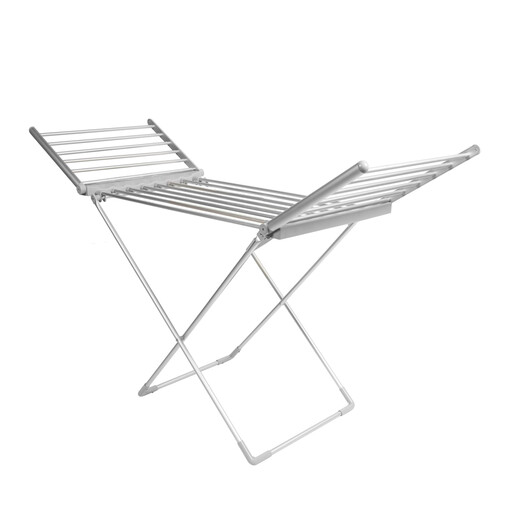
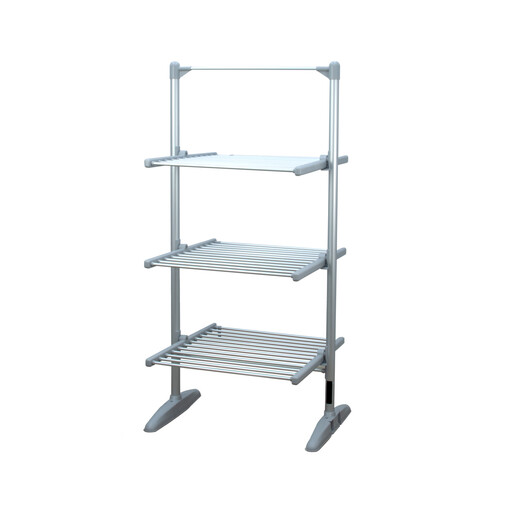
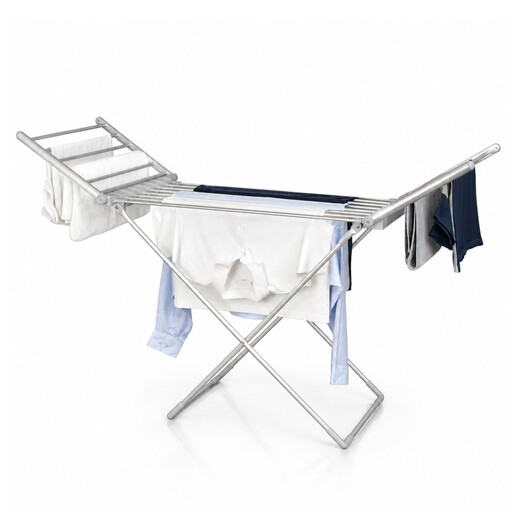
Status offers a foldable aluminium winged airer and a foldable three-tier model for comparing two layouts in a shared drying space.
These foldable heated airers offer tiered or winged layouts for indoor workwear drying. Compare each one with the household’s load, available floor space and preferred controls rather than assuming the formats are interchangeable.
 No image available
Consider this layout if you have room to open its wings and need to arrange workwear across three tiers. Check the frame against your garments, along with its open footprint and socket reach.
 No image available
For a shared indoor load, check whether its three tiers let you separate the workwear you usually wash. The title states a 248W rating and a foldable aluminium design; check the open dimensions and controls for your setup.
 No image available
Consider the winged layout if it fits your shared drying space, but check that the frame suits the length of your workwear. The title states a 230W rating, foldable aluminium construction and a silver finish; measure the space needed with the wings open.
Yes, if the airer fits safely and the room is ventilated while laundry dries. Energy Saving Trust advises using a window or trickle vents; indoor drying adds moisture even when the airer is heated.
Only use a suitable extension device within its marked load rating. Electrical Safety First advises against overloading or daisy-chaining extension devices and says cable reels should be fully unwound.
A timer is useful when several people use the airer and no one person consistently handles switch-off. Lakeland states a 1–12 hour timer for its Dry:Soon Deluxe 3-Tier model, while Minky Homecare states programming up to nine hours for its 4 Tier sureDRI; check the controls on the exact model.
Not necessarily: capacity, garment spacing and room fit still matter. The 21m model can be used without a cover, so check whether a compatible cover is included with any model you compare and follow its instructions.
Tell the landlord or managing agent about persistent damp or mould rather than assuming a different airer will resolve it. Continue to ventilate during indoor drying; UK government guidance identifies laundry drying as one source of moisture in homes.