Who each layout suits

Small-flat laundry planners

If you dry several pairs of leggings indoors and need to put the airer away afterwards, a folding three-tier rack is a useful starting point. The cited 21m model measures 75cm by 75cm when open, but you still need to leave room to walk around it.

One-load, minimum-footprint users

If open floor area is your tightest constraint, a covered pod may be easier to position than a wide rack. The cited JML DriBUDDI has a stated 64cm by 64cm footprint; check its 850W rating as well as its dimensions.

Delicates-first air dryers

If the care label calls for flat drying or you want to spread leggings apart, consider whether a winged layout gives you the arrangement you need. Winged airers are described as offering flat-dry zones, but the cited winged models open to 148cm wide.

What matters when choosing

Folding three-tier rack

Choose when: You need to separate several garments while keeping the open footprint roughly square.

Allow for: Space to reach the tiers and somewhere to store the rack after use; the cited 21m model folds to 8cm deep.

Covered drying pod

Choose when: A smaller open footprint matters more than having exposed rails for spreading garments.

Allow for: A different electricity-use profile: the cited JML DriBUDDI is rated at 850W, against 300W for the cited three-tier rack.

Winged heated airer

Choose when: A broader, lower arrangement suits the leggings’ care instructions and you have room to extend the wings.

Allow for: Considerable open width: the cited winged models each measure 148cm across.

Concern What to check Who this matters to
Floor space and storage Measure open width and depth with walking clearance, then check the folded dimensions against your storage spot. I need to dry leggings without leaving a rack across the walkway, and I want to put it away between loads. Around 36% of consumers put open footprint and storage first.
Room for a full load Compare stated drying length and load capacity, then look at whether the bars let you separate the garments you normally wash together. When several pairs need drying at once, I would rather leave space between them than crowd a small rack. Enough room for a regular load comes first for around 29% of consumers.
Electricity use and running time Check rated watts and consider how long you expect each load to run; a wattage rating alone does not establish drying time. I expect to use the airer regularly, so its electrical rating and likely running time affect my choice. Around 21% of consumers prioritise managing electricity use.
Flat-drying layout Read the leggings’ care label and check whether the open layout permits the required garment position without blocking ventilation. If my leggings need to lie flat or be spread apart, the shape of the drying area matters more to me than fitting in extra items. That is the primary concern for around 14% of consumers.

Mistakes to avoid

  • Choosing by drying length alone

    A long drying line does not tell you whether the open airer will obstruct a small room. The cited 21m three-tier model measures 75cm by 75cm when open, while the cited 11m winged model opens to 148cm wide.

    Mark out the open width and depth where you plan to use the airer, then measure the separate storage space.

  • Assuming a smaller airer uses less electricity

    Physical size and rated electrical power are different measures. The compact JML DriBUDDI is rated at 850W and the cited three-tier rack at 300W; neither rating establishes how long your leggings will take to dry.

    Compare the rated watts alongside your expected running time rather than using footprint as a substitute for either measure.

  • Treating heat as a substitute for ventilation

    The Ministry of Housing, Communities and Local Government warns that moisture can become trapped indoors without effective ventilation, leading to condensation.

    Choose a drying location with usable ventilation and follow the airer’s placement and operating instructions.

  • Overlooking an exact-model safety recall

    The UK Office for Product Safety and Standards has reported overheating or fire hazards involving specific heated-airer products. A report about one model does not establish the status of a different airer.

    Check the official UK product-recall database using the exact make, model and identifying numbers where available. Stop using an airer if a recall instructs owners to do so.

Brands to consider

Dry:Soon

Lakeland’s Dry:Soon range includes a folding three-tier layout for people who want to concentrate drying space vertically.

  • Lakeland states that its cited three-tier model provides 21m of drying space, holds up to 15kg and folds to 8cm deep.
  • Check the open footprint and whether a cover or mesh shelves are included with the particular model you choose; folded depth does not describe the space needed during use.

Status

Status lists a three-tier 248W foldable aluminium airer and a 230W winged version, two layouts to measure against a tight floor area.

  • The three-tier model states 248W and the winged model 230W.
  • Check the open footprint of the exact layout rather than applying one format’s dimensions to the other.

JML

JML’s cited DriBUDDI is a covered, freestanding pod for consumers who need a compact open footprint.

  • The cited model states a 64cm by 64cm footprint, an included cover and a 10kg load capacity.
  • The same listing gives an 850W maximum rating; compare both its layout and electrical rating with the rack you would otherwise use.

Minky

Minky’s cited Wing model offers a broad, covered arrangement for garments you want to spread across a lower layout.

  • The cited model lists 12m of drying space, a cover and a stated 16kg capacity.
  • Its 148cm open width needs substantially more clear room than a compact square rack or pod.

Joybuy product choices

These heated airers represent two layouts relevant to drying leggings indoors: a folding three-tier rack and a winged three-tier rack. Check each model’s open dimensions against the space you can actually spare, particularly if the airer will sit near a walkway.
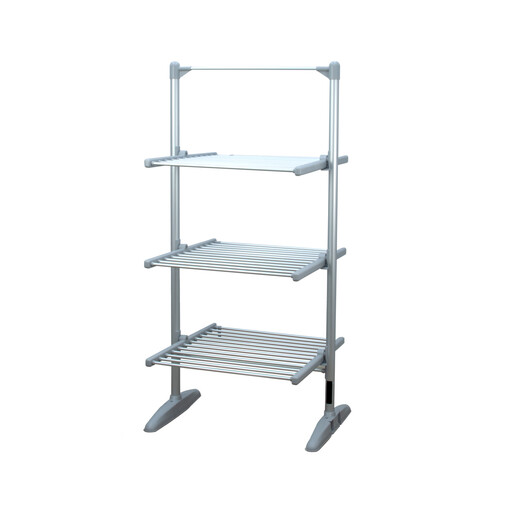
Status three-tier 248W folding heated clothes airer

Status Three-Tier 248W Folding Heated Airer

Consider this folding three-tier layout if you need to store the airer between leggings loads. Its stated rating is 248W and its maximum load is 30kg. Check the open and folded dimensions against your room and storage space; follow the product instructions, including the warning not to cover the heated bars during operation.

View on Joybuy
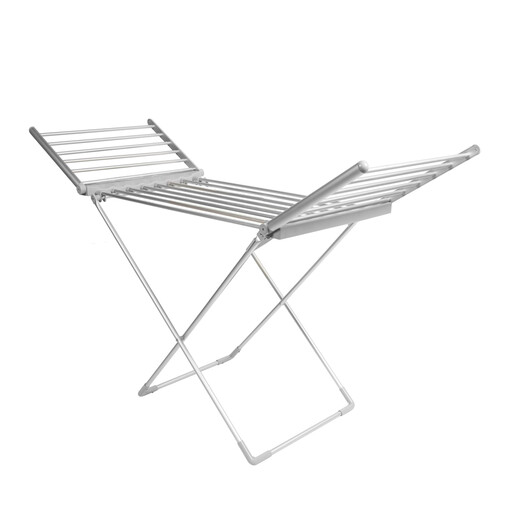
Pifco three-tier winged heated airer

Pifco Three-Tier Winged Heated Airer

Consider the winged layout if you need to spread leggings out and have sufficient room to open it. Confirm the open width and depth before choosing it for a narrow space, and check its rated wattage for your intended use. Follow the product instructions for covering the airer and keep items away from its controls.

View on Joybuy

Questions about drying leggings

What size heated airer works in a small room?

Choose by the open footprint and available walking space, not drying length alone. A 75cm by 75cm open footprint is listed for the cited 21m three-tier model, with 148cm open width for the cited winged model; the compact JML DriBUDDI is stated as 64cm by 64cm. Measure the spot where the airer will stand before deciding.

Does a compact drying pod necessarily use less electricity than a rack?

No: compare the rated watts of the specific models. The cited JML DriBUDDI pod is rated at 850W and the cited three-tier rack at 300W. Those ratings describe electrical power, not how long either appliance will take to dry your load.

Do I still need to ventilate a room when using a heated airer?

Yes, indoor clothes drying still adds moisture to the room. The Ministry of Housing, Communities and Local Government warns that moisture can become trapped without effective ventilation and lead to condensation. Keep the room’s ventilation usable and follow the airer’s instructions.

What safety check should I make for a heated airer?

Check the exact make, model and available identifying numbers against the official UK product-recall database, then follow the appliance instructions. The Office for Product Safety and Standards recalled a specific Dunelm Heated Winged Airer on 29 January 2025 because it could overheat; that recall must not be assumed to apply to other models.