What matters when choosing
Covered winged airer
Choose when: Shorts and other small loads are the main job, and you have room to open the wings.
Allow for: A wide open shape that may obstruct a narrow walkway. The Minky Wing model is 148cm wide when open.
Tiered airer
Choose when: The same airer needs room for regular mixed or fuller laundry loads.
Allow for: A taller structure. Two examples are 144cm and 147cm high when open.
Drying pod
Choose when: You favour a compact floor footprint for everyday garments over space to spread out larger items.
Allow for: Less capacity than a rack, according to Which?. The JML DriBUDDI Compact has a 64cm by 64cm footprint; check its hanging layout against your clothes.
For consumers choosing an airer chiefly to dry cotton shorts in a utility room, decide which need takes priority: handling small loads, fitting and storing the airer, or making room for other laundry.
| Concern |
What to check |
Who this matters to |
| Everyday small loads |
Check the layout for hanging shorts and whether a compatible cover is included. |
If I usually dry just shorts and a few everyday items, I want enough hanging room without choosing a rack for much larger loads. Around 45% of consumers would put small-load practicality first. |
| Room fit and storage |
Compare open width, depth and height with appliance clearance; check folded size and cable reach. |
I need to keep the route past the appliances clear and put the airer away afterwards. Room fit would be the primary concern for roughly 33% of consumers. |
| Mixed-load capacity |
Compare drying space and stated load capacity with the model’s open dimensions. |
When shorts go into a fuller wash with towels or bedding, I need space for those items too. Approximately 22% of consumers would prioritise mixed-load capacity. |
Joybuy airers for small loads
These winged heated airers offer places to spread everyday loads of cotton shorts. Compare their open dimensions with your utility room, and check the supplied contents if a cover matters to you.
 No image available
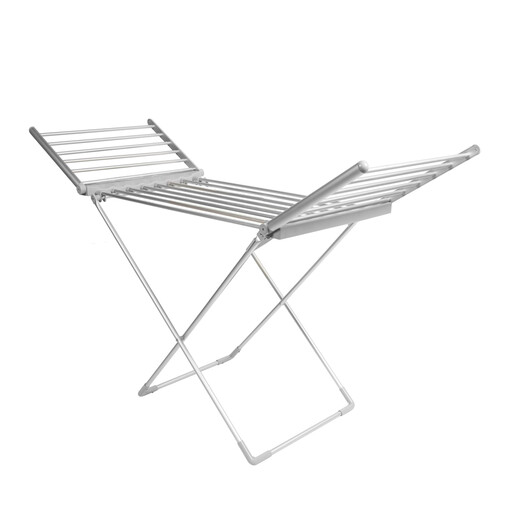
Pifco 3 Tier Winged Heated Airer
The winged layout offers places to spread a regular small load of cotton shorts.
The listing states 20 heated bars, a 12kg capacity, an included fabric cover, a 1.4m cord and fold-flat storage.
Confirm its open and folded width, depth and height against your utility room before buying; use the cover according to the airer’s instructions.
Joybuy
 No image available
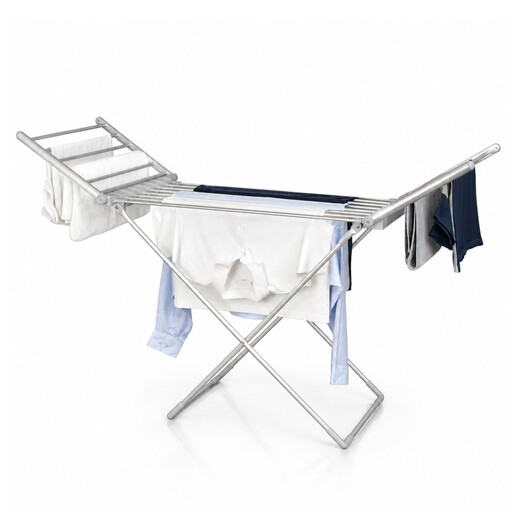
STATUS 230W Foldable Aluminium Winged Heated Airer – Silver
Its winged layout provides heated bars for spreading everyday garments, including cotton shorts.
The listing states 20 heated bars, a 15kg maximum load, a 230W rating and fold-flat storage. The rating alone does not establish drying time or electricity use per load.
Check its open dimensions and cable reach against your room, and confirm the supplied contents if you want a cover.
Joybuy
Questions about heated airers
Should I choose a winged airer, a tiered airer or a drying pod for cotton shorts?
Start with a winged airer for small loads if its open width fits; consider a tiered airer if it must also hold fuller mixed washes. A pod may suit everyday garments where floor footprint matters, but Which? describes pods as quicker-drying and lower-capacity than heated racks.
Does a cover remove the need to ventilate the utility room?
No. Winchester City Council notes that drying clothes indoors raises moisture levels; use available ventilation, such as a window or fitted trickle vents, even when using a covered airer.
What should I measure before ordering a heated airer?
Measure the usable open width, depth and height, allowing for appliance doors, cupboards and a clear route through the utility room. Also check folded storage dimensions and the distance to a suitable socket; listed drying space alone cannot establish whether an airer will fit.
How can I check whether a heated airer has been recalled?
Search the UK Government’s product recalls and alerts service using the exact brand and model. The Office for Product Safety and Standards publishes recalls, safety reports and alerts there.


