Frequent small-load dryers
If you wash a few pairs of cotton socks or other light items between larger laundry loads, a compact format may take up less room. Compact airers are described as suited to top-up loads.


For a few pairs of cotton socks and limited floor space, start by considering a compact or winged heated airer. A three-tier model makes more sense when socks regularly share the airer with everyday clothing, but check its opened size as well as its folded size. Whichever format you choose, drying laundry indoors adds moisture to the room, so plan for ventilation.
If you wash a few pairs of cotton socks or other light items between larger laundry loads, a compact format may take up less room. Compact airers are described as suited to top-up loads.
If socks usually go on the airer with everyday clothing, extra rails and manageable storage matter together. Three-tier designs are an option for larger loads in smaller spaces; check each model’s opened dimensions before choosing.
If condensation or damp is already a concern, decide where wet laundry can dry with workable ventilation. Energy Saving Trust advises against drying clothes indoors where possible and recommends keeping vents clear and using available extraction.
Choose the size for the laundry you normally dry, then check where the airer can stand, be stored and run safely.
| Concern | What to check | Who this matters to |
|---|---|---|
| Small sock loads | Check the opened footprint and whether there is room to spread out a few pairs without using a large rack. | I wash socks often but rarely need an airer for a full load, so I want it to be easy to put up without taking over the room. Around 27% of consumers put that small-load fit first. |
| Mixed-load capacity | Compare usable rails, the stated load limit, opened dimensions and folded storage size. | My socks usually dry alongside everyday clothing, so the airer needs enough space for both while still fitting away afterwards. Around 20% of consumers make mixed-load capacity and storage their primary concern. |
| Indoor moisture | Choose a place with workable ventilation; keep vents clear and use available extraction rather than relying on heated rails to manage condensation. | Condensation is already a concern at home, so I need a drying setup that does not leave moisture unmanaged. Around 33% of consumers put moisture management first. |
| Power and electrical setup | Check the exact model’s wattage and instructions, and keep the total connected load within any extension lead’s marked rating. | I want to judge running costs against my own electricity tariff and connect the airer safely. Around 20% of consumers prioritise those power and setup checks. |
Wet laundry still releases moisture indoors. Energy Saving Trust identifies indoor clothes drying as a moisture source and advises keeping ventilation working.
Before buying, choose a suitable place to run the airer. Keep vents clear and use available extraction; do not treat a cover as a solution to existing damp.
A compact airer intended for top-up loads may not suit a regular mixed wash, while a tower intended for larger loads may occupy more room than a few pairs of socks warrant.
Think about the largest load you normally dry indoors, then compare the airer’s opened footprint with the space available and its folded size with your storage space.
Minky specifies its sureDRI four-tier cover for the corresponding airer. That fit should not be assumed for another model.
Check cover compatibility against the exact model and follow its assembly and use instructions.
Electrical Safety First warns that overloaded extension equipment can overheat and create a fire risk.
Use a suitable wall socket where practical. If you need an extension lead, check its marked current rating against everything connected to it, and do not plug one extension lead into another.
Lakeland’s Dry:Soon range includes a Mini for tighter spaces and larger three-tier formats for mixed laundry.
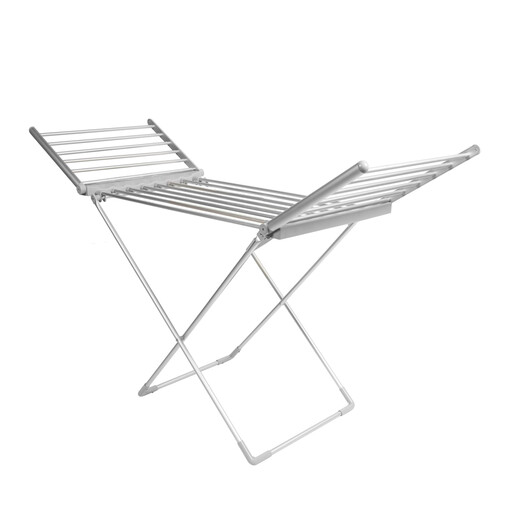
Minky offers winged and multi-tier heated airers for different laundry sizes.
The JML DriBUDDI Compact is an enclosed alternative to an open rack for light indoor laundry.
BLACK+DECKER offers foldable X-frame and tiered formats for buyers comparing setup and storage.
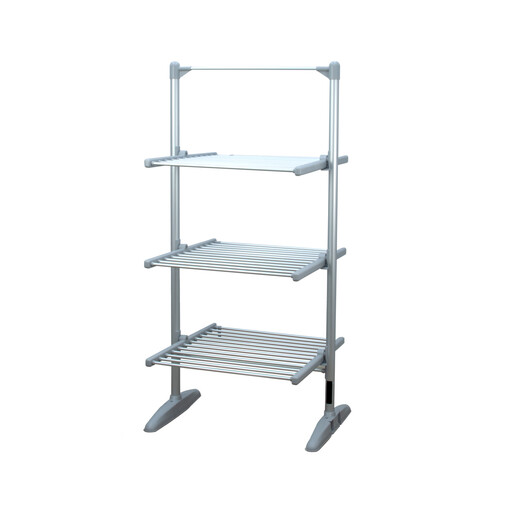
These three-tier options are for drying socks alongside other clothing. If you only dry a few pairs at a time, compare their opened size with a compact format before choosing.
 No image available
Consider this format when socks share drying space with everyday clothing and you have room to open a three-tier airer.
Check the opened and folded dimensions against your space, and confirm the power rating if running cost matters to you. Plan for ventilation when drying indoors.
 No image available
This three-tier format is relevant if socks normally dry with a larger mixed load rather than on their own.
The product name specifies 248W and a foldable aluminium design. Check its opened and folded dimensions for your space, and follow the product instruction not to cover the heated bars during operation. Ventilate the room while laundry dries.
A compact airer is worth considering if you mainly dry a few pairs at a time. Compact formats suit top-up loads; if socks usually dry with everyday clothing, compare the available rails and opened footprint of a larger format.
No. Drying wet socks indoors still adds moisture to the air, even when the rails are heated. Energy Saving Trust advises keeping vents clear and using available extraction to help manage indoor moisture.
Use the exact model’s rated wattage, how long you expect to run it and your electricity tariff. Divide watts by 1,000 to get kilowatts, then multiply by hours used and the tariff per kilowatt-hour; Minky notes that electricity prices affect running cost.
Use one only if it is suitable for the connected load and the airer’s instructions allow that setup. Electrical Safety First advises checking the extension lead’s marked current rating, avoiding overload and never plugging one extension lead into another.