Space-limited sock dryers
Students drying socks, underwear and small personal washes need enough space to separate items, but also somewhere to put the rack away between uses.


Choose a compact, foldable heated airer if socks and small personal washes are the usual load and storage is tight. A covered tiered model makes more sense when housemates also dry larger loads; consider a drying pod only if you have a compatible rack. Whichever format you choose, indoor drying still calls for ventilation and a safe electrical setup.
Students drying socks, underwear and small personal washes need enough space to separate items, but also somewhere to put the rack away between uses.
Housemates drying socks alongside shirts and larger washes need to weigh drying space and stated load capacity against the room a tiered frame occupies.
Students drying laundry indoors need to consider ventilation and how another appliance will be connected, particularly where sockets are shared.
Choose it when: Socks and small personal washes are the main load, and the rack must be put away after use.
Trade-off: A smaller rack may not leave enough drying space when housemates need it for full washes.
Choose it when: Several housemates will share the airer or dry larger items alongside socks.
Trade-off: Allow room for the open frame and check its folded dimensions rather than relying on tier count alone.
Choose it when: The house already has a compatible three-tier airer and wants an enclosed warm-air setup.
Trade-off: The Minky Heat Pod does not include an airer, and pod systems can have a higher rated wattage than heated rails.
| Concern | What to check | Who this matters to |
|---|---|---|
| Small loads and storage | Compare open and folded dimensions with the room and storage spot; check that socks can be spaced across the bars. | If I mainly dry socks in my room, I need usable rail space without leaving a large rack out all day. Around 40% of consumers put small-load practicality and storage first. |
| Shared loads and electricity use | Check drying space, whether the airer or cover is included, and rated watts alongside likely running hours. | When several housemates use one rack, I need room for socks and larger washes while keeping an eye on electricity use; roughly 30% of consumers prioritise shared-load capacity. |
| Moisture and electrical safety | Plan for ventilation and check the rating of any extension lead against the combined appliance load. | Drying indoors makes me consider both moisture in the room and how we use a shared socket. About 30% of consumers place moisture and electrical safety first. |
A stated cost per hour depends on the electricity tariff, while the total also depends on how long the airer runs. A pod and a heated-rail airer need not draw the same power.
Use the rated power in kW, your expected hours of use and your household tariff per kWh to compare likely use. Check whether a pod also needs a separate airer.
Extra drying space is useful for shared washes only if the open airer fits where it will be used and the folded frame fits where it will be stored.
Measure both spaces and compare them with the model's open and folded dimensions before ordering.
Drying laundry indoors adds moisture. UK government guidance identifies it as an everyday source of moisture that can contribute to damp and mould.
Ventilate while drying. If damp or mould persists in rented accommodation, report it to the landlord or housing provider so the underlying issue can be assessed.
Electrical Safety First warns that connected appliances can exceed an extension lead's current rating, creating an overheating and fire risk.
Check the lead's marked rating against the combined load, do not connect extension leads to one another, and fully unwind cable reels.
Lakeland's Dry:Soon range includes tiered heated airers for larger indoor laundry loads.
Minky offers a covered four-tier airer and a Heat Pod intended for use with a suitable existing three-tier airer.
Beldray's range includes winged heated racks and a Quick-Dry system for use with a suitable three-tier airer.
Homefront offers a compact standalone heated airer relevant to smaller indoor loads.
These standalone three-tier or winged airers are options for drying socks alongside other small indoor laundry. Choose by the space available when the rack is open and stored; a drying pod that needs a separate rack is a different purchase.
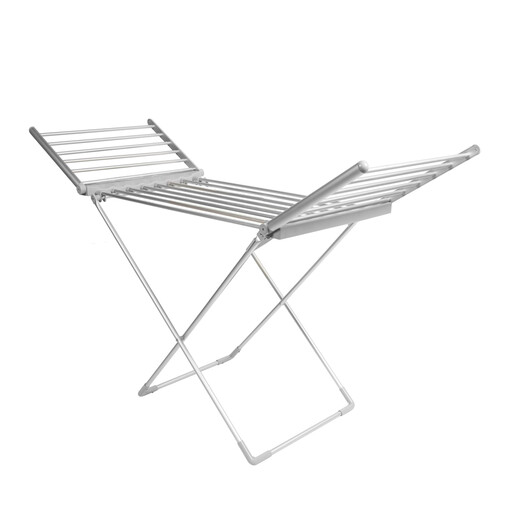 No image available
Consider this three-tier winged format if socks share the rack with other small laundry. Check its open and folded measurements, bar spacing and rated power against your space and expected use. Follow its cover instructions; do not cover the airer completely.
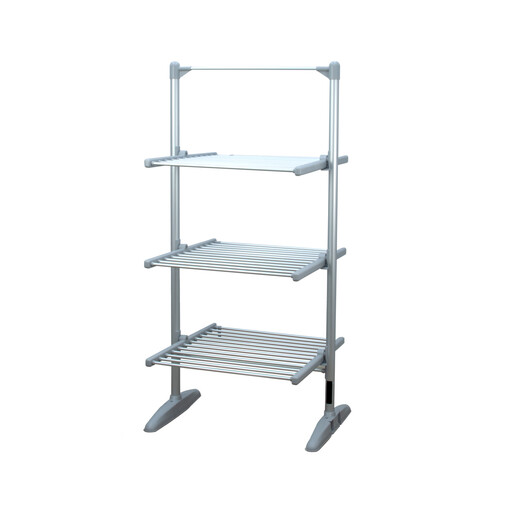 No image available
For socks alongside a shared wash, consider whether a foldable three-tier rack suits the room. This model lists 248 W; compare likely running hours as well as power, and check its open dimensions and bar spacing. Follow its instructions on covering the heated bars.
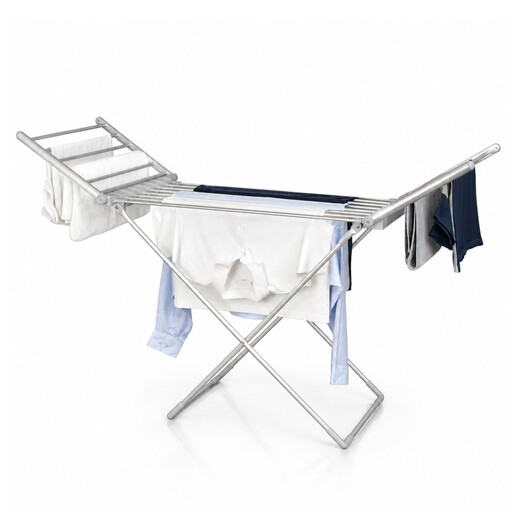 No image available
If the rack needs to be put away after drying socks and other small garments, consider this foldable winged format. Its listed power is 230 W; check its footprint, folded dimensions and bar spacing before choosing. Follow its instructions on covering the heated bars.
No: heating laundry does not remove the moisture it releases into the room. UK government guidance identifies indoor laundry drying as a source of moisture, so ventilate while drying and address any persistent damp or mould.
Use an extension lead only if it is suitable and the combined load stays within its marked current rating. Electrical Safety First advises against overloading leads or connecting one extension lead to another, and says cable reels should be fully unwound.
A covered tiered airer is easier to justify when housemates also need space for larger washes. For socks alone, compare the room it occupies with a smaller rack and check whether its bars or suitable accessories let you space out the items.
Multiply rated power in kW by expected hours of use and your household electricity tariff per kWh. A cost-per-hour claim may use a different tariff, while the time needed to dry a load can vary with the laundry and room conditions.