Small-flat apron dryers
If aprons and tea towels make up most of your load, the airer needs to fit while open and store away between washes. A large stated drying capacity is less useful if the frame blocks the room.


For several aprons, a folding three-tier heated airer is a practical choice if its open footprint fits your flat and you can spread the fabric across its rails. For smaller occasional loads, consider a winged airer; consider a covered pod when vertical hanging matters more, but compare its power rating and likely time in use. Whichever format you choose, indoor drying still calls for ventilation and attention to condensation.
If aprons and tea towels make up most of your load, the airer needs to fit while open and store away between washes. A large stated drying capacity is less useful if the frame blocks the room.
If you wash several aprons regularly, look for enough rail or hanger positions to keep damp fabric separated rather than choosing by maximum load weight alone.
Indoor laundry drying adds moisture to a home, as GOV.UK guidance explains. If condensation or damp is already a concern, plan where you can ventilate as well as where the airer will stand.
Start with the space the airer will occupy during a wash, not just its folded size. Then match the hanging layout to your apron load and consider electricity use alongside ventilation.
Choose it when: Several aprons need separate rail space and the open frame fits your drying spot.
Trade-off: Extra tiers can occupy more of the room while in use, even if the frame folds away afterwards.
Choose it when: You usually dry only a few aprons and want a fold-away rail layout.
Trade-off: Check both the wings’ open span and the available hanging positions before relying on it for larger loads.
Choose it when: Hanging aprons vertically suits the available space better than spreading them over rails.
Trade-off: Beldray’s separate fan-assisted hanger pod is described with a 900/1000 W heater; compare likely operating time as well as rated power.
| Concern | What to check | Who this matters to |
|---|---|---|
| Open footprint and storage | Measure the open width and depth, allowing room for apron ties, doors and a clear route past the airer. Compare its folded size if it will be stored between washes. | If floor space is tight, I need to walk past the airer while it is open and put it away afterwards. Around 42% of consumers would put space and storage first. |
| Separated drying space | Compare rail or hanger positions and the stated load limit; check whether several aprons can hang without damp sections bunching together. | When several aprons are washed together, I need places to hang them apart rather than a load limit I cannot use comfortably. For around 33% of consumers, separated drying space is the main concern. |
| Time, power and moisture | Compare rated wattage with likely hours per session, and choose a place where you can manage ventilation and condensation. | If I wash aprons often, I need a workable drying routine without overlooking electricity use or moisture in the flat. Drying time, power and moisture would come first for around 25% of consumers. |
A tiered airer can offer substantial rail space yet obstruct a small room when open. The Minky SureDri four-tier model is listed at 1470 × 720 × 670 mm.
Mark out the stated open width and depth where you intend to use it, then allow space for hanging aprons and opening doors.
Drying laundry adds moisture to the home. GOV.UK guidance also warns about the effects of persistent damp and mould.
Use an appropriately ventilated space, watch for recurring condensation and address persistent damp or mould rather than relying on the airer to resolve it.
Rated power distinguishes appliances, but energy used over a drying session also depends on operating time. A shorter session at a higher wattage cannot be assumed to use more or less energy without both figures.
For each model, multiply its rated power in kW by the likely hours of use to compare kWh per session, then consider whether its hanging layout suits your load.
A general three-tier airer name does not identify every variant, cover or accessory. A review of one product should not stand in for the specifications of another.
Compare the complete model name and number, stated specifications and included items before applying a review or recommendation to a retailer listing.
The range includes tiered rail airers and a heated drying cabinet, giving apron dryers different hanging layouts to consider.
Minky’s SureDri four-tier model is a covered, foldable rail option for loads that need more hanging space.
The covered 63091 three-tier model offers a rail layout for aprons washed alongside other light laundry.
Beldray offers covered airer and pod formats for buyers considering rails or more vertical hanging.
A Status three-tier model offers a fold-flat rail format for storing an airer between washes.
These winged and tiered heated airers are relevant when you want rails for aprons and fold-away storage. Compare each frame’s open dimensions with your drying spot before choosing a format for a small flat.
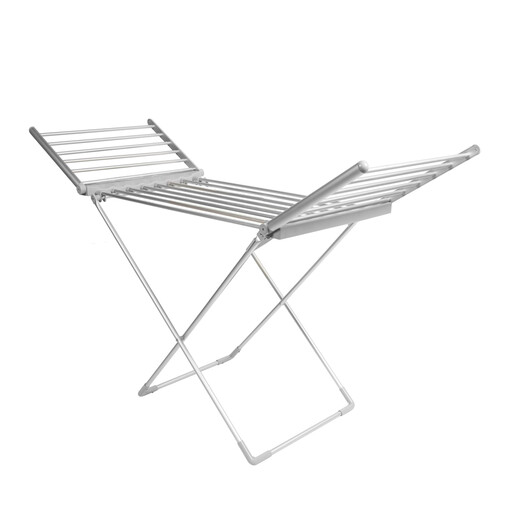 No image available
Consider this winged format if you want rail space for aprons and a frame you can put away between washes.
Check the operating instructions before using a cover: the product information also cautions against fully covering the airer.
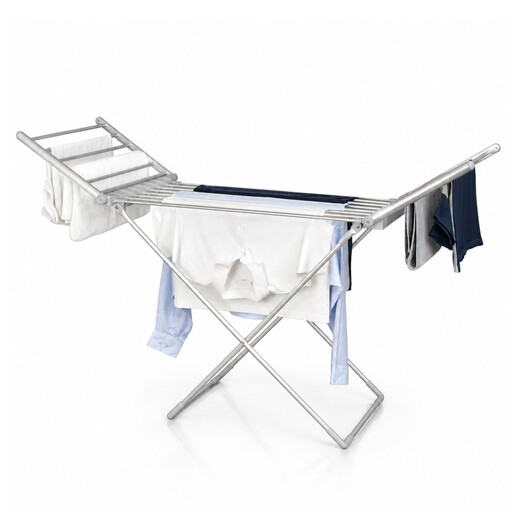 No image available
The foldable winged layout suits apron loads when storage between washes is important.
Rated at 230 W; this does not by itself establish drying time or energy used per session. Confirm the open dimensions against your available space.
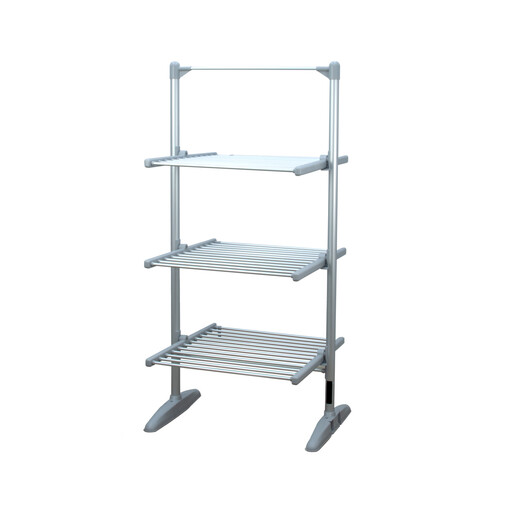 No image available
Consider the three-tier layout if you need to spread several aprons across rails and fold the frame away afterwards.
Rated at 248 W; allow room to hang laundry evenly and confirm the open footprint before buying.
No: drying laundry indoors still adds moisture to the home. GOV.UK identifies laundry drying as a source of moisture, so ventilate appropriately and address persistent damp or mould rather than relying on an airer alone.
Use a cover only where the instructions for the exact airer permit it. Dunelm says its compatible cover creates a warm, enclosed space that speeds moisture evaporation, but that does not establish that an improvised cover is safe or suitable for another model.
Check that the specific model is supplied for use in Great Britain, and keep its product instructions so you can follow the stated loading and cover guidance. GOV.UK publishes Great Britain-specific electrical-equipment safety guidance; a product name or retailer listing alone does not establish a particular model’s compliance.
Spread aprons across the permitted rail or hanger positions so damp sections are not bunched together, following the model’s loading instructions. If you regularly wash several at once, compare usable hanging positions as well as the stated maximum load.