Hosts managing frequent linen changeovers
If socks share an airer with other laundry between bookings, separate hanging positions and enough capacity for the usual load matter more than heat-up time alone.


For repeated changeovers with socks and other laundry, a multi-tier airer offers more stated drying length than the winged and pod examples considered here, provided it fits the room. A winged airer suits a lighter load when its open width is manageable; consider a pod when an enclosed setup matters more than separate rail space. Check how socks will hang, whether a cover is supplied and permitted for the exact model, and how the drying room will be ventilated.
If socks share an airer with other laundry between bookings, separate hanging positions and enough capacity for the usual load matter more than heat-up time alone.
The airer must fit both while open and when stored. Check that there is room to load it and that its cable reaches a suitable socket without obstructing access.
Decide whether staff alone will use the airer or guests can reach it. Equipment condition, safe socket use and a ventilated drying location all affect that decision.
Choose when: Several pairs of socks need space alongside other changeover laundry.
Allow for: Its height and loading clearance; a cover is suitable only where the exact model permits one.
Choose when: Loads are lighter and access across an open rail layout suits the room.
Allow for: The open width and potentially more batches than with the researched multi-tier examples.
Choose when: A self-contained setup for a modest load matters more than a long set of rails.
Allow for: Checking how many separate socks can hang inside and the exact model’s power use.
Start with the number of socks and other items in a typical changeover, then check whether the open airer and its storage position fit the property.
| Concern | What to check | Who this matters to |
|---|---|---|
| Sock space and load | Compare stated drying length and load capacity; check how small items can be hung separately. | When socks arrive with the rest of the changeover laundry, I need places to hang them without bunching them together. Around 36% of consumers put turnaround capacity first. |
| Room fit and storage | Measure the airer open and folded, including loading clearance and the route to a suitable socket. | If the utility area is narrow, I need an airer I can use without blocking access and put away between stays. Room fit is the primary concern for around 29% of consumers. |
| Power and accessories | Check the exact model’s wattage and whether the sock-hanging accessories needed for your load are supplied. | I want to plan electricity use over the hours the airer actually runs and know what the sock setup requires. Around 21% of consumers prioritise those operating and accessory considerations. |
| Guest access and moisture | Plan who can use the appliance, how its condition will be checked and where wet laundry can dry with ventilation. | If guests can reach the airer, I need to manage electrical use as well as moisture in the room. These are the primary purchasing concerns for around 14% of consumers. |
Heat-up time describes the appliance, not how long a load of cotton socks will take to dry. Spacing, the amount of laundry and room conditions also matter.
Compare usable hanging space and load capacity first, then plan enough time for the actual changeover load.
Lakeland lists separate small-item accessories for its Dry:Soon range, while the researched Minky models are listed with covers. Package contents differ by model.
Check what is supplied, whether any small-item accessory fits the exact airer and whether its instructions permit a cover during use.
Adding a compatible hanger or shelf also adds a step to setting up and storing the airer between stays.
Electrical Safety First warns that overloaded or daisy-chained extension leads can overheat. Wet laundry also adds moisture indoors; government guidance identifies damp and mould as risks that need addressing.
Choose a ventilated position, follow the appliance instructions and check equipment condition. If guests can access the airer, check the requirements for the property’s location.
The researched Minky four-tier airer has a 300W maximum and the JML pod an 850W maximum. Wattage alone does not establish the total electricity used to dry a load.
Use the exact model’s wattage and expected running hours to work out energy use, then apply the property’s electricity unit rate.
Lakeland’s range includes multi-tier airers and small-item accessories for a rack-based sock-drying setup.
Its researched winged and four-tier models offer different layouts for lighter loads and larger changeovers.
The DriBUDDI Compact is an enclosed pod to consider when that layout suits a modest laundry load.
Its range includes a three-tier 248W foldable aluminium airer and a 230W winged model, covering both stacked and winged layouts.
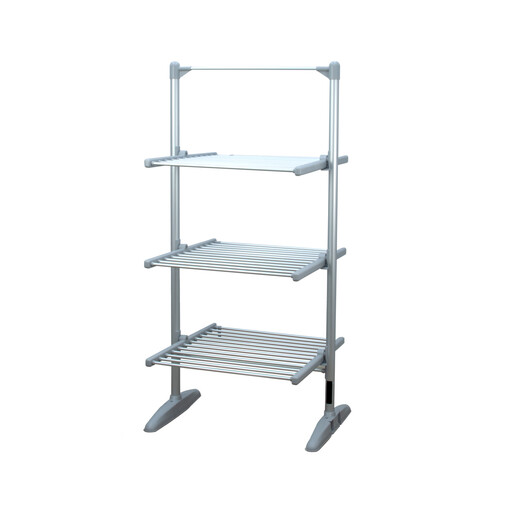
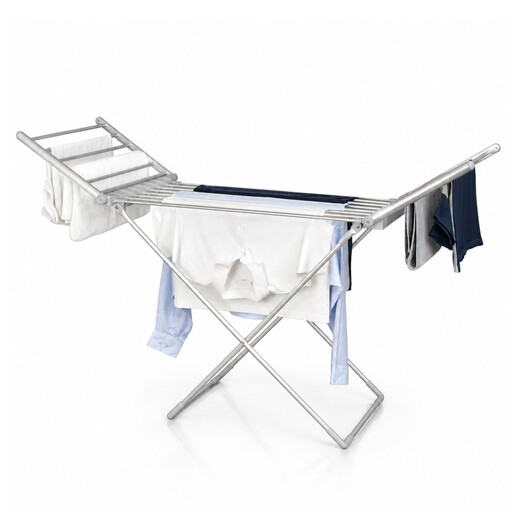
These Status airers provide three-tier and winged layouts for indoor laundry between stays. For either one, check how socks can be kept separate and follow its instructions on covering the heated bars.
 No image available
The three-tier layout is relevant when socks need space alongside other indoor laundry between bookings.
This foldable aluminium model is labelled 248W. Check its usable drying length, sock-hanging options and open and folded dimensions against your laundry area.
Its instructions say not to cover the heated bars during operation. Use a ventilated drying location.
 No image available
The winged layout is worth considering for indoor sock loads when there is room to open and access both sides.
This foldable aluminium model is labelled 230W. Measure the space available for it open and folded, and check its usable drying length and small-item hanging options.
Its instructions say not to cover the heated bars during use. Allow for ventilation where the laundry dries.
A multi-tier rack is a practical starting point when several pairs must dry alongside other changeover laundry, provided there is room to load it. Compare the exact model’s drying length and load rating, then check for a compatible way to hang small items separately; a winged layout may be enough for lighter loads.
No. Wet laundry still adds moisture indoors, and UK government guidance identifies inadequate ventilation as a factor in damp and mould problems. Use a suitable ventilated location, address existing damp and use a cover only if the exact airer’s instructions permit it.
There is no single annual portable-appliance-testing interval prescribed for every UK holiday let. The Health and Safety Executive says electrical equipment must be maintained safely but that the regulations do not specify a fixed testing frequency. Local conditions can be more specific: Highland Council’s May 2026 short-term-let application conditions require a PAT report for moveable appliances accessible to guests. Check the requirements for the property’s nation and licensing authority.
Check the airer’s instructions and the extension lead’s marked rating before using that arrangement. Electrical Safety First advises against overloading leads and daisy-chaining extensions; if the planned drying position routinely needs an extension, review its access to a suitable socket.