For a few table napkins alone, a heated airer is easier to justify if it will also dry regular housemate laundry: even Dunelm’s compact examples have 11.5–13m of drying space and stated 10kg load limits. A fold-away winged model suits small loads if there is room to open it; a covered tiered model makes more sense for repeated shared loads, while a 1200W warm-air pod calls for a recurring need for that larger enclosed format. Whichever you choose, indoor drying still requires room ventilation.
Who is this for?
Small-load student-house users
If you mainly dry reusable table napkins, tea towels and occasional small loads, consider how much room an airer takes while open and where it will go afterwards. Dunelm’s winged and two-tier examples both have stated 10kg load limits, so maximum capacity need not drive a napkins-led choice.
Housemates sharing an airer
If the same appliance will regularly hold several people’s laundry, drying space and stated load limit become more useful comparisons. Dunelm and Lakeland list three-tier examples with substantially more rail space than the compact Dunelm models.
Renters managing indoor moisture
If laundry dries in a room prone to condensation, plan how the room will be ventilated as well as where the airer will stand. Government home-ventilation guidance explains that moisture can become trapped without effective ventilation.
What matters when choosing?
Winged heated airer
Choose when: Napkins and occasional small loads are the main use, and you can fold the airer away between loads.
Allow for: Open wings need clear floor space; Dunelm states an extended width of 148cm for its winged example.
Covered tiered airer
Choose when: Housemates will dry repeated loads and prefer a vertical, covered rail format.
Allow for: The tiers need height, and a cover does not replace ventilation of the room.
Warm-air drying pod
Choose when: An enclosed hanging format meets a recurring need to dry larger laundry loads.
Allow for: Robert Dyas lists the JML DriBUDDi at 1200W, against 220W or 300W for the Dunelm rail-airer examples; compare likely hours of use as well as rated power.
| Concern | What to check | Who this matters to |
|---|
| Size and storage |
Compare open dimensions with the available floor space, then check folded dimensions and the stated load limit. |
If I mostly dry napkins and tea towels, I need an airer I can put away without giving up shared-room space. Roughly 50% of consumers would put a proportionate size first. |
| Shared-load drying |
Compare drying-space length, load limit, rated power and whether a cover is included. |
When housemates regularly share laundry equipment, I need enough room for those loads rather than napkins alone. Around 33% of consumers would make shared-load drying their primary concern. |
| Moisture and electrical safety |
Plan room ventilation and a suitable socket position; follow Electrical Safety First’s advice not to overload or daisy-chain extension leads. |
In a room that already develops condensation, I need to avoid trapping more moisture and using an unsafe electrical setup. For approximately 17% of consumers, those precautions would take priority. |
What should you avoid?
-
Buying a large airer for napkins alone
Dunelm and Lakeland list examples ranging from 11.5m of drying space and a stated 10kg limit to 21m and 15kg. Much of that space may go unused when only a few napkins need drying.
Decide whether housemates will use the airer for regular laundry before choosing a larger tiered model.
A larger airer can also take more room while in use or storage.
-
Assuming a cover ventilates the room
A cover encloses the airer, not the moisture produced by indoor drying. Government home-ventilation guidance says moisture can become trapped and turn into condensation without effective ventilation.
Use the home’s designed ventilation and keep fitted trickle vents unblocked during indoor drying.
-
Choosing a pod on wattage alone
Robert Dyas lists the JML DriBUDDi at 1200W, while Dunelm’s cited rail airers are rated at 220W or 300W. Rated power describes electrical input, not how long a particular load will take to dry.
Choose the enclosed pod format for a recurring laundry need, and compare rated power alongside the time you expect to use it.
-
Overlooking electrical condition and model identity
The Office for Product Safety and Standards reported a serious fire risk from poorly secured wiring in a specific Mini 3 Tier Electric Heated Airer; that report is not a finding about every heated airer. Electrical Safety First also warns against overloaded extensions.
Choose an identifiable model, follow its instructions, and stop using equipment with damaged cables, burning smells, sparks or signs of overheating.
Brands to consider
Dunelm
Dunelm lists winged, covered two-tier and three-tier heated airers, making it a useful reference for comparing formats.
- Its stated examples range from 11.5m of drying space and a 10kg load limit for the winged model to 20m and 15kg for the three-tier model.
- Check the dimensions of the particular format: a fold-away winged airer still needs space when open, while a tiered one needs vertical clearance.
Dry:Soon
The Dry:Soon three-tier model listed by Lakeland is a reference point for households planning regular laundry loads as well as small items.
- Lakeland states 21m of drying space, a 15kg load limit and an 8cm folded depth for storage.
- That stated capacity is more than a few table napkins call for; check whether the household will use the additional drying space.
JML
The DriBUDDi offers an enclosed warm-air hanging format rather than heated rails.
- Robert Dyas lists the DriBUDDi with a stated 10kg capacity.
- Its listed 1200W rating and 164cm height warrant checking power use and vertical clearance before choosing it for a napkins-led task.
Joybuy heated airers
These foldable winged and three-tier heated airers are relevant if the student house will dry other laundry alongside its table napkins. Compare their open dimensions and usable drying space for your room before choosing a larger format.
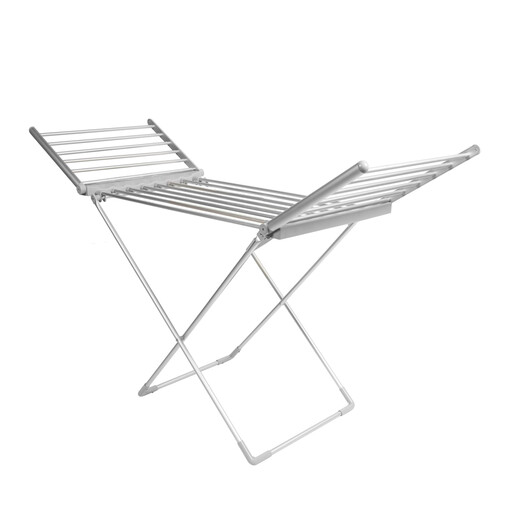 No image available
Pifco 3 Tier Winged Heated Airer
Consider this three-tier winged format if housemates will also dry laundry; for napkins alone, check whether you need its additional tiers.
Confirm its open dimensions, rated power, usable drying space and whether a cover is included before deciding where and how to use it.
Joybuy
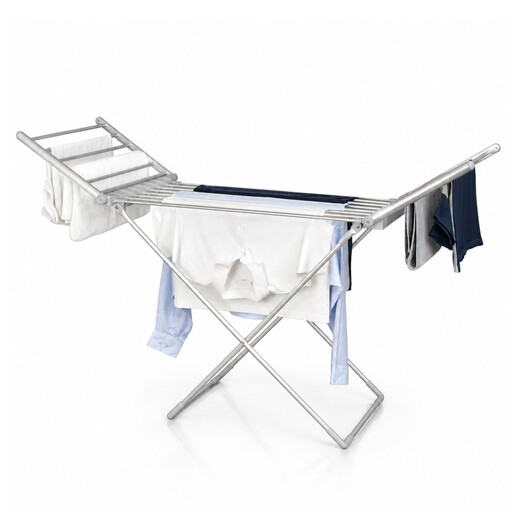 No image available
STATUS 230W Foldable Aluminium Heated Airer with Wings
The winged, foldable format is worth considering when the house dries small items and wants to put the airer away between loads.
Rated at 230W. Check its width when open and its drying-space length against the available room.
Joybuy
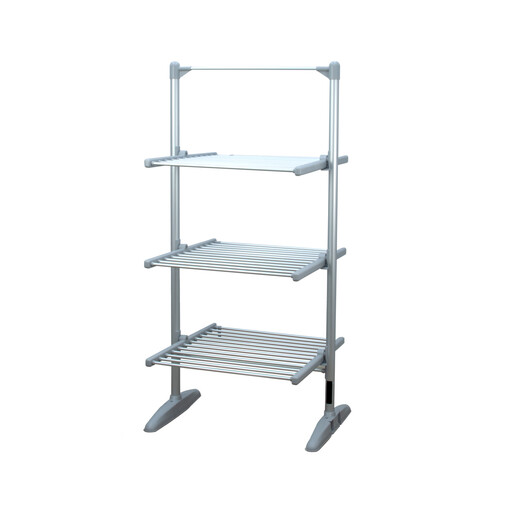 No image available
Status 3 Tier 248W Foldable Aluminium Heated Clothes Airer
Consider the three-tier format if housemates will regularly dry laundry as well as napkins, rather than buying the extra tiers for napkins alone.
Rated at 248W and described as foldable. Check its height, open footprint and drying-space length before choosing a place for it.
Joybuy
Common questions
Is a heated airer sensible for just a few table napkins?
It is easier to justify if the student house will also use it for regular laundry. Even Dunelm’s compact winged and two-tier examples offer 11.5–13m of drying space and stated 10kg load limits, so choose for the loads you actually expect to dry.
Will a covered heated airer prevent condensation?
No: a cover does not replace room ventilation. Government home-ventilation guidance explains that moisture from indoor drying can become trapped without effective ventilation, so use the home’s designed ventilation and keep fitted trickle vents unblocked.
Can I use an extension lead with a heated airer?
Use a wall socket where practical; if an extension lead is necessary, check its marked rating and the combined load of connected equipment. Electrical Safety First advises against overloading extensions or plugging one extension lead into another, and says cable reels should be fully unwound before use.
What if the rented house develops persistent damp or mould?
Do not treat another drying appliance as a fix for persistent damp or mould. Report the problem to the landlord or managing agent and use the home’s ventilation; UK government guidance for rented housing says landlords should investigate reports and address the underlying issue.


