Shared-house uniform rota organisers
If several residents need shirts, trousers and PE kit dried indoors, look at usable hanging space as well as the stated load limit. Garments still need room to hang rather than being piled across the rails.


A fold-flat three-tier rail airer is a sensible starting point when several residents need space for school shirts, trousers and PE kit: Lakeland and Addis each list three-tier models with a 15 kg load limit and 21 m of drying space. A compact enclosed dryer may suit a contained, timed laundry turn instead, but compare its load limit and rated power with the household’s needs. Whichever format you choose, plan where it will stand and ventilate the room while laundry dries.
If several residents need shirts, trousers and PE kit dried indoors, look at usable hanging space as well as the stated load limit. Garments still need room to hang rather than being piled across the rails.
Measure the space available while an airer is open and where it will go between laundry turns. A fold-flat rack addresses storage, but its open footprint must still work for everyone using the room.
Compare rated watts and expected hours of use using the household’s own electricity tariff. A lower wattage means less electricity used per hour at its rated power; it does not establish the energy needed to finish a load.
Start with the number of uniform items that need hanging space at once, then check whether the open airer fits the room. Rated power, ventilation and a safe socket arrangement matter for either format.
| Concern | What to check | Who this matters to |
|---|---|---|
| Shared-load capacity | Compare the load limit with usable rail length, and leave room between shirts, trousers and PE kit. | When uniforms from several residents need a turn on the airer, I need enough separate hanging space to keep the rota moving; around 33% of consumers put shared-load capacity first. |
| Room and storage space | Measure the open footprint and height, then check folded dimensions against the intended storage spot. | If the airer has to come out of a communal room after each turn, I need one that fits both while open and when stored. Around 25% of consumers prioritise room and storage space. |
| Electricity use | Check rated watts, any timer and the household’s tariff; allow for the hours and repeat sessions a load may need. | When we share the electricity bill, I want to understand the draw of each drying turn rather than rely on a quoted hourly claim; around 25% of consumers make electricity use their primary concern. |
| Moisture and electrical setup | Choose a ventilated drying spot and check the appliance instructions, cable condition and socket arrangement. | In a busy shared room, I need somewhere to dry uniforms without ignoring condensation or unsafe leads. Moisture and electrical setup come first for around 17% of consumers. |
An hourly figure depends on the electricity rate used to calculate it and says nothing about how many hours the uniforms will need. Rated power also cannot establish which of two formats uses less electricity for a completed load.
Use the appliance’s rated watts, expected hours of use and your own tariff when comparing drying turns. Account for repeat sessions if the household cannot hang everything at once.
Longer cycles and extra drying turns add to the electricity used for the household’s laundry rota.
Drying laundry releases moisture into the room. UK government guidance identifies condensation as a common cause of damp and mould.
Pick a ventilated location before buying, keep vents clear and address recurring damp rather than adding more indoor laundry to the same space.
Cover instructions and bundles vary by model. Electrical Safety First also warns against overloading extension leads, cable reels and block adaptors.
Check what the chosen bundle includes, follow its instructions for any compatible cover and avoid overloaded or daisy-chained extension devices.
The Office for Product Safety and Standards reported a fire risk involving a specifically identified Mini 3 Tier Electric Heated Airer in 2024. That finding does not apply to every three-tier airer.
Check the exact model against official product-safety alerts before buying. Stop using an appliance if its lead is damaged or it shows scorching, sparks, smoke or signs of overheating.
A tiered rail-airer range to consider when several uniform items need hanging space and the rack must be stored between turns.
A covered warm-air format for households that prefer a contained, timed drying turn to an open rail layout.
A three-tier rail-airer option for a household organising shared drying turns.
These rail airers are options for drying school uniforms indoors and putting the appliance away between shared laundry turns. Check each model’s open dimensions, load guidance and instructions against the room and rota you have in mind.
 No image available
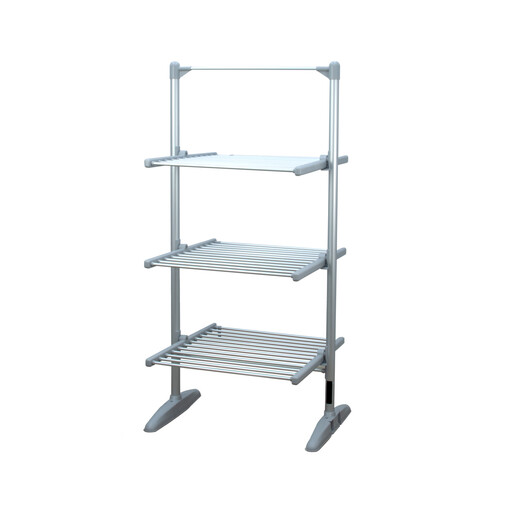
Consider this three-tier rail format if several uniform items need space during a shared drying turn and the airer must be folded away afterwards.
Its stated power is 248 W; that rating does not tell you how long a load will take to dry. Check the open dimensions and load guidance before planning where it will stand.
 No image available
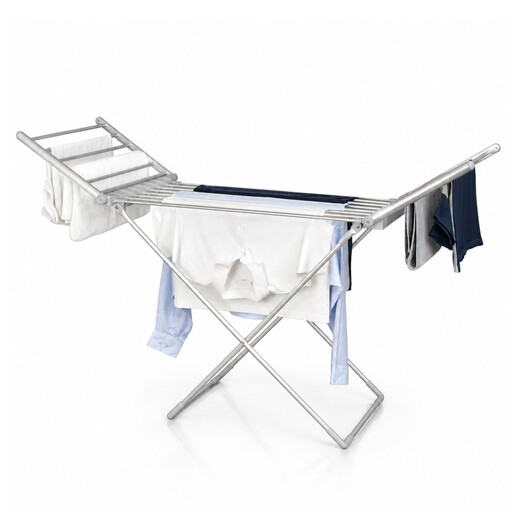
The winged rail format is worth considering if you want to separate uniform items across the airer and store it between laundry turns.
Its stated power is 230 W, not a measure of electricity used for a completed load. Check the space needed with the wings open and the load guidance for your planned laundry turns.
 No image available
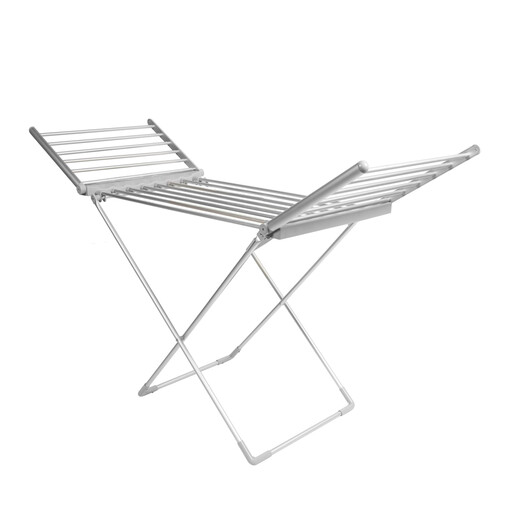
Consider the three-tier winged layout if the shared laundry rota calls for separate places to hang uniform items.
Check its load guidance, open size and rated power against your room and electricity tariff. Follow the manufacturer’s instructions before using any cover.
Yes. A heated airer does not remove the moisture released by drying laundry. UK government guidance identifies condensation as a common cause of damp and mould, so use a ventilated room and address persistent damp rather than treating the airer as a moisture-control appliance.
Multiply its rated watts by the hours used, then divide by 1,000 to estimate kilowatt-hours; multiply that result by your electricity rate per kilowatt-hour. The actual hours needed depend on the load and drying conditions, so an hourly estimate is not a cost per completed load.
Check the appliance instructions and the rating and condition of any extension device before use. Electrical Safety First warns against overloading extension leads, cable reels and block adaptors; do not daisy-chain them, and stop using a lead that shows damage or overheating.
No. The Office for Product Safety and Standards’ 2024 report concerns an identified Mini 3 Tier Electric Heated Airer, not every appliance with three tiers. Check the exact model against official product-safety alerts and follow its own instructions.