For frequent small face-cloth loads, start with a winged or compact tiered heated airer that lets you space cloths apart and fits the utility room while open. A larger tiered frame makes more sense when face cloths are part of a mixed laundry load, provided its height and footprint fit. Whichever format you choose, ventilate the room: a heated airer does not remove the moisture released by wet cloths.
Who needs which setup?
Frequent face-cloth washers
If you wash small cloths often, look for a layout that keeps them separate rather than bunched on one bar. Winged airers are described with flat-dry zones, while Lakeland offers peg and mesh accessories for some Dry:Soon frames.
Utility-room space managers
If appliances, doors and walkways leave little spare room, compare the airer’s open dimensions with its folded size. Check that its cable reaches a suitable socket from the position where you will use it.
Households concerned about indoor moisture
If you dry laundry indoors, plan how to ventilate the room as well as where to put the airer. Dacorum Borough Council advises good ventilation during indoor drying, such as an open window or an extractor fan.
What matters when choosing?
Decide how you will lay out the cloths, then check whether the airer fits while in use and how you will manage moisture in the room.
| Concern |
What to check |
Who this matters to |
| Small-cloth layout |
Check for usable space between bars, a flat-dry area or compatible small-item accessories. |
If I wash face cloths frequently, I want room to spread them out instead of layering them together. Around 45% of consumers would put small-item handling first. |
| Room moisture |
Check that you can ventilate the utility room during and after drying; a cover is not a substitute. |
In an enclosed utility room, I want to avoid persistent condensation while drying wet laundry. For around 36% of consumers, moisture management would be the primary concern. |
| Fit and storage |
Compare open and folded dimensions with the walkway and storage space; check socket reach and rated wattage separately. |
I need to reach the appliances while the airer is open and put it away afterwards. Fit and storage would come first for around 19% of consumers. |
What should you avoid?
-
Choosing by drying length alone
Enough bar length will not help if the open frame blocks a door, appliance or walking route. A winged model is listed that opens to 148cm wide, while Lakeland lists a three-tier Dry:Soon model at 137cm high.
Measure the intended position and door swing, then compare them with the exact model’s open and folded dimensions and cable reach.
-
Assuming heat replaces ventilation
Wet cloths still release moisture indoors. Dacorum Borough Council advises ventilating during indoor drying to help manage condensation and damp.
Use an available window or extractor fan during and after drying where practical, and investigate condensation that persists.
-
Treating wattage as the cost of a load
A wattage rating describes electrical power, not how long a particular load will take to dry. Loading, fabric thickness and room conditions also affect the time needed.
Consider rated power alongside how long you expect to run the airer and your electricity tariff; do not assume tightly packed cloths will dry quickly.
-
Overlooking an exact-model recall
The UK Office for Product Safety and Standards recalled a specific Dunelm Heated Winged Airer because overheating presented a serious fire risk. The notice identifies article number 30752153 and barcode 5057722844042.
Check the official UK product-recall notice against the article number and barcode before using an older or second-hand airer. Do not use the identified recalled product.
Relevant brands for reference
Dry:Soon
Lakeland’s Dry:Soon range includes smaller frames, three-tier airers and small-item accessories. A three-tier frame is more relevant when face cloths share space with larger laundry loads.
- Lakeland lists 21m of drying space, a 15kg capacity and an 8cm folded depth for its three-tier model.
- The same model measures 73 × 75 × 137cm when erected, so check both floor space and height in a narrow utility room.
Minky
Minky’s covered winged format is an option for a single load when you want a frame that folds away after use.
- The researched Minky Wing model is listed with 12m of drying space and an included cover.
- The listed open width is 148cm; measure the clear walkway before choosing this model.
Beldray
Beldray’s EH1156BLKR is a winged frame to consider if you prefer a broad, low-profile layout to a vertical tiered airer.
- Beldray lists a 15kg capacity, 230W rated power and a fold-flat frame for this model.
- Its stated 93 × 54 × 147cm dimensions call for an open-footprint check; Beldray notes that drying varies with fabric thickness and room temperature.
Joybuy products to consider
These options include winged and tiered heated airers for indoor laundry, plus a five-bar heated towel rail. For face cloths, compare how each layout accommodates separate items before choosing on capacity or wattage alone.
 No image available
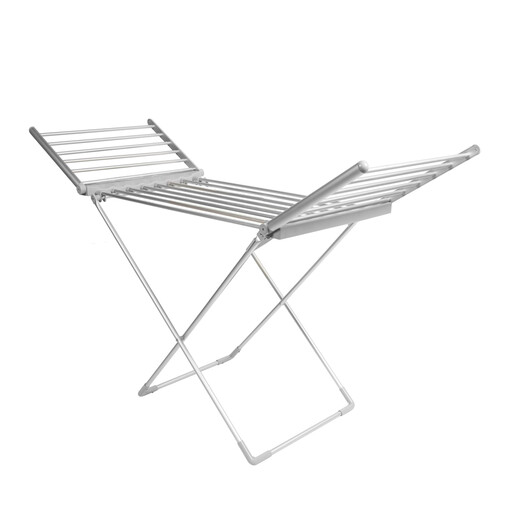
Pifco 3 Tier Winged Heated Airer
Consider this winged, three-tier layout if you dry face cloths alongside other laundry. Check the open footprint and whether its bars let you space individual cloths apart.
Follow the product instructions for covering the airer and keeping its controls clear.
Joybuy
 No image available
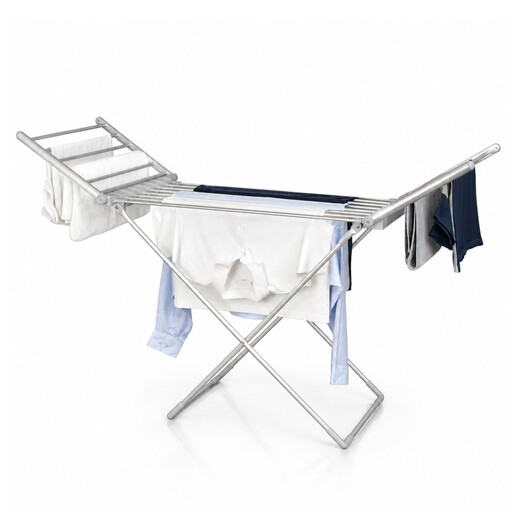
STATUS 230W Foldable Aluminium Winged Heated Airer, Silver
A winged, foldable airer is worth considering for a modest face-cloth load if its open layout provides enough space between items. Check its open and stored dimensions and socket reach against your utility room.
The stated 230W is a power rating, not a drying-time or full-load electricity-use figure. Follow the product instructions on covering heated bars.
Joybuy
 No image available
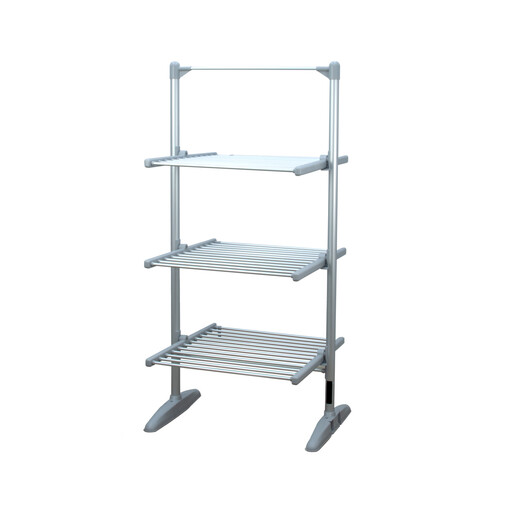
STATUS 3 Tier 248W Foldable Aluminium Heated Airer
Consider the three-tier format if face cloths are part of a larger laundry routine. Check its erected height and footprint, storage fit and whether the bars allow cloths to be spaced apart.
The stated 248W describes rated power rather than drying speed. Follow the product instructions during use.
Joybuy
 No image available
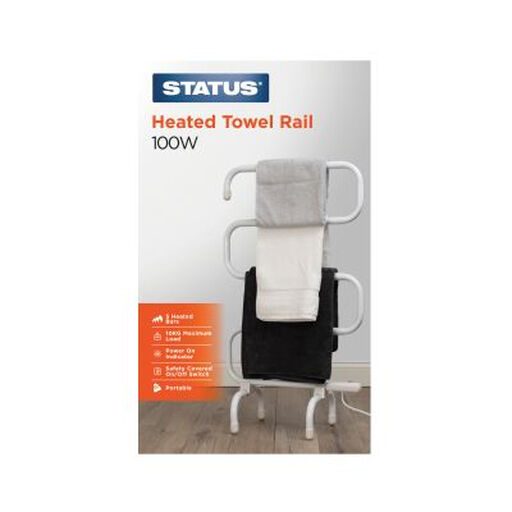
STATUS 100W Freestanding Aluminium 5-Bar Heated Towel Rail, White
This is a heated towel rail rather than a clothes airer. Consider its five-bar layout only if it gives your face cloths enough separate hanging space; check where the freestanding rail will sit and how you will store it.
The stated 100W is its power rating. Place and use the rail according to its instructions, away from water.
Joybuy
Common questions
Is a winged or tiered heated airer better for face cloths?
A winged airer is a sensible starting point for a small load if it lets you spread cloths out and folds away conveniently; a tiered frame is more useful when you also dry larger laundry loads. Check the exact frame’s open dimensions and cloth spacing before buying.
Will a heated airer prevent condensation in my utility room?
No. Wet textiles still release moisture into indoor air, so ventilate the room while drying. Dacorum Borough Council recommends good ventilation for indoor drying, such as an open window or extractor fan.
Can I put a cover on any heated airer?
No; use a cover only when it is intended for, or explicitly compatible with, the exact airer and follow its instructions. A cover does not remove the need to ventilate the room.
How can I check whether an older heated airer has been recalled?
Check the exact model, article number and barcode against the official UK product-recall notice before use. The Office for Product Safety and Standards instructed owners to stop using the recalled Dunelm Heated Winged Airer identified by article number 30752153 and barcode 5057722844042 because of an overheating fire risk.


