Who each format may suit

Frequent uniform washers

If you regularly wash several work tops, trousers or uniforms together, look for enough drying length and stated load capacity to spread out a practical load. The three-tier examples illustrate the capacity and layout checks worth making on the exact model.

People drying workwear in a small home

A folding rack still needs floor space while open and loaded. Compare its open dimensions and folded storage depth with your room, and account for the moisture released as clothes dry indoors; UK government home-ventilation guidance notes that moisture can become trapped without effective ventilation.

People preparing clothes for the next shift

For a limited set of hanger-friendly work garments, a covered drying pod is worth considering when turnaround matters more than fitting a mixed wash. Which? describes pods as faster-drying but lower-capacity than heated airers, so check whether the garments and their combined damp weight fit the particular pod.

What matters when choosing

Folding heated rail airer

Choose it when: several washable work garments or a mixed laundry load need room to hang apart.

Allow for: the floor area needed while the rack is open, even if it folds down for storage.

Covered fan-heated drying pod

Choose it when: a smaller, hanger-friendly workwear load needs a quicker turnaround; Which? reports that pods dry faster but hold less than heated airers.

Allow for: the pod’s load and garment-fit limits rather than assuming bulky or numerous items will fit.

Concern What to check Who this matters to
Load and garment layout Compare the exact model’s drying length, damp-load limit and space for long garments; do not treat capacity as a drying-speed claim. If I wash several uniforms or work trousers together, I need to hang them without crowding the rack. Around 29% of consumers would put load and layout first.
Room fit and ventilation Measure the airer when open and where it will be stored; keep the room’s intended ventilation effective while laundry dries. In a small home, I need the loaded airer to fit without leaving damp laundry in a poorly ventilated room. Room fit and moisture would come first for around 21% of consumers.
Next-shift turnaround Check whether the urgent garments fit the chosen format and its load limit; Which? reports faster drying but lower capacity for pods than heated airers. When clean work clothes are needed for my next shift, getting a limited set dry promptly matters more than handling a large wash. Around 29% of consumers would prioritise turnaround.
Electricity use and operation Check rated wattage and any timer; estimate electricity use from power, actual running time and your unit tariff. Follow the model’s operating instructions. If I dry workwear regularly, I want to understand electricity use across a complete session rather than judge a model by wattage alone. Controlled running would be the primary concern for around 21% of consumers.

Buying and use pitfalls

  • Choosing by wattage alone

    Rated power does not tell you how much electricity a particular workwear load will use before it is dry. The cited rail airers are specified at 300W, while JML specifies a 1200W heating element for its DriBUDDi pod; the formats also differ in capacity and running time.

    For the model you are considering, estimate use from rated power in kW multiplied by actual hours running and your electricity unit tariff. Compare that alongside the load the appliance can accommodate.

  • Measuring storage space but not drying space

    A rack that folds flat can still take up considerable room when opened and loaded. UK government home-ventilation guidance also warns that moisture from indoor drying can become trapped without effective ventilation.

    Check open dimensions, loading clearance and cable reach in the intended position. Use the home’s ventilation as designed while clothes dry.

  • Assuming a drying pod suits every load

    Which? describes pods as faster-drying but lower-capacity than heated airers, with less suitability for large items such as bedding. Fit and capacity can likewise limit their usefulness for bulky or numerous work garments.

    Check the pod’s damp-load limit and hanging space for the clothes you need soon. If spreading out several garments or a mixed wash is the priority, compare a larger rail airer instead.

  • Skipping electrical-condition and recall checks

    The UK Office for Product Safety and Standards recalled a specific Dunelm Heated Winged Airer in January 2025 because it could overheat and pose a serious fire risk. The notice concerns the identified model, not heated airers generally.

    Keep the exact brand and model details, check the Office for Product Safety and Standards recall service, and inspect the plug, cable and appliance before use. Stop using an appliance that shows damage or electrical faults.

Relevant brands to consider

Lakeland / Dry:Soon

The Dry:Soon Deluxe 3-Tier is a folding rail airer for buyers who want front access and a timer when drying larger workwear loads.

  • Lakeland specifies 21m of drying space, approximately 15kg capacity, a 1-to-12-hour timer and 8cm folded depth for this model.
  • Lakeland describes the cover as a separate accessory; check the contents of the exact bundle. A timer does not replace safe-use instructions.

Minky

The sureDRI 3-Tier is a folding rail option for a larger mixed workwear wash where stated load limits matter.

  • Minky specifies 21m of drying capacity, an 18kg maximum load, 300W rated power and 15.5cm closed depth for the cited model.
  • Its stated limits also include 3kg per arm and 6kg per layer. Minky’s description of improved airflow from angled arms is a brand claim, not a measured drying-time comparison here.

BLACK+DECKER

The 63099 is a three-tier folding heated rail airer to compare when substantial stated drying length matters more than a confirmed timer feature.

  • The 63099 is specified with 21m of drying space, approximately 15kg capacity, 300W rated power and a 1.6m cable.
  • If timed shut-off matters to you, confirm the controls on the exact variant before choosing it.

JML

The DriBUDDi represents a covered fan-heated pod for a smaller, hanger-friendly set of washable work clothes.

  • JML specifies a load of up to 10kg of damp clothing and a 1200W heating element that circulates warm air inside the cover.
  • Check that long or bulky garments fit. Which? describes drying pods as faster-drying but lower-capacity than heated airers; that format-level finding is not a drying-time guarantee for this model.

Joybuy heated rail airers

These folding rail airers are choices to assess if you need to spread out washable workwear indoors. Compare their stated load limits with your laundry, then check garment spacing, room fit and operating instructions; this selection does not cover the drying-pod route.
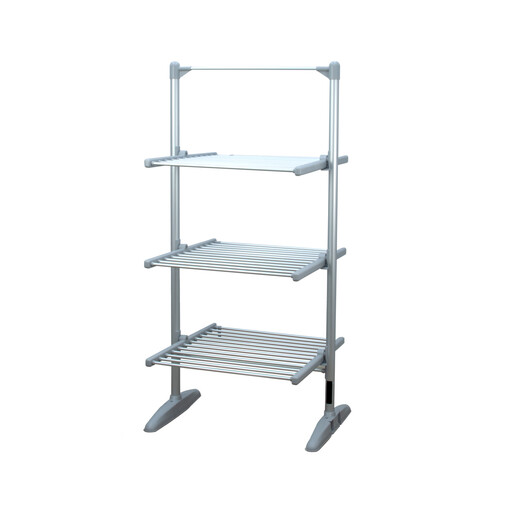
Status three-tier heated clothes airer

Status Three-Tier Heated Clothes Airer, 248W

Consider this folding rail airer if you regularly need to spread out a larger washable-workwear load.

The product description states 30 heated bars, a 30kg maximum load and fold-flat storage; the title specifies 248W. Check the open dimensions and how long garments will hang on it, and confirm the controls and operating instructions before use.

View on Joybuy
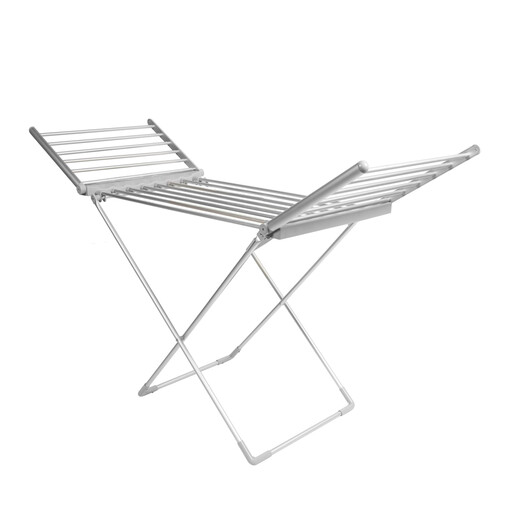
Pifco three-tier winged heated airer

Pifco Three-Tier Winged Heated Airer

Consider this model for a moderate workwear load if its open and folded sizes fit your drying and storage space.

The product description states a 12kg capacity, 20 heated bars, a fabric cover and fold-flat storage. It lists open dimensions of 14.7 × 54.0 × 94.0cm and folded dimensions of 11.3 × 54.0 × 54.0cm. Check how long garments will hang on the rack and confirm the controls before use; the cover alone does not establish a drying time.

View on Joybuy

Common questions

Can I put washable workwear on a heated airer?

Check each garment’s care label and any employer instructions before using a heated airer. This is especially important for protective workwear or garments with coatings, reflective trims or attached badges; being washable does not, by itself, establish that heated drying is suitable. GINETEX explains that care symbols include drying instructions.

Could drying workwear indoors cause condensation?

Yes, indoor drying releases moisture that can become trapped if ventilation is ineffective. UK government home-ventilation guidance links trapped moisture with condensation, so use the home’s ventilation as intended and keep fitted trickle vents unblocked.

Does a timer make a heated airer safe to leave on overnight?

No: a timer controls when a model switches off, but it is not permission to leave an appliance operating unattended. Electrical Safety First advises against leaving electrical appliances on and unattended; follow the instructions for your exact model and check its lead and condition before use.

How can I check whether a heated airer has been recalled?

Search the UK Office for Product Safety and Standards recall service using the exact brand and model, and check again if a safety concern arises after purchase. Its January 2025 recall of a Dunelm Heated Winged Airer concerned an identified model with an overheating and fire risk, not every heated airer.