
24/7 Customer Support

Free returns

Same-day & Next-day Delivery

Quality Guaranteed

Unlock Your Welcome Offers: FREE Delivery | Up to 80% OFF | Free 30-day JoyPlus trial
Download the APP
Achieving that smooth, bouncy, salon-quality blowout at home often feels just out of reach. A heated round brush promises to be the solution, offering the polish of a straightener and the volume of a round brush in one simple tool. However, the market is filled with options that can easily lead to disappointment, wasted money and even hair damage.
Before you make a purchase, it is important to understand the common pitfalls. Many shoppers find their new tool either fries their hair or fails to deliver the promised volume. Here are the key issues to watch out for.
blowout brush, but they function very differently. A hot air styler blows hot air to dry and style damp hair simultaneously. A thermal brush, the focus of this guide, has an internally heated barrel and is designed for use on dry hair to add shape, smoothness and shine. Choosing the wrong type for your routine is a frequent and frustrating mistake.To choose a tool that delivers consistent results without compromising hair health, focus on these core parameters.
The material of the heated barrel is crucial for performance and hair protection. Look for a tourmaline ceramic round brush.
The diameter of the brush directly influences the final look. There is no single "correct" size; it depends on your hair length and styling goals.
This is a non-negotiable feature for protecting your hair's integrity. A good heated brush should offer a range of settings to suit different hair types. A typical effective range includes:
Having multiple, clearly marked settings allows you to use the minimum heat necessary to achieve your style, significantly reducing the risk of long-term damage. For those who travel, a dual voltage hair styler is also a practical consideration, ensuring it works safely abroad with a plug adapter.
We have identified several products that align with these principles, matching them to specific user needs and lifestyles.
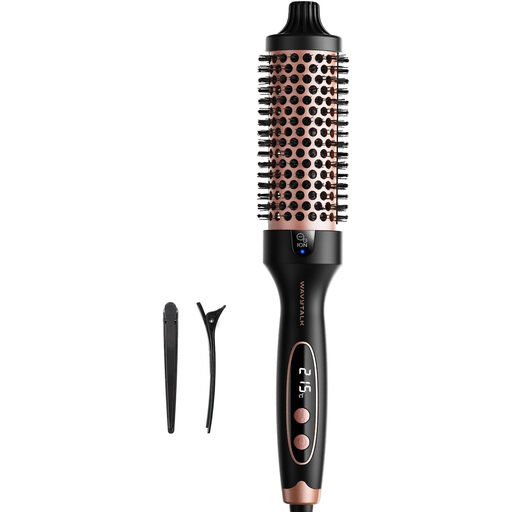
Why This Fits Their Persona: Ideal for the user who wants to quickly refresh second-day hair or add volume and polish to dry hair. It mimics the effect of a traditional round brush and hairdryer but with the convenience of a single, heated tool.
It directly addresses the temperature pitfall with 5 distinct heat settings (150°C-215°C), allowing for precise control. The tourmaline ceramic barrel ensures even heat distribution, preventing hot spots.
Features negative ion technology for a smooth, anti-frizz finish. The 38mm barrel is a versatile size for creating volume and soft waves on most hair lengths.
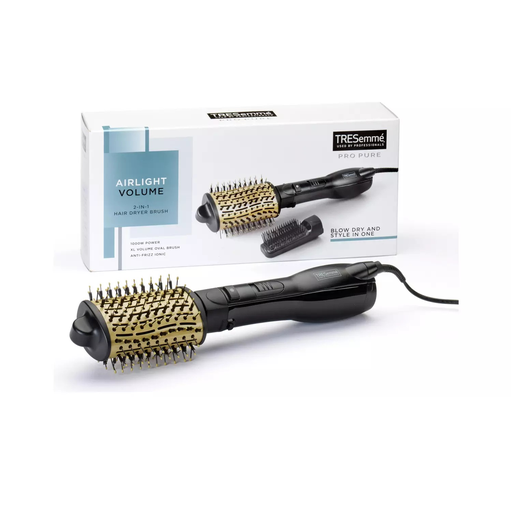
Why This Fits Their Persona: This is for someone who prioritises speed and wants to go from damp hair to a finished style with one tool. It combines the function of a hairdryer and a volumising brush.
This choice clarifies the hot air vs. thermal brush confusion. As a hot air styler, it is correctly designed for use on damp hair, avoiding the damage caused by using a thermal brush on wet strands.
It dries and styles hair simultaneously, saving significant time in a morning routine. The multiple heat and speed settings provide good styling control for different hair types.
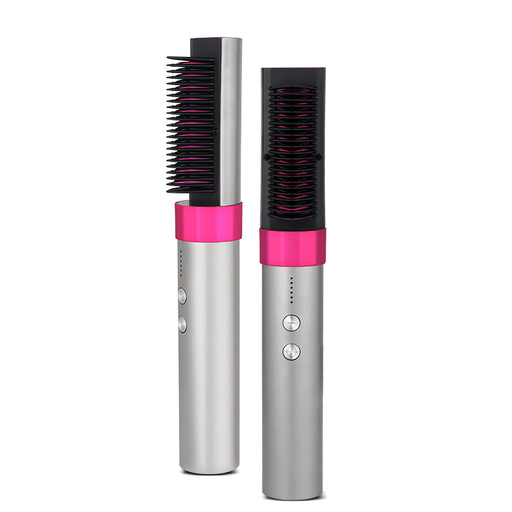
Why This Fits Their Persona: Perfect for those who need a styling tool for travel, the gym or quick touch-ups at the office. Its cordless design offers ultimate portability for a sleek, smooth finish on the go.
While this is a straightening brush rather than a round one, it features 6 temperature settings (130°C-200°C), avoiding the one-size-fits-all heat trap and allowing for safe use on various hair types.
The main benefit is its cordless, battery-powered design for maximum convenience. It also incorporates negative ion technology and an anti-scald comb structure for safer styling.
We have compiled a complete, real-time list of products that fully satisfy these strict selection criteria and UK safety regulations.
No, you should never use a thermal brush with a heated barrel on wet or damp hair. These tools are designed for dry hair only. The intense, direct heat on wet strands can cause the water inside the hair cuticle to boil, leading to severe and irreversible steam damage. For styling damp hair, you must use a hot air styler, which is specifically designed to dry the hair as it styles.
The ideal barrel size depends on your hair length and the style you want to achieve. As a general guide:
For use exclusively within the United Kingdom, a dual voltage feature is not necessary. However, if you travel internationally, a dual voltage hair styler is a highly practical feature. It allows the appliance to adapt to different electrical standards found in other countries (e.g., 110-120V in North America vs. 220-240V in the UK and Europe), ensuring you can use your tool safely with just a simple plug adapter.