Family-load shirt dryers
If several cotton shirts need drying with the rest of the wash, look for usable hanging length, space between tiers and an open footprint that fits the room. The stated capacity alone will not tell you how the shirts hang.


For several cotton shirts alongside a family wash, start with a three-tier heated airer and check whether its rails give the shirts room to hang, not just its stated load capacity. A drying pod is worth considering when a smaller set of shirts needs attention sooner, while a compact airer may suit limited storage space; whichever format you choose, indoor drying still calls for ventilation.
If several cotton shirts need drying with the rest of the wash, look for usable hanging length, space between tiers and an open footprint that fits the room. The stated capacity alone will not tell you how the shirts hang.
When a smaller rotation of school or work shirts is needed again soon, a hanger-based pod may be more relevant than maximum rack capacity. Check how many hangers and full-length garments it accommodates.
If laundry must dry indoors, choose a location where moisture can leave the room. Hackney and NHS Spring Hill Practice guidance recommends opening windows, closing the room door and using extractor fans where available.
For regular family loads, assess shirt clearance on a three-tier rack before deciding whether a compatible cover would be useful. If only a few shirts need prompt drying, compare a pod's hanger space with the rack space you would give up; if storage is tight, measure the airer both open and folded.
| Concern | What to check | Who this matters to |
|---|---|---|
| Room for family washing | Check the stated load limit and drying length, then inspect tier spacing and clearance for hanging shirts. | If several shirts go on the airer with the family wash, I need rails that let them hang without crowding or touching the floor. Around 33% of consumers would make usable capacity their primary concern. |
| Shirt turnaround | Compare rack heating with a pod's hanger arrangement; check garment clearance and whether a cover is designed for the chosen rack. | When school or work shirts are needed again soon, I may accept a smaller load to focus on those garments. Roughly 27% of consumers would put turnaround first. |
| Room and storage fit | Measure the open footprint and folded size, allowing space for doors, walkways and ventilation. | My drying spot has to remain usable for the household, and the airer needs somewhere to go between washes. Around 20% of consumers would prioritise fit and storage. |
| Indoor moisture | Choose a room where windows or extraction can be used, and consider any existing condensation or damp. | If moisture builds up where I dry laundry, I need a workable ventilation routine as well as an airer. About 20% of consumers would make moisture management their primary concern. |
A rack's stated load limit does not show whether longer shirts will hang clear of lower tiers or the floor.
Inspect the rail arrangement and measure the open airer before buying, leaving space between garments.
Which? describes pods as quicker-drying but lower-capacity options for everyday garments, rather than bedding such as sheets or duvets.
Consider a pod for a limited rotation of shirts; assess a larger rack if full family loads are the regular task.
Moisture leaving the clothes can still contribute to indoor condensation. A cover does not replace ventilation.
Follow the Hackney and NHS Spring Hill Practice guidance for necessary indoor drying: use a room with open windows, a closed door and working extraction where available, without blocking air vents.
Lakeland's range spans three-tier racks and a hanger-based Drying Pod, so compare formats against the size of your usual shirt load.
Its covered, wheeled three-tier model listed by B&Q is a reference point for households considering a larger rack with room for longer garments.
Dunelm's foldable three-tier model offers another large-rack format to measure against the intended drying and storage spots.
Homebase lists a three-tier model with folding wings for households comparing rail arrangements and room fit.
These three-tier heated airers are options to consider for drying shirts alongside household laundry. Compare their rail arrangements and room fit for your own loads; neither product should be taken as a drying-pod choice.
 No image available
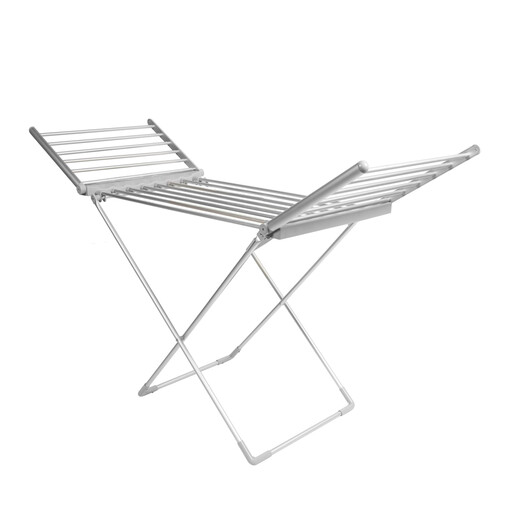
Consider the winged, three-tier layout if you want to arrange shirts alongside other laundry. Check the rail spacing and where longer shirts will hang before deciding how much of your usual wash it can accommodate.
If you plan to use a cover, confirm it is intended for this model and follow its instructions, keeping controls clear.
 No image available
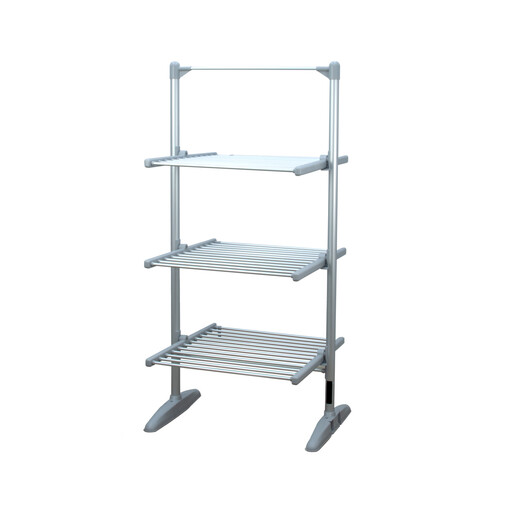
Consider this foldable three-tier format when you need to put the airer away between washes. Its title specifies 248W power; check the open and folded dimensions, rail spacing and clearance for your cotton shirts before buying.
As with any indoor airer, choose a drying position where moisture can be ventilated.
Start by assessing a three-tier rack with enough usable rail space for the shirts and the rest of your usual wash. Lakeland, Dunelm and B&Q each list three-tier models with around 20–21m of drying space and a stated load limit of up to 15kg, but you should also check tier clearance and the room needed when the rack is open.
Use a cover only if it is designed for the particular airer and its instructions permit it. An enclosed space may help drying, but moisture still needs a way out of the room; keep controls clear and follow the product's directions.
Choose a room you can ventilate rather than treating the heated airer as a moisture-control device. Hackney and NHS Spring Hill Practice guidance advises opening windows, closing the room door and turning on extractor fans where available when indoor clothes drying is necessary.