Small-flat shirt dryers
You dry a few cotton shirts indoors, have little clear floor area and need to put the airer into a narrow storage gap between loads.


Choose a compact three-tier heated airer if it fits your open floor area, folds into your storage gap and gives your cotton shirts enough room on the rails. A larger tiered rack offers more stated drying length but takes up more space; a covered warm-air pod is a different, timer-controlled option for a smaller load. Whichever format you choose, indoor moisture and electrical safety still need attention.
You dry a few cotton shirts indoors, have little clear floor area and need to put the airer into a narrow storage gap between loads.
You need room for more than a few shirts or a mixed wash, but still want a rack that can be stored between uses.
You dry laundry in a home where condensation or poor ventilation makes moisture control and safe placement important alongside the rack's size.
Start with the space the airer occupies while open, then decide whether its rail layout fits your usual shirt load. Compare the following formats against both requirements.
Choose it when: You need a rack that can be folded away after a modest shirt wash. Lakeland states that its Dry:Soon Mini folds to 8 cm deep.
Allow for: Its 13 m of stated drying space is less than the 21 m stated for Minky's larger three-tier rack; check whether the shelves suit the way you hang shirts.
Choose it when: Several shirts or a mixed load need more rail space and you can leave a larger rack standing while they dry.
Allow for: Minky states that its 21 m three-tier model needs a 72 × 67 cm floor area when open and folds to 15.5 cm deep.
Choose it when: You prefer an enclosed format for a smaller load and want a set drying cycle. JML states that its DriBUDDi Compact has a timer and a 10 kg damp-clothing limit.
Allow for: This is not a heated-bar rack. Check its open dimensions and how shirts hang inside it; its stated 850 W rating alone cannot tell you how long a load will take to dry.
| Concern | What to check | Who this matters to |
|---|---|---|
| Open footprint and storage | Compare open width and depth with the clear floor area, including walking space; check folded depth against your storage gap. | If the rack would block a doorway or need to be put away after every load, I need a workable open position as well as somewhere to store it. Around 50% of consumers put footprint and storage first. |
| Space for cotton shirts | Check the rail arrangement against your shirts and hanger method, alongside the stated drying length and load limit. | When several shirts need drying together, I want enough separation to handle collars and sleeves without crowding the rack. Shirt-load handling is the main concern for roughly 30% of consumers. |
| Moisture and electrical safety | Plan ventilation and a suitable socket position; inspect the lead and check the exact model for relevant recalls. | If indoor drying adds to condensation or forces the appliance onto an unsuitable extension setup, I need to address those conditions before using it. About 20% of consumers prioritise moisture and electrical safety. |
A vertical rack can still obstruct a narrow room. Lakeland lists the Dry:Soon Mini at 60 × 63 × 113.5 cm when open, while Minky lists its three-tier model at 147 × 72 × 67 cm.
Mark out the stated floor dimensions where the rack will stand, leave walking clearance and check its folded depth against the intended storage space.
Drying laundry adds moisture to the home, as UK government guidance on damp and mould explains. Heating a rack does not remove the need to manage that moisture.
Use appropriate ventilation or available extractor fans and vents. Investigate recurring condensation or mould rather than relying on more drying heat.
An overloaded or damaged electrical setup can overheat. Electrical Safety First advises against overloading extension devices or plugging one extension lead into another.
Use a suitable wall socket where practical. If an extension is necessary, check that it is correctly rated, use only one extension device per socket and stop using damaged equipment.
The UK Office for Product Safety and Standards recalled a specified Dunelm Heated Winged Airer in January 2025 because of a fire risk. That notice does not identify every winged airer as affected.
Check the exact brand, model and identifying details against the current product safety notice before buying or continuing to use an airer.
Lakeland's range includes Mini, Standard and Deluxe three-tier heated racks; the Mini is the compact-space example here.
Minky's sureDRI range includes a winged 12 m airer and larger tiered formats.
JML's DriBUDDi Compact is a covered warm-air dryer with fold-out legs rather than a conventional heated-bar rack.
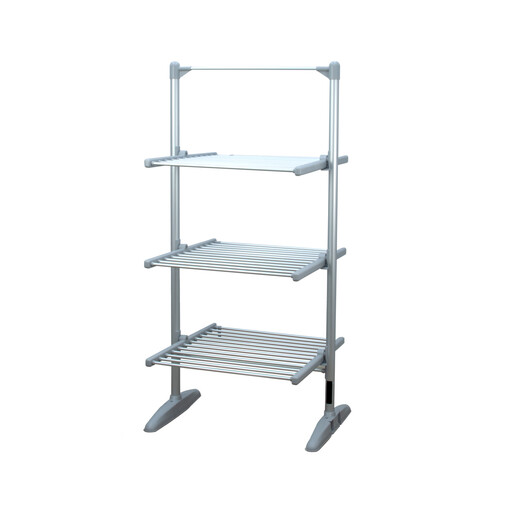
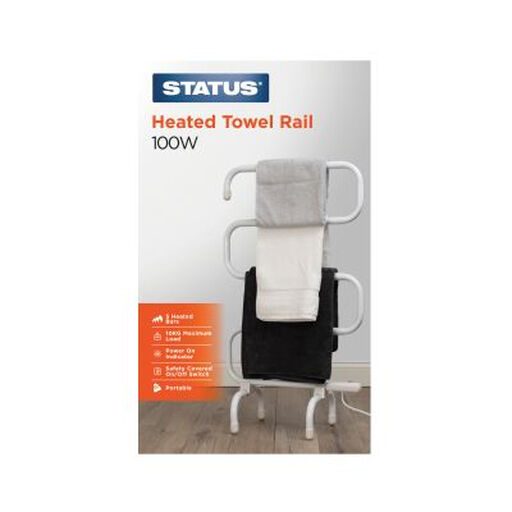
These options cover a foldable three-tier airer and a freestanding five-bar towel rail. For either one, check the space available while it is in use and whether its bars accommodate your cotton shirts; the towel rail is not a substitute for a larger shirt rack simply because it is narrow.
 No image available
Consider this foldable, three-tier format if you need to store the airer between indoor shirt loads. Its title specifies an aluminium construction and 248 W rating. Check its open dimensions, folded depth and bar spacing against your room and the way you hang shirts; follow the product instructions for safe use.
 No image available
Consider this towel-rail format only if its five bars give your cotton shirts the spacing they need. Its title specifies an aluminium construction and 100 W rating. Check its open floor dimensions and how it would be stored between uses; do not assume that it folds.
Measure the clear floor area while the airer is open, not just the gap where you plan to store it. Check its stated width, depth and height, leave walking clearance, then compare its folded depth and cable reach with the positions you can use safely.
No: drying laundry indoors still adds moisture to the home. UK government guidance identifies indoor laundry drying as a source of moisture, so plan suitable ventilation and investigate persistent condensation or mould.
Use an extension only if it is suitable for the appliance and can be used without overloading or damage. Electrical Safety First advises using only one extension device per socket and never daisy-chaining extension leads; a suitable nearby wall socket is preferable where practical.
Match the exact brand, model and identifying number to the product safety notice. The UK Office for Product Safety and Standards recalled a specified Dunelm Heated Winged Airer in January 2025 and instructed owners of the affected product to stop using it and return it; the notice does not apply automatically to other models.
Not by itself: electricity use depends on rated power and how long the appliance runs. Lakeland states 198 W for the Dry:Soon Mini, Minky states 300 W for its three-tier rack and JML states 850 W for the DriBUDDi Compact, but those ratings do not establish comparable cotton-shirt drying times.