For regular family washes that include cotton shorts, compare three- and four-tier heated airers if you have room for their height; a winged or X-frame model may suit a lower layout and fold-flat storage. A compact drying pod is more relevant to smaller loads, but no format removes moisture from the room. Check the open dimensions, stated load limit and cover arrangements, and keep the drying room ventilated.
Who these airers suit
Households drying family-size loads indoors
If cotton shorts usually go on the airer with other family laundry, compare hanging length and stated load capacity before choosing a format. Lakeland lists tiered models with 21m of drying space and 15kg capacity; those figures still need to be weighed against the space available at home.
Households with limited floor or storage space
A winged or X-frame airer offers a lower layout for spreading garments, while a tiered frame uses more height. Measure both the open position and the intended storage space rather than relying on a description such as compact.
Households managing indoor moisture and electrical safety
Drying laundry indoors adds moisture to the air, even under a cover. Ventilation guidance from the UK government and Energy Saving Trust makes room airflow an important part of the choice; the exact electrical model also matters when checking product-safety notices.
What matters when choosing
Three- or four-tier airer
Consider it when: several pairs of cotton shorts dry alongside a regular family wash and you have height available for a tiered frame.
Trade-off: check its open and folded size, and whether the cover you want is included; a cover does not replace room ventilation.
Winged or X-frame airer
Consider it when: you want a lower, spread-out layout for garments and a frame that folds away between washes.
Trade-off: the open wings need clear floor space; the winged and X-frame examples have less stated hanging length than the larger tiered examples.
Compact drying pod
Consider it when: you usually dry a smaller load and a narrow, covered unit fits your room better than an open rack.
Trade-off: check capacity and electricity use over your actual runtime; the JML DriBUDDI has a 10kg stated capacity and an 850W maximum rating.
For cotton shorts mixed with family laundry, start with the size of your usual wash, then check where the airer will stand and how the room will be ventilated.
| Concern |
What to check |
Who this matters to |
| Family-load capacity |
Compare stated hanging length and load limit with your usual wash; check whether a cover is included. |
When cotton shorts compete for rails with the rest of a family wash, I want enough room to spread the garments rather than divide the load. Around 42% of consumers would put capacity first. |
| Room fit and storage |
Measure open width, depth and height, then compare the folded size with your storage space. |
If the airer has to stand in a room used for other activities, I need to preserve a clear route through it and put the frame away afterwards. For around 33% of consumers, room fit and storage would be the primary concern. |
| Moisture, electricity and safety |
Plan room ventilation, compare wattage against likely runtime and check the exact model against product-safety notices. |
I want to dry laundry indoors without leaving moisture trapped or overlooking an electrical risk, and I need to understand electricity use across the full drying session. Around 25% of consumers would place these checks first. |
Buying pitfalls
-
Choosing by tier count alone
The stated capacity of an airer depends on the particular frame, not just its number of tiers. A 23m, 20kg Minky four-tier model and an 11m, 10kg winged model are listed; those figures describe different products, not drying speed.
Compare hanging length, load limit and open dimensions against your usual family wash before deciding which format fits.
-
Treating a cover as ventilation
A cover does not stop water from wet clothes entering the indoor air. The UK government's existing-home ventilation guide warns that trapped moisture can become condensation, while Energy Saving Trust advises improving ventilation to help manage damp.
Use any cover according to its instructions and keep the room's intended ventilation working while laundry dries.
-
Assuming similar-looking airers have the same safety status
The UK Office for Product Safety and Standards recalled a specific Dunelm Heated Winged Airer in January 2025 because of a serious fire risk. That notice does not identify every winged airer as recalled.
Check the exact model and identifying details against current official notices. If your airer is covered by a recall, follow that notice and stop using it where instructed.
-
Judging electricity use by wattage alone
A power rating does not tell you how long a cotton-shorts-and-family-laundry load will take to dry. Total electricity use depends on both power and actual runtime.
Use the model's rated wattage and your likely hours of use to compare electricity consumption in kWh, while keeping load size and room conditions in mind.
Brands to consider
Dry:Soon
Lakeland's Dry:Soon range includes a Deluxe three-tier heated airer aimed at larger laundry loads.
- Lakeland states 21m of drying space and a 15kg load capacity for the Deluxe model.
- Its fitted cover is a separate purchase for the standalone airer; covered drying still requires room ventilation.
Minky
Minky has winged and four-tier heated-airer formats for different room layouts.
- The covered Sure Dri four-tier model is listed with 23m of drying space and 20kg capacity.
- Check the larger frame's open dimensions and storage position before choosing it for a shared room.
Black+Decker
The X-frame airer is an option to examine if fold-flat storage matters more than a tiered layout.
- The X-frame model is listed with 12.5m of drying space and a 15kg load capacity.
- Its stated hanging length is shorter than the 21m tiered examples listed by Lakeland; compare it with the space your wash needs.
JML
JML's DriBUDDI is a covered drying-pod format to compare with open heated racks for smaller loads.
- The listing states a 10kg capacity and identifies a supplied cover.
- Its listed 850W maximum rating makes actual runtime important when comparing electricity use.
Joybuy heated airers
These three-tier and winged airers are options to compare for indoor drying of cotton shorts and other family laundry. Check each model's usable hanging space, load limit and open dimensions against your usual wash and available room.
 No image available
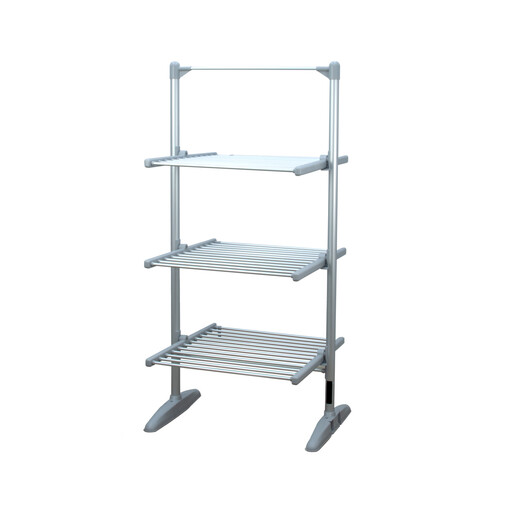
Status 3-Tier Foldable Aluminium Heated Airer, 248W
Consider this three-tier format if your cotton shorts dry alongside other family laundry and you have space for the open frame.
The product name specifies foldable aluminium construction and a 248W rating. Check its load limit, hanging length, open dimensions and whether a cover is supplied before buying.
View on Joybuy
 No image available
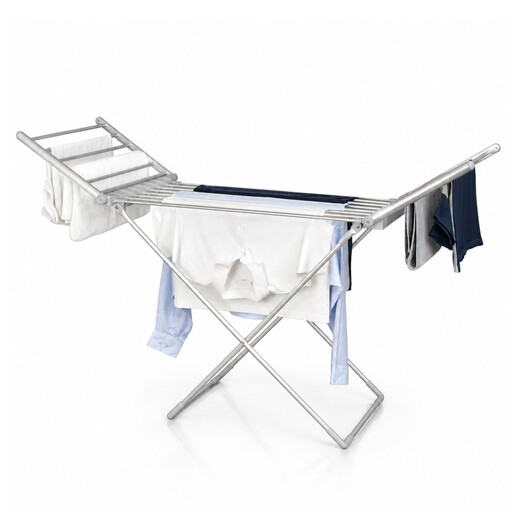
STATUS Winged Foldable Aluminium Heated Airer, 230W, Silver
Choose a winged layout to consider if you want to spread garments across a lower frame and fold the airer away after use.
The product name specifies aluminium construction and a 230W rating. Check the open footprint, hanging length and load limit against your room and usual wash.
View on Joybuy
 No image available
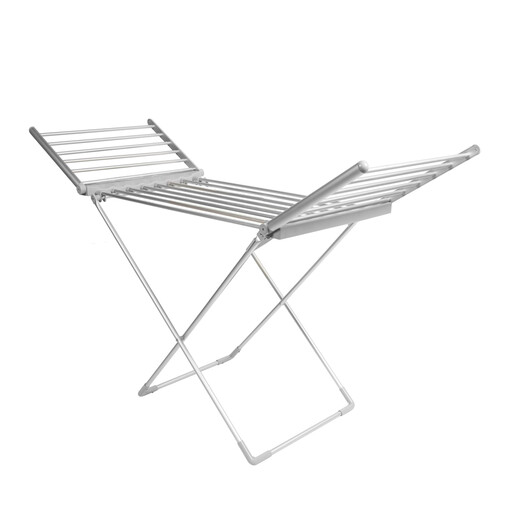
Pifco 3-Tier Winged Heated Airer
This three-tier winged format is worth comparing if you want places to hang cotton shorts and other garments across both tiers and wings.
Check its load limit, total hanging length and open dimensions against your family wash and the space where it will stand.
View on Joybuy
Common questions
Do I need to ventilate the room when using a heated airer?
Yes. Drying clothes releases moisture into indoor air, including when the airer has a cover. The UK government's existing-home ventilation guide explains that ineffective ventilation can allow moisture to become condensation; use your home's intended ventilation while laundry dries.
Does a recall of one heated airer affect similar models?
No; check the precise product identifiers in the notice rather than judging by appearance. The UK Office for Product Safety and Standards recalled the Dunelm Heated Winged Airer with article number 30752153 and barcode 5057722844042 on 29 January 2025 and instructed owners to stop using it. That notice does not identify other winged models as recalled.
Can I use a heated airer with an extension lead?
Use a wall socket where practical; if you need an extension lead, check its marked rating against the airer and any other connected appliances. Electrical Safety First advises against overloading or daisy-chaining extensions and says cable reels should be fully unwound to avoid overheating.
How can I compare electricity use between heated airers?
Multiply the model's power rating in kW by the hours it runs to compare consumption in kWh. Wattage alone cannot establish total use for a family wash: drying time also depends on the load and room conditions, so compare models using a realistic runtime for your laundry.


