Small-flat pillowcase dryers
If you mainly dry pillowcases and light laundry, compare the space an airer takes up both while open and when put away. A slim folded frame will not help if its open wings obstruct the room.


For one or two pillowcases and occasional small loads, consider a fold-flat winged heated airer if its open width fits your drying space. A vertical multi-tier airer is worth considering when floor width is tighter but height is available; a covered pod suits consumers who prioritise enclosed drying, provided its power rating and required components work for them. Whichever format you choose, check its open and stored dimensions and plan for the moisture that indoor laundry adds to the room.
If you mainly dry pillowcases and light laundry, compare the space an airer takes up both while open and when put away. A slim folded frame will not help if its open wings obstruct the room.
A tiered airer may suit a drying spot with limited floor width and enough clear height. Check where the folded frame will go as well as where it will stand during use.
If indoor laundry is frequent or time-sensitive, compare covered pod systems with open racks. Check the power rating and whether the cover, heater and any required rack are included together.
Choose a drying position and storage spot before comparing capacity: a winged rack needs open width, while a tiered rack needs clear height. Then consider room moisture and how long you expect to run the appliance.
| Concern | What to check | Who this matters to |
|---|---|---|
| Fit and storage | Measure clear width, depth and height with the airer open, then check its folded dimensions and socket reach. | I need to dry pillowcases without blocking my living space, then put the rack away. Around 42% of consumers would put fit and storage first. |
| Moisture and safe use | Choose a suitable, stable position, follow the exact model’s instructions and check product-safety recalls. Plan how to manage condensation. | If laundry dries indoors regularly, I want to avoid adding to an existing damp problem and use the appliance as instructed. Moisture and safe use would come first for around 33% of consumers. |
| Drying time and electricity use | Compare rated wattage, your likely running time and the components included with any pod system; watts alone do not give use per load. | When I need pillowcases dry sooner, I want to weigh running time against electricity use rather than choose by wattage alone. Around 25% of consumers would make that trade-off their primary concern. |
An airer that stores thinly may still obstruct a narrow room when open. The cited winged model is 7 cm deep when folded but 148 cm wide when open.
Measure the drying position with wings extended, as well as the storage space and route to a socket.
UK government guidance identifies drying laundry as a source of indoor moisture. Heating the airer does not remove that moisture from the room.
Use a suitable drying position, manage ventilation and investigate persistent condensation or mould rather than relying on the airer to resolve it.
Rated power is only part of the comparison: the hours an appliance runs also affect electricity use. A covered pod and a heated rail may suit different load sizes and drying routines.
Compare the exact model’s rated kW with your expected running hours and household tariff. For a pod, check which components are included.
The UK Office for Product Safety and Standards has recalled a Dunelm Heated Winged Airer because of a serious fire risk. Recall notices can distinguish products by identifiers beyond their general name.
Check the model, article number and barcode against the notice before buying or continuing to use an affected airer; do not use a recalled unit.
Compare individual models and what each listing includes, rather than assuming that every airer or accessory from a brand has the same dimensions or features.
A range spanning smaller airers, tiered racks, pods and accessories for consumers comparing an airer with a separate cover.
Offers both a vertical sureDRI airer and a winged XL format, giving consumers different shapes to measure against their drying space.
Offers heated winged rails and a covered pod system for consumers weighing an open rack against enclosed drying.
A foldable winged airer rated at 230W, cited as a low-height rack that folds slim for storage.
These winged and tiered heated airers are options to measure against a small flat’s drying and storage spaces. Compare the open setup and operating instructions for the exact model before deciding where to dry pillowcases.
 No image available
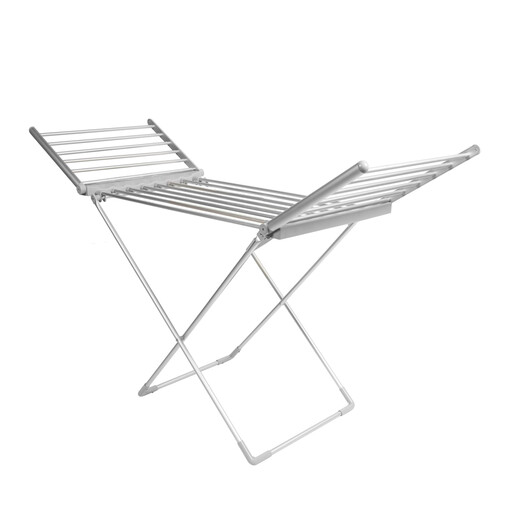
Consider this winged, three-tier format if its open setup fits your pillowcase-drying spot. Check the dimensions in the configuration you will use and follow the supplied instructions for its cover and controls.
 No image available
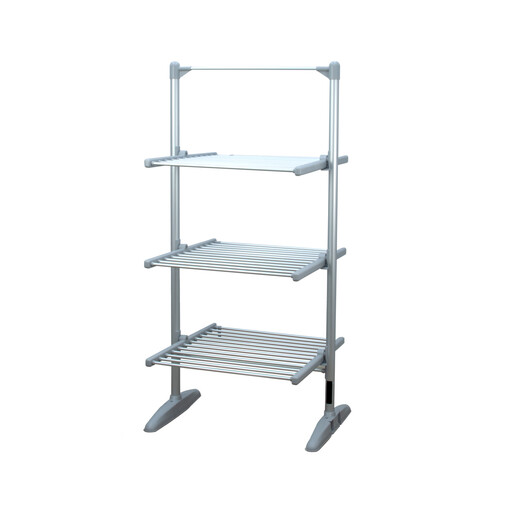
Consider this foldable, three-tier model if you want several levels for pillowcases alongside other laundry. Its stated rating is 248 W; check the open and folded dimensions and socket reach for your intended position.
 No image available
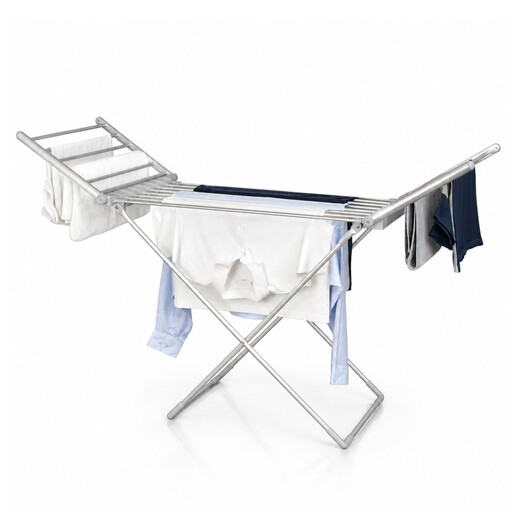
Consider this foldable winged model for pillowcases if you have room to extend its wings. Its stated rating is 230 W; check the open width, folded size and socket reach, and follow its instructions on covering the heated bars.
No. Drying laundry still adds moisture to indoor air, as UK government guidance explains. Choose a suitable drying position and address persistent condensation or mould rather than treating the airer as a moisture-control appliance.
A winged airer needs enough clear width when open, while a tiered airer needs clear height and a suitable floor position. The cited winged model is 148 cm wide when open; Minky lists its cited 4-tier model with a 73.5 × 71 cm footprint and a height of 147 cm. Measure your own drying spot against the exact model.
Multiply the model’s rated power in kW by the hours you expect to run it to estimate kWh, then apply your household tariff. Actual running time matters, so a lower wattage alone does not establish lower electricity use for a load.
Check the exact product identifiers against UK product-safety notices and follow any instructions for an affected unit. The Office for Product Safety and Standards recalled the Dunelm Heated Winged Airer with article number 30752153 and barcode 5057722844042 because of a serious fire risk; owners were told to stop using it and return it.