Families drying small loads often
If uniforms, children’s clothes or work items regularly need drying before there is a full basket, look for controls documented for smaller loads rather than choosing by maximum capacity alone.


For repeated small family loads, choose a heat-pump dryer whose exact model documents load-responsive sensing, a half-load setting or a reduced-load programme; drum capacity alone does not tell you how it handles a few garments. Before choosing between 8 kg and 9 kg, check the programme’s load and fabric limits, the space needed to install the dryer and its model-specific energy information.
If uniforms, children’s clothes or work items regularly need drying before there is a full basket, look for controls documented for smaller loads rather than choosing by maximum capacity alone.
If energy use is central to the decision, compare the energy information for the exact models and capacities you are considering. A heat-pump label does not distinguish one heat-pump model from another.
If small loads include delicates or the dryer must fit a tight space, check garment care labels, programme conditions, appliance depth and installation clearances together.
Start with the controls you will use for a few garments, then check energy information and whether the chosen machine can be installed and maintained in its intended position.
| Concern | What to check | Who this matters to |
|---|---|---|
| Small-load adjustment | Check the exact model for load sensing, a half-load control or a programme with a stated reduced-load limit. | When I dry just a few garments, I want the cycle to respond to that load rather than relying on the drum’s maximum capacity; around 36% of consumers put small-load adjustment first. |
| Energy use | Compare the exact models’ energy labels and product information using comparable capacities and programmes. | If I run the dryer regularly, its energy information matters alongside its small-load controls. Around 29% of consumers make energy use their primary concern. |
| Fabric care | Check care labels and the dryer’s permitted fabrics and load limits for each relevant programme. | With delicates or mixed fabrics in the basket, I need a programme appropriate for those garments; for around 21% of consumers, fabric care comes first. |
| Fit and upkeep | Check maximum depth, required clearances and socket access; plan for lint-filter cleaning after every use. | Before ordering, I need to know the dryer will fit and that I can reach the filter for routine cleaning. Fit and upkeep are the leading concern for around 14% of consumers. |
An 8 kg or 9 kg rating describes maximum capacity, not how a cycle responds to a few items.
Check the exact model’s sensing controls, half-load option and reduced-load programme limits.
The drying technology alone does not establish the energy performance of a particular model.
Use its energy label and product information sheet when comparing models of suitable capacity.
A dryer may fit across an alcove but still need more depth or clearance than the space allows.
Measure the route into the room and the final position against the chosen model’s dimensions and installation instructions.
Lint and fluff need regular removal. Electrical Safety First advises cleaning the filter and the area around the door after every use.
Make that check part of each drying cycle and follow the model’s manual for other cleaning tasks.
AEG has relevant 8 kg model examples for households seeking load-responsive sensing or a programme with a stated smaller-load limit.
The Bosch WQG233D8GB illustrates what an explicitly named half-load control can offer in an 8 kg heat-pump dryer.
Samsung Series 5 model information provides a reference for shoppers considering a named quick-dry feature and connected controls.
These 8 kg and 9 kg heat-pump models offer capacity for family laundry. If a few garments are your usual load, check each model’s small-load programme conditions before treating that capacity as the deciding feature.
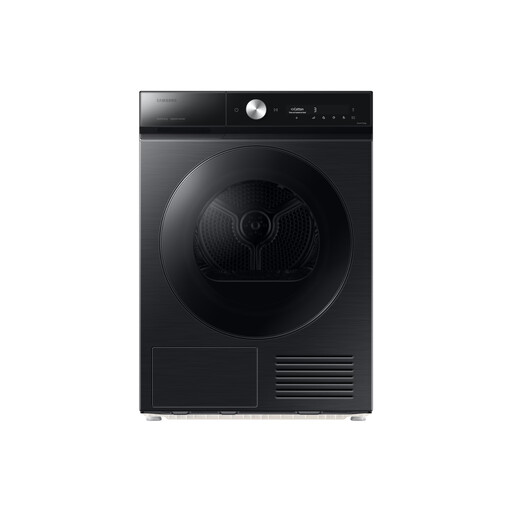 No image available
Consider this 9 kg model if you also need room for occasional larger family loads. For a few urgent items, check the Quick Dry programme’s fabric conditions and stated load limit before relying on it.
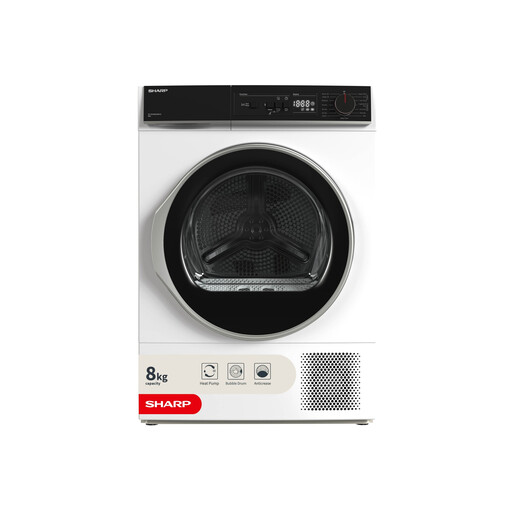 No image available
This 8 kg model is an option where family-load capacity matters alongside shorter programmes. Check the permitted weight and fabrics for Express 34 and Shirts 20 before choosing either for a small load.
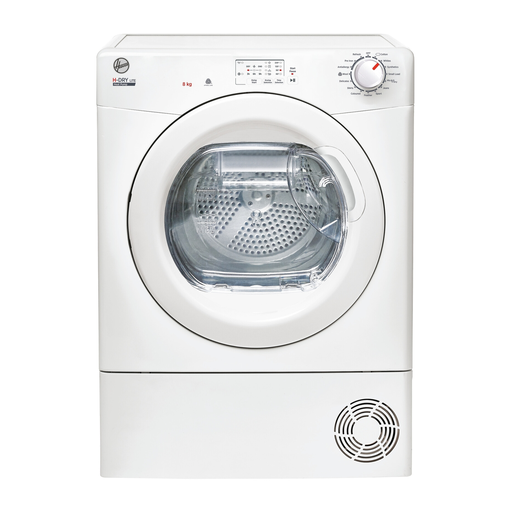 No image available
This 8 kg heat-pump model suits consideration when occasional full family loads matter. Its title lists Sensor Dry; check the programme table for how it handles smaller loads, and confirm the appliance’s dimensions and required clearances.
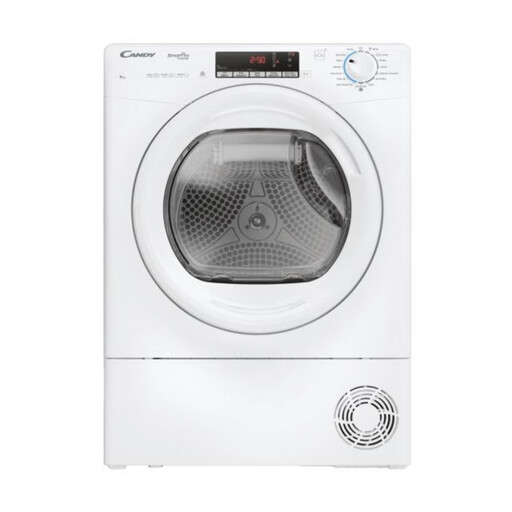 No image available
Consider the 9 kg capacity if larger family loads are also part of your routine. The title lists Sensor Dry and Wi-Fi connectivity; check the exact small-load programmes, energy information and installation clearances separately.
 No image available
This 9 kg heat-pump model is relevant if you need capacity for larger family loads as well as smaller ones. Its title lists Sensor Dry and Wi-Fi connectivity; confirm the small-load programme conditions, energy information and installation clearances for this model.
No. Neither capacity establishes how well a dryer handles a few garments. Compare the exact models’ sensing controls, reduced-load programme limits, dimensions and energy information before deciding which capacity suits the rest of your family laundry.
A heat-pump dryer normally does not need the external wall vent used by a vented dryer. It still needs the installation space and ventilation clearances specified for its exact model.
Connect the dryer to a suitable wall socket rather than an extension lead. Electrical Safety First advises positioning tumble dryers close enough to a wall socket to avoid the overload risk associated with extension leads.
Clean lint and fluff from the filter and around the door after every use, as Electrical Safety First advises. Follow your dryer’s manual for any additional periodic cleaning.
Not necessarily: a direct drain is an option on some models rather than a condition of heat-pump drying. If you want to avoid emptying a water container, check that the exact dryer supports a drain connection and that its installation instructions suit the drain location.