Households short on space
For families drying school uniforms indoors during wet weather, the appliance has to work in the available kitchen or laundry area—not merely fit between two units.


For rainy-day school laundry in a small flat, choose a heat pump dryer only after checking its full dimensions, door swing and required installation clearances against the space available. An 8kg drum is a useful starting point among the models considered here, but the programme’s permitted load matters more than drum capacity when a uniform needs drying quickly; compare current energy information and garment-specific programmes for the clothes you actually dry.
For families drying school uniforms indoors during wet weather, the appliance has to work in the available kitchen or laundry area—not merely fit between two units.
If a shirt, PE kit or socks are needed again tomorrow, the permitted load and fabric conditions of a quick programme matter as much as its advertised duration.
When school clothes share laundry time with wool, delicates or outdoor clothing, check the exact dryer’s sensor and fabric programmes alongside the care labels on the garments.
Start with whether the dryer can be installed and loaded comfortably. Then compare the programmes for your usual loads and the current energy information for each exact model.
| Concern | What to check | Who this matters to |
|---|---|---|
| Fit and installation | Measure the full appliance depth, door swing and access route; allow the clearances required by its installation instructions. | If the dryer sits in a narrow kitchen or laundry area, I need room to open it and meet its installation requirements. Around 42% of consumers put fit and installation first. |
| School-clothes turnaround | Check the quick programme’s permitted load and fabrics, then compare its duration with the normal programme. | When a uniform is needed the next morning, I need a programme that suits the items I can wash that evening. Roughly 33% of consumers prioritise turnaround for school clothes. |
| Electricity use and fabric care | Compare current labels and product information sheets on the same basis; check programmes against garment care labels. | With frequent wet-weather loads and a mix of everyday and delicate clothes, I want to weigh electricity use against suitable fabric settings. Around 25% of consumers make those considerations their primary concern. |
An 8kg drum does not imply a standard depth: Beko lists the B5T48231R at 60.5 cm deep, while AEG lists a maximum depth of 66.3 cm for the TR818P4B. A cabinet gap alone cannot establish whether either dryer will fit in use.
Measure height, width, maximum depth, the route into the flat and the space needed to open the door. Follow the chosen model’s installation instructions for clearances and socket access.
Beko says the B5T48231R’s RapiDry programme dries up to 5kg in one hour; that claim does not describe an 8kg load.
Check the stated load limit and permitted fabrics before relying on a quick programme for next-day school clothes.
An older A++ or A+++ statement should not be treated as directly comparable with an A–G rating. Energy Saving Trust explains that appliance labels also provide information about energy use, noise and performance.
Use the current label and product information sheet for each exact model, comparing figures presented on the same basis.
The Office for Product Safety and Standards has identified a serious fire risk affecting specified Haier-manufactured heat pump dryers; the alert does not mean every dryer from the associated brands is affected.
Check the exact model and product identifier against official safety alerts. Greater Manchester Fire Rescue Service advises removing lint after every load and keeping openings uncovered; avoid running the dryer while asleep or away.
These model examples show different features worth checking; a brand name alone does not establish fit, programme suitability or availability.
The B5T48231R is relevant when an 8kg capacity, stated dimensions and a fast partial-load programme are priorities.
The WTH85225GB offers a model-specific point of reference for dimensions, noise and sensor drying.
Specific AEG models are worth comparing when sensor settings or programmes for mixed fabrics matter.
The TWC640WP is an 8kg model to consider if connected features are useful to your household.
These 8kg and 9kg heat pump dryers are options for recurring school and household laundry. Use the listed capacity as a starting point, then check each exact model’s installation instructions, programmes and current energy information before deciding.
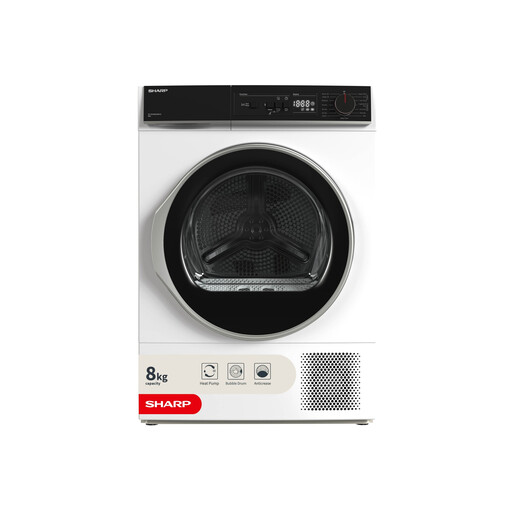 No image available
Consider this 8kg model for recurring school-clothes loads if its dimensions and door opening suit your space.
Check the permitted load and fabrics for any short programme you intend to use, and use the current energy label for comparisons.
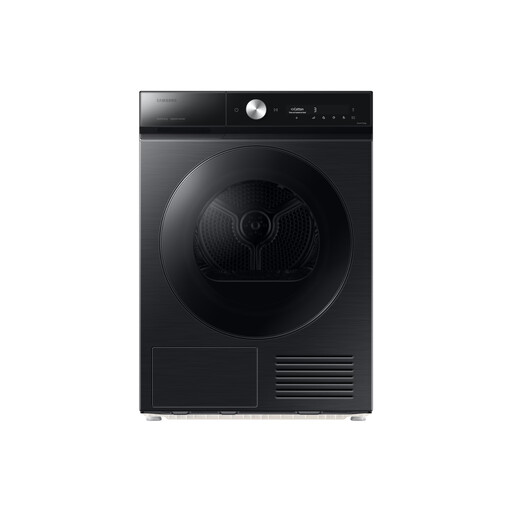 No image available
The 9kg capacity may be relevant if your usual laundry loads are larger, provided the appliance fits the intended position.
For urgent smaller loads, confirm the exact quick programme’s load and fabric limits rather than applying its time to a full drum.
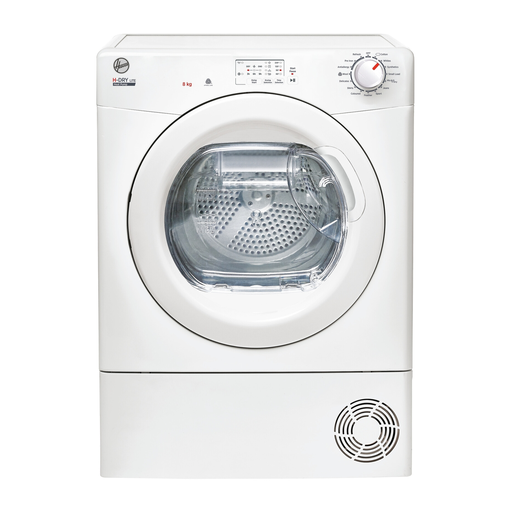 No image available
This 8kg Sensor Dry model is an option to assess for routine school laundry where the installation space is limited.
The product information gives conflicting energy classes; compare running-cost information using the exact model’s current label and product information sheet.
 No image available
The 9kg capacity and Sensor Dry feature make this a model to assess if routine loads extend beyond school clothes.
Check its full installation requirements and programme details if a next-day uniform turnaround is essential.
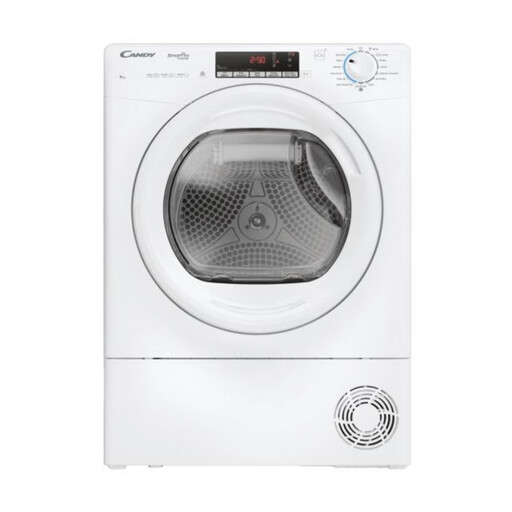 No image available
Consider this 9kg Sensor Dry model if your typical loads call for that capacity and its installation requirements suit the flat.
If it will run near a living or sleeping area, check the exact model’s noise information alongside its current energy label.
A heat pump dryer does not normally need the external vent hose used by a vented dryer. Check how the exact model collects or drains water, and follow its installation instructions for the space and clearances it requires.
An 8kg drum can be a useful starting point for recurring household laundry, but match capacity to the loads you actually dry. A rapid programme may have a lower permitted load, so check that separately before relying on it for a uniform needed the next day.
Compare the exact models’ current energy labels and product information sheets on the same basis, rather than equating an older A++ statement with a class on the A–G scale. Also consider the programme and load you expect to use regularly.
Check the exact model against official safety alerts before buying: the Office for Product Safety and Standards has reported a corrective-action programme affecting specified Haier-manufactured heat pump dryers, not every dryer from the associated brands. After installation, remove lint after every load and keep openings uncovered, as advised by Greater Manchester Fire Rescue Service.