Residents with limited space
If the dryer must fit a particular recess, you need to measure beyond the cabinet dimensions. Allow room for the door to open and space around the machine for ventilation.


Choose a heat-pump dryer for winter cotton loads only after checking its full installation space, including door opening and ventilation clearance. Then compare capacity, cotton-programme information, noise and energy information for the exact model: a larger drum or a faster named programme will not necessarily suit your available space or usual load.
If the dryer must fit a particular recess, you need to measure beyond the cabinet dimensions. Allow room for the door to open and space around the machine for ventilation.
If winter loads often contain cotton clothes, towels or bedding, check the cotton programme and usable load capacity. Moisture-sensing options may also matter if you want the cycle to stop at a selected dryness level.
If the dryer will run near a living area or laundry needs a quick turnaround, compare declared noise and the load limits of named fast programmes for the exact model.
Start with a workable installation space, then compare the energy information and programmes against the cotton loads you actually dry. Treat a quick-cycle claim as programme-specific, not as the time for a full drum.
| Concern | What to check | Who this matters to |
|---|---|---|
| Fit and access | Measure usable width, height and depth; allow for the plug, pipework, door opening and the model’s required ventilation space. | If I have a tight recess, I need the dryer to fit and its door to open in everyday use. Around 33% of consumers put workable installation first. |
| Electricity use | Compare the exact models’ product information sheets and energy use under the same label scheme, alongside capacity. | With repeated winter loads, I want to understand the electricity each machine uses rather than judge it by a headline class alone. Roughly 27% of consumers prioritise energy use. |
| Cotton care | Check garment-care labels, the machine’s cotton programme and whether sensor drying offers a suitable dryness setting. | For cotton clothes and household linen, I want a programme that suits the items without routinely drying them longer than needed. Around 20% of consumers put cotton care first. |
| Time and disturbance | Check the load limit behind a fast programme and the exact model’s declared noise figure. | If laundry must be ready around my schedule while the dryer runs close to living space, cycle conditions and noise both matter. About 20% of consumers make that their primary concern. |
A machine can fit on paper yet leave too little room to open its door or meet its installation clearances.
Measure the usable space around the plug and pipework, then check the exact model’s dimensions and installation instructions. Also allow space for door opening and ventilation.
A fast-cycle statement may apply to a smaller, specified load. Beko’s one-hour RapiDry statement for B5T48231R concerns a 5 kg load, not every cotton programme or a full 8 kg drum.
Check the stated load and programme conditions, and use the cotton-programme information when planning larger loads.
Condenser-cleaning features and drainage accessories differ. Bosch lists no self-cleaning condenser for WTH85226GB and identifies a water-drain-set accessory.
Check the selected model’s filter and condenser instructions, and whether the drainage arrangement you want requires an accessory.
A headline class does not show all the information needed to compare electricity use, capacity and other declared characteristics.
Use the label and product information sheet for each exact model, checking that the ratings are shown under comparable label schemes. Energy Saving Trust explains that appliance labels include energy-use, noise and performance information.
These examples illustrate features of particular models, not every dryer made by each brand. Check the specification of the model you intend to buy.
Relevant when comparing cabinet depth, sensor drying and a named fast programme across specific 8 kg heat-pump models.
Relevant when comparing a published noise figure and sensor-controlled drying for a specific 8 kg model.
Relevant when moisture sensing, condenser-cleaning features or connected controls are priorities on selected models.
These heat-pump dryers offer 8 kg or 9 kg stated capacities for comparing winter laundry options. Check each model’s installation instructions, cotton programmes and product information sheet against your space and usual loads.
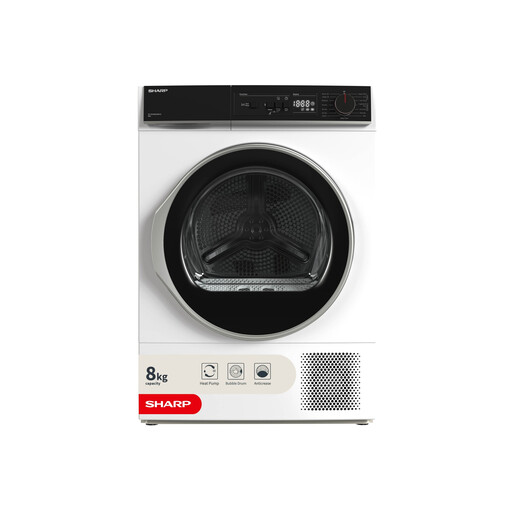 No image available
Consider this 8 kg model if that capacity suits your regular cotton loads. Check its full installation footprint and the energy information on the product sheet before deciding.
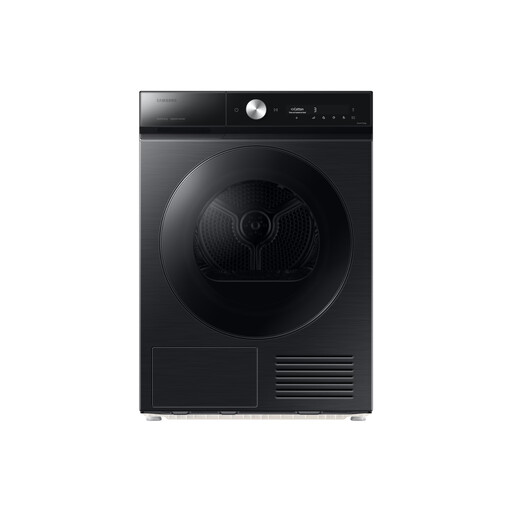 No image available
The 9 kg stated capacity may suit larger loads if the machine fits your space. Check the cotton programme and the conditions of any quick cycle rather than assuming it applies to a full drum.
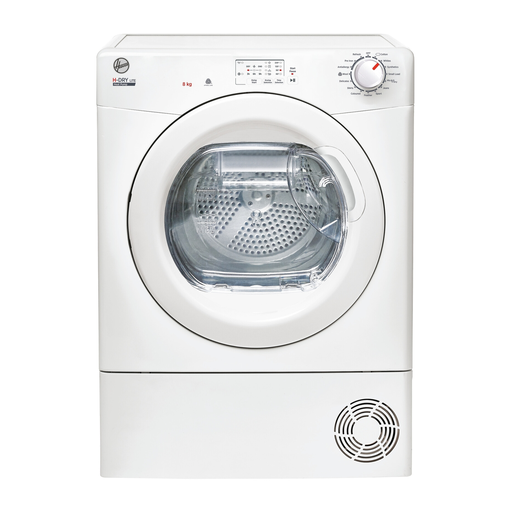 No image available
Consider this 8 kg model if sensor drying is important for your routine. Its name also identifies NFC One Touch and Aquavision; check device compatibility, cotton programmes and routine cleaning instructions for this variant.
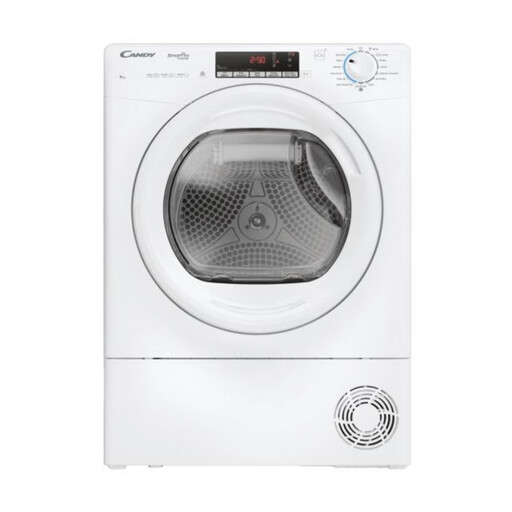 No image available
This 9 kg model is worth comparing if you need room for larger loads and want sensor drying. The product name also specifies Wi-Fi connectivity; check installation space, cotton-programme details and the exact product sheet.
 No image available
Consider its 9 kg capacity if larger cotton loads are common and the installation space permits it. The product name specifies sensor drying and Wi-Fi connectivity; confirm the cotton programme and maintenance instructions for this model.
A heat-pump dryer does not use an external exhaust hose in the way a vented dryer does. It still needs a suitable indoor location and the ventilation space specified in its installation instructions.
Measure the usable width, height and depth, accounting for the plug, pipework, door opening and required clearances. Compare those measurements with the exact model’s installation instructions; cabinet depth alone does not establish whether it will fit.
Compare the displayed energy label and product information sheet for each exact model under the same label scheme, alongside the capacity you need. Energy Saving Trust explains that appliance labels include information on energy use, noise and performance, so a headline class should not be your only comparison.
Not necessarily: check the stated programme and load limit. Beko’s one-hour RapiDry statement for B5T48231R applies to a 5 kg load and should not be used as the expected time for a full 8 kg cotton load.